

Last Updated: October 29, 2026
Quick Summary
To balance scalp pH naturally, keep the scalp near its mildly acidic level of about 5.5 by using a pH-balanced shampoo, washing gently, and rinsing thoroughly. Avoid harsh alkaline products and keep conditioner off the scalp. Most symptoms need more than home care if they persist.
- Scalp pH is about 5.5 according to a 2014 review cited in the article.
- Choose a shampoo whose final pH is at or below about 5.5.
- Keep shampoo on the scalp for under a minute and massage with fingertips.
- Rinse for at least 30 to 60 seconds to remove residual surfactant.
- See a dermatologist if itching or flaking lasts more than a few weeks.
Table of Contents
- What Is the pH of the Scalp and Why Does It Matter?
- Signs Your Scalp pH May Be Out of Balance
- How to Test Scalp pH and Product pH at Home
-
Step-by-Step Routine to Balance Scalp pH Naturally
- Step 1: Pre-wash scalp check (30 seconds)
- Step 2: Cleanse with a pH-balanced shampoo
- Step 3: Massage with fingertips, not nails
- Step 4: Rinse longer than feels necessary
- Step 5: Condition the lengths and ends only
- Step 6: Finish cool and skip the heat
- Step 7: Track for four weeks
- Adapting frequency to your scalp type
- Choosing a pH-balanced shampoo
- Does Apple Cider Vinegar Rinse Help? Evidence and Safety
- When to See a Dermatologist About Scalp Symptoms
- Building Your Scalp pH Routine With Kerarganic Products
- Frequently Asked Questions
What Is the pH of the Scalp and Why Does It Matter?
The scalp is naturally slightly acidic, and a 2014 review reports a scalp pH of about 5.5 (The Shampoo pH can Affect the Hair: Myth or Reality?). Keeping scalp pH close to that level is the goal when you try to balance it naturally.
Scalp pH is simply how acidic or alkaline the skin on your head is, measured on a scale from 0 to 14 (pH and Water). Lower numbers are more acidic. Most of the time, your scalp works to keep that level stable on its own.
Scalp pH versus hair-shaft pH
The scalp and the hair strand are not the same. The same 2014 review reports a hair-shaft pH of 3.67, which is more acidic than the scalp. The review argues that shampoo for scalp use should have a final pH no higher than 5.5. That is why many people look for a pH-balanced formula rather than trying to change the hair's pH directly.
Signs Your Scalp pH May Be Out of Balance
Common signs of an imbalanced scalp include:
- Persistent dryness or flaking
- Itching or mild irritation after washing
- Oily roots paired with dry lengths
- Tightness that eases only after conditioning
- Hair that feels rough, frizzy or tangles easily
These signs can come from many causes, including product buildup, heat styling, hard water and stress. They do not confirm a pH problem on their own. If symptoms last or worsen, get them checked (see the dermatologist section below).
How to Test Scalp pH and Product pH at Home
Home testing is limited, but you can check the pH of a product before you use it:
- Use pH test strips made for cosmetics, which are sold online and at pharmacies.
- Dip a strip in the diluted product or dampen it with a small amount of product.
- Compare the color to the chart on the package.
- Look for a final pH around 5.5 for scalp products.
Testing a product tells you what it is, not what your scalp is doing. Scalp pH itself is best measured by a professional.
Step-by-Step Routine to Balance Scalp pH Naturally
A pH-friendly routine is less about any single product and more about sequence, contact time and frequency. The goal is to avoid pushing the scalp alkaline, then give it time to return to its natural mildly acidic state. Most practitioners find the scalp re-acidifies on its own within a few hours after washing, so the routine below is built to minimize disruption rather than to "correct" pH after the fact.
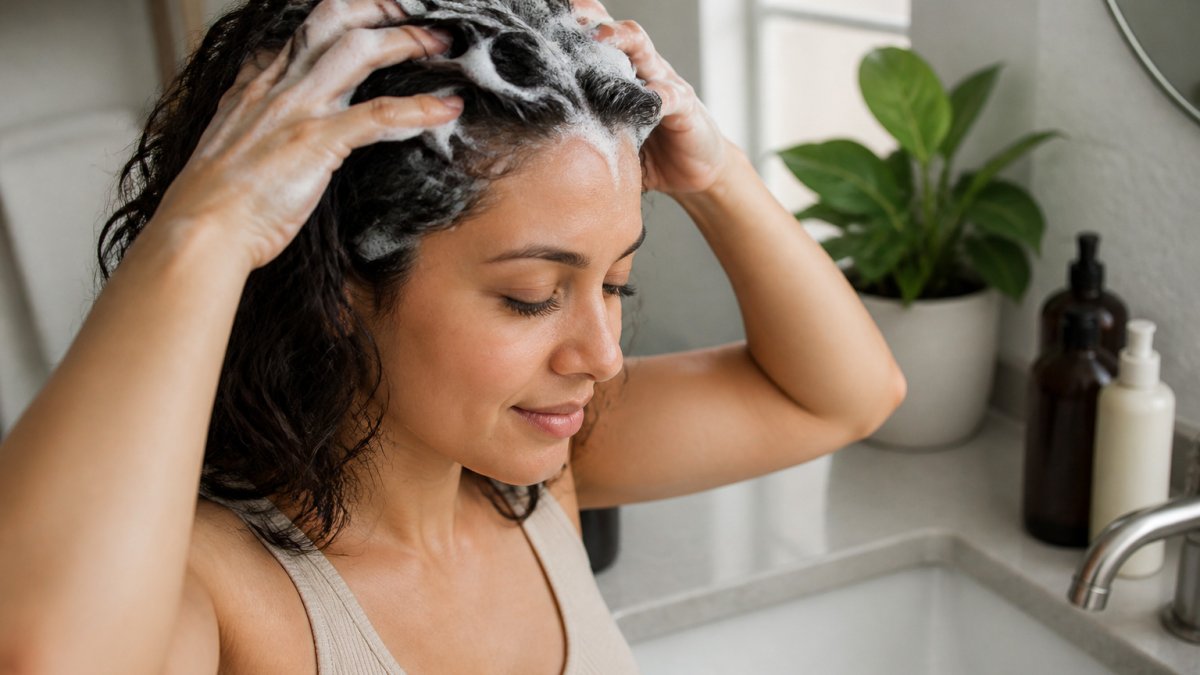
Step 1: Pre-wash scalp check (30 seconds)
Before you wet your hair, part it in two or three places and look at the scalp. Note flaking, redness, or tenderness. This baseline tells you whether today is a normal wash day or a gentler one. If the scalp is irritated, skip exfoliating tools and hot water entirely.
Step 2: Cleanse with a pH-balanced shampoo
- Choose a shampoo whose final pH is at or below about 5.5; many drugstore and salon options now print this on the label or product page.
- Use roughly a quarter-sized amount for shoulder-length hair; more shampoo does not clean better and is harder to rinse out.
- Focus the lather on the scalp, not the lengths. The lengths get cleaned by the runoff.
- Keep the product on the scalp for under a minute. Longer contact does not improve cleansing and gives surfactants more time to strip the barrier.
Step 3: Massage with fingertips, not nails
Work the lather with the pads of your fingers in small circles for 1 to 2 minutes. This loosens oil and buildup without creating micro-abrasions that make an already-irritated scalp more reactive. Skip scalp brushes with stiff bristles if you have flaking or redness.
Step 4: Rinse longer than feels necessary
Rinse for at least 30 to 60 seconds after the lather is gone. Residual surfactant is one of the most common and most overlooked causes of post-wash tightness and itching, and it has nothing to do with the product's pH once it is diluted and rinsed away.
Step 5: Condition the lengths and ends only
Apply conditioner from mid-shaft to ends and keep it off the scalp. Most conditioners are formulated at a lower pH than shampoos, which is fine for hair fiber but unnecessary on scalp skin and can contribute to buildup at the roots.
FIBERPLASTY MICELLAR REJUVENATING SHAMPOO →
Step 6: Finish cool and skip the heat
A final cool-water rinse tightens the cuticle and calms the scalp. Let hair air-dry when possible, and keep blow-dryer heat on medium at least six inches from the scalp.
Step 7: Track for four weeks
Note scalp feel, flaking and itch on a simple weekly log. Four weeks is long enough to see whether a change is helping and short enough to abandon a routine that is not.
Adapting frequency to your scalp type
Our three-step routine for treated hair (shampoo, conditioner and a weekly mask) follows this same logic. You can see how the routine fits together before you start.
Choosing a pH-balanced shampoo
For a cleanse, our Fiberplasty Micellar Prep Shampoo is a starting point.

The routine below breaks the process into steps, each with a timing or frequency you can follow. If you are still choosing a formula, How to Choose the Right Shampoo for Damaged Hair covers how to pick one in depth.
| Step | What to do | Time or frequency |
|---|---|---|
| Pre-wash scalp check | Part hair and look for flaking, redness or tenderness | 30 seconds, before each wash |
| Cleanse | Use a pH-balanced shampoo, about a quarter-sized amount | Under a minute of contact |
| Massage | Work lather with fingertip pads in small circles | 1 to 2 minutes |
| Rinse | Rinse until all lather is gone | At least 30 to 60 seconds |
| Condition | Apply from mid-shaft to ends, keeping it off the scalp | Lengths and ends only |
| Finish | Cool-water rinse, then air-dry when possible | Keep dryer heat on medium, six inches away |
| Track | Log scalp feel, flaking and itch | Weekly, over four weeks |
Does Apple Cider Vinegar Rinse Help? Evidence and Safety
Apple cider vinegar is the most-searched DIY scalp remedy, and it is also the one most often used incorrectly. Vinegar is acidic, so it can temporarily lower the pH of the hair surface and help smooth the cuticle, which is why hair feels softer and shinier after a rinse. What the available research does not show is that a vinegar rinse reliably "rebalances" scalp pH, and no study we reviewed establishes a standard dilution, frequency or contact time.
What vinegar can and cannot do
- Can: temporarily lower the pH of the hair shaft, smooth the cuticle, and help remove some product residue.
- Cannot: diagnose or correct an underlying scalp condition, replace a pH-balanced shampoo, or substitute for treatment of persistent flaking or redness.
- Unclear: whether routine vinegar rinses change scalp skin pH over time in a meaningful way.
If you try it, dilute it
A common home dilution is roughly one tablespoon of apple cider vinegar in one cup of water (about a 1:16 ratio). Undiluted vinegar is far more acidic than scalp skin and is a known irritant. Apply to the scalp and lengths after shampooing, leave on for under a minute, and rinse thoroughly. Patch test on the inner forearm 24 hours before the first full use.
Lemon juice and baking soda: the two remedies to approach with the most caution
- Lemon juice is acidic like vinegar but also contains photosensitizing compounds; leaving it on and then going into the sun can cause irritation and discoloration, especially on lighter hair.
- Baking soda is alkaline, so a baking-soda paste or wash pushes the scalp in the opposite direction from its natural pH. It is a common cause of post-treatment dryness and tightness and is not a pH-balancing remedy.
Scalp versus hair shaft, again
A vinegar rinse mostly acts on the hair fiber, which is already more acidic than the scalp. That is why a rinse can make hair feel better without doing much for scalp skin, and why it is not a substitute for a gentle, pH-appropriate shampoo on the scalp itself.
When to See a Dermatologist About Scalp Symptoms
See a dermatologist if itching, flaking or redness lasts more than a few weeks, spreads, or comes with pain, hair loss or sores. Ongoing symptoms can have causes that no shampoo will fix, and a professional can help you find the right treatment.
Building Your Scalp pH Routine With Kerarganic Products
Our Fiberplasty Micellar Rejuvenating Shampoo is listed at $16.10 and contains aloe vera and panthenol.

Frequently Asked Questions
What is the pH of the scalp?
A 2014 review reports that the scalp typically measures around pH 5.5, which is slightly acidic, while the hair shaft measures lower at about pH 3.67. The review argues that shampoo meant for scalp use should have a final pH no higher than 5.5. Staying near this slightly acidic range is the practical goal when you choose products and plan your wash routine.
Does apple cider vinegar help balance scalp pH?
Apple cider vinegar is acidic, so it can lower the pH of a rinse, but the research available here does not prove it reliably restores scalp pH or improves scalp health. Because it can irritate sensitive skin if used undiluted, dilute it well, patch test first, and stop if you notice burning or redness. If symptoms persist, see a dermatologist rather than relying on home remedies.
How can I tell if my scalp's pH is out of balance?
Common signs include persistent dryness, flaking, tightness, itchiness, or irritation that returns after washing. Hair that feels rough or frizzy despite regular care can also point to a mismatch between your products and your scalp. Because these symptoms have many causes, a dermatologist can help rule out conditions that a pH change alone will not fix.
Should I use a pH-balanced shampoo?
Kerarganic's Fiberplasty Micellar Rejuvenating Shampoo, priced at $16.10, is one option to consider.
