
Last Updated: October 27, 2026
Quick Summary
Run a hair care consultation as a structured conversation that lasts about 20 minutes and ends with a written plan. Greet the client, explore goals and inspiration photos, review hair history and previous services, assess condition and scalp, then agree on service, budget, and maintenance before quoting. Document everything on a consultation form and get a signed consent.
- Book roughly 20 minutes and hit checkpoints at minutes 5, 10, 15, and 20.
- Ask about box color, relaxers, keratin, and heat habits, then write the answers down.
- Assess hair and scalp by hand and eye, not just the client's description.
- Defer or refer clients with open sores, sudden hair loss, or unhealed chemical reactions.
- Repeat the plan, price, and next step, then get a verbal yes plus a signed form.
Table of Contents
- Why a Structured Consultation Decides the Appointment
- Hair Consultation Duration: How Long to Book and Where the Time Goes
- Hair Consultation Questions for Clients: What to Ask and Why
- How to Assess Hair Condition, Scalp, and Suitability
- Following a Hair Consultation Script Without Sounding Scripted
- The Hair Consultation Form for Stylists: What to Record and Why
- Aligning Goals, Budget, and Maintenance Before You Quote
- Book a Consultation and Match the Client to the Right Product
- Frequently Asked Questions
Why a Structured Consultation Decides the Appointment
A professional hair care consultation is a structured conversation that turns a client's vague wishes into a clear, workable plan before any scissors or color bowl comes out. The IBISWorld U.S. hair salon industry overview tracks a salon sector where revenue keeps climbing, which means more clients walking in with high expectations and strong opinions.
The consultation is not small talk before the service. It is the blueprint.
Hair Consultation Duration: How Long to Book and Where the Time Goes
- Greeting and rapport: 2-3 minutes
- Goals and inspiration photos: 5-7 minutes
- Hair history and previous services: 4-5 minutes
- Condition and scalp assessment: 3-4 minutes
- Plan, budget, and maintenance talk: 4-5 minutes
- Documentation and booking next visit: 2-3 minutes
Timing Checkpoints Inside the Consultation
- Minute 5: You should know the client's desired result in their own words.
- Minute 10: You should know their hair history, including color history and chemical treatments.
- Minute 15: You should have a service recommendation and a rough price range.
- Minute 20: You should have consent, notes, and a next appointment on the books.
Hair Consultation Questions for Clients: What to Ask and Why
Start with these:
- "What do you like about your hair right now?"
- "What bothers you most about it?"
- "Show me a photo of hair you love. What do you love about it?"
- "How much time do you spend styling on a normal morning?"
Then confirm with the specifics:
- "When was your last color service, and what was used?"
- "Have you used box color at home in the past year?"
- "Any relaxers, keratin treatments, or straightening services in the last 12 months?"
- "How often do you heat style, and at what temperature?"
Questions About Hair History and Previous Services
Ask about color history (including at-home kits), chemical and smoothing treatments, bleach and lightening, heat tool habits, and past product reactions such as itching or burning. Write the answers down. Memory fades, and the next stylist needs the record.
Questions About Lifestyle, Routine, and Styling Habits
The best service recommendation fits the client's real life, not their Pinterest board. Ask how often they wash, whether they work out, swim, or wear hats daily, how much morning time they actually have, whether they'll use a weekly mask or leave-in, and their at-home maintenance budget. A client with five minutes and no patience for a routine will not maintain a high-maintenance color. Say so kindly, and offer a lower-maintenance option.
How to Assess Hair Condition, Scalp, and Suitability
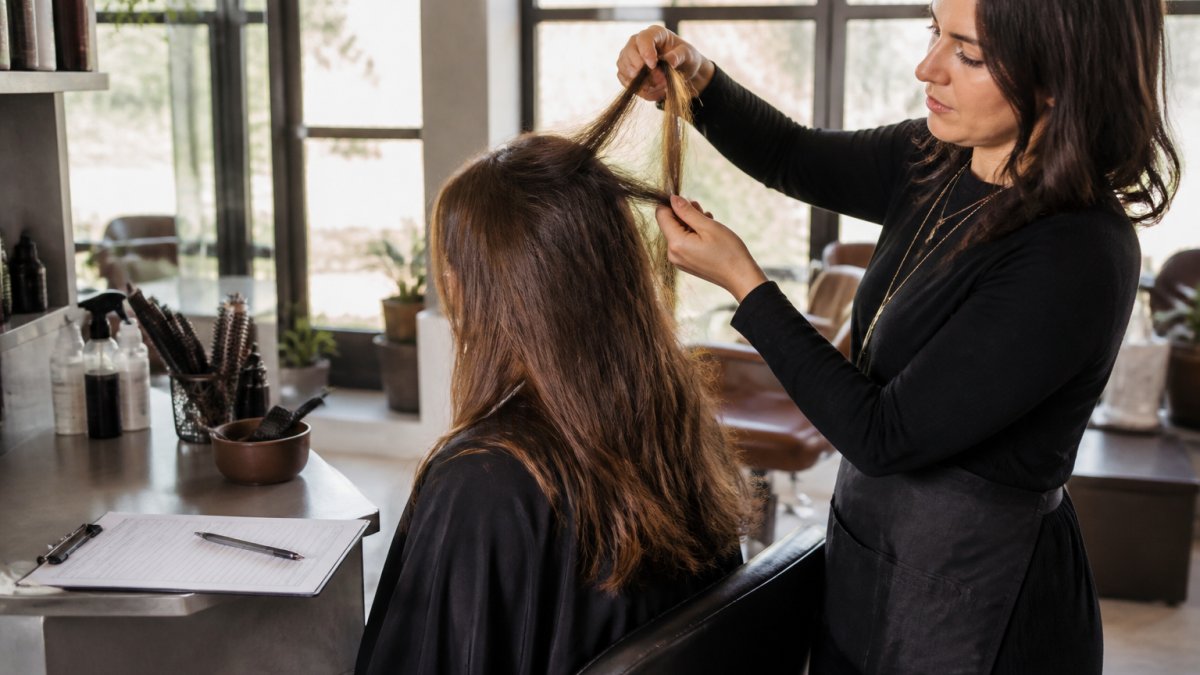
Assess with your hands and eyes, not just the client's description. Lift sections of hair, check the mid-lengths and ends, and look at the scalp under good light. A consistent sequence keeps you from missing the detail that changes the service plan.
A Practical Assessment Checklist
Write each finding on the consultation form. The next stylist needs the record, and the client benefits from continuity.
Suitability: Matching the Goal to What the Hair Can Handle Today
Suitability is not a judgment about the client's taste but a technical match between the desired result and the hair's current capacity. Ask yourself: can this hair reach the target level or shape in one appointment without unacceptable breakage? If not, what staged plan gets there over two or three visits, and what at-home care protects the result between visits? For clients with a sensitive or reactive scalp, gentle product choices matter more than strong ones. Our guide to organic hair care benefits for a sensitive scalp covers what to look for.
When to Defer or Refer a Client
Some consultations should end with a referral, not a service. Defer or refer when you see open sores, severe flaking, or spreading redness on the scalp; sudden hair loss or patchy thinning; an unhealed reaction to a previous chemical service; hair so compromised that any chemical service risks breakage; or scalp conditions that look medical rather than cosmetic. Say it plainly: "I want to get your scalp healthy before we color. Here is what I would do first." Then book a follow-up and document the referral in the client record. Once the scalp has recovered and the hair integrity is restored, you can confidently move forward with a dimensional color appointment to achieve the desired aesthetic results.
FIBERPLASTY 2-WEEK AMPOULE HAIR REPAIR SET - HAIR SERUMS →
Following a Hair Consultation Script Without Sounding Scripted
- Open: "Tell me what you're hoping for today."
- Explore: "What do you like and dislike about your hair now?"
- Confirm: "So the goal is softer ends and less frizz, without losing length. Did I get that right?"
- Advise: "Here is what I would recommend, and here is why."
- Agree: "Does that plan and price work for you?"
Scripts for the Hard Parts: Budget, Time, and Maintenance
- "I can see why you love that result. To get there safely, I'd recommend splitting it into two visits. Today we can do the color, and next visit we can finish the lightening. That keeps the cost and the hair health in a better place. Does that work for you?"
- "The full service today would be [quoted price]. If that's more than you planned, I can show you a version that gets you 80% of the look for less. Would you like to see both options?"
- "This color looks great, but it needs a gloss every four to six weeks and a mask once a week to stay vibrant. How much time can you realistically give it at home?"
- "If mornings are tight, I'd steer you toward a cut that air-dries well and a color that grows out softly. That way you get a look you can keep up with."
- "That photo is a great target. Your hair is at [current level], and that photo is at [target level]. Getting there in one appointment would risk breakage. Here's the staged plan I'd recommend, and here's what each visit would involve."
- "I understand. The price reflects the time and the products needed to protect your hair. If it helps, I can break down what's included so you can see where the cost comes from."
Confirming Agreement Before You Begin
End the script with a clear agreement. Repeat the plan, the price, and the next step in one sentence: "So today we're doing [service] for [quoted price], and you'll book the follow-up in [timeframe]. Does that sound right?" A verbal yes plus a signed consultation form is your best protection against mismatched expectations.
The Hair Consultation Form for Stylists: What to Record and Why
- Client name, contact, and visit date
- Desired result and inspiration references
- Hair history, including color history and chemical treatments
- Hair and scalp assessment notes
- Products and formulas used
- Service recommendation and quoted price
- At-home maintenance plan
- Consent signature
Consent, Documentation, and Privacy Basics
Skipping the consent signature on a smoothing or color service is the mistake that turns a bad outcome into a dispute. A signed form and clear notes are your best protection. For deeper guidance on organizing and managing salon inventory, see how to build a professional hair care inventory.
Aligning Goals, Budget, and Maintenance Before You Quote
The three-way check:
| What to confirm | Ask the client | What it changes |
|---|---|---|
| Goal | "What result matters most?" | Service choice and time |
| Budget | "What range works for you?" | Service scope and products |
| Maintenance | "How much upkeep can you handle?" | Frequency and home care |
Book a Consultation and Match the Client to the Right Product
For clients with dry, damaged, or frizz-prone hair, the Restorative Xtreme Hair Repair Products Frizz Control Collection Bundle includes a sulfate-free restorative shampoo, mask, conditioner, and treatment serum. The products include hydrolyzed keratin and argan oil.

For color-treated clients, the Angel Touch Color Care Guardian Collection Bundle includes a sulfate-free color shampoo, color-lock mask, conditioner, leave-in, and shine serum.

The Fiberplasty 2-Week Ampoule Hair Repair Set includes a prep shampoo, self-heating oils, masks, and a sealer.

Frequently Asked Questions
What should a professional hair care consultation include?
A hair care consultation can cover the client's goals and inspiration photos, hair history, and a plan for time, budget, and at-home maintenance.
How long should a hair consultation duration be?
Book 15 minutes for a straightforward cut or single-process color and 30 minutes for chemical services, corrections, or first-time clients. New-client consultations and extension or smoothing appointments often need 30 to 45 minutes because you are assessing hair history and setting expectations. If the client arrives with several inspiration photos and a complicated color history, add 10 minutes rather than rushing the assessment. Charging a small consultation fee, credited toward the service, protects your time on no-shows.
What questions should a stylist ask during a consultation?
Ask open-ended questions that get past yes or no: What do you like and dislike about your hair right now? Walk me through the last 12 months of color, relaxers, or keratin treatments. How much time do you spend styling on a typical morning? What products are in your shower today? Bring inspiration photos and ask what specifically they like in each one. These hair consultation questions for clients surface the real goal, the maintenance ceiling, and any red flags before you mix a single bowl.
How do you recommend a hair care routine during a consultation?
Match the routine to the service and the client's actual habits, not an ideal version of them. If they just had a smoothing or keratin service, recommend a sulfate-free, salt-free shampoo and conditioner to protect the result, plus a weekly mask. For color-treated hair, a color-protecting bundle with UV defense keeps vibrancy longer. Write the routine down with product names and how often to use each, and set a follow-up date to check how it is working.
Most salons lose clients not because the service was bad, but because the conversation never happened. A structured hair care consultation fixes that. At Kerarganic Cosmetics, LLC, we make formaldehyde-free, keratin-infused products that support the plan you set in the chair, from professional treatments to at-home maintenance. Get started with Kerarganic Cosmetics, LLC and give every client a consultation they can trust.
