
Table of Contents
- Why Organic Hair Care Helps a Sensitive Scalp
- Ingredients to Avoid for Sensitive Scalp
- How to Treat Scalp Irritation Naturally
- Benefits of Formaldehyde-Free Hair Treatments
- The Detox Phase: What to Expect When You Switch
- How to Spot Real Organic Hair Care vs. Greenwashing
- Pros and Cons of Organic Hair Care for Sensitive Scalps
- Conclusion
- Frequently Asked Questions
Last Updated: September 15, 2026
Why Organic Hair Care Helps a Sensitive Scalp
What are the benefits of organic hair care for sensitive scalp? The main benefit is fewer irritants touching your skin. Organic hair care is the practice of using products formulated without harsh sulfates, parabens, synthetic fragrances, and other reactive chemicals. For anyone with a reactive scalp, that difference matters more than any marketing claim.

At Kerarganic Cosmetics, LLC, we hear from customers every week who have spent years cycling through drugstore shampoos that leave their scalp red, tight, and itchy. The pattern is consistent: the products strip natural oils, the scalp overproduces sebum to compensate, and the cycle repeats. Organic formulas interrupt that loop by removing the ingredients most likely to trigger it.
A sensitive scalp reacts to harsh formulas because its protective barrier is already compromised. When sulfates strip sebum from the surface, the skin underneath loses moisture and becomes more permeable to irritants. That triggers inflammation, which shows up as redness, itchiness, and flaking.
The scalp microbiome, the community of bacteria and fungi living on your skin, also takes a hit. Disrupt it repeatedly and conditions like dandruff and dermatitis become easier to flare. Organic formulas that respect the scalp's natural pH balance give that barrier a chance to rebuild.
Ingredients to Avoid for Sensitive Scalp
Most articles stop at "avoid sulfates and parabens." That advice is too broad to act on. A reactive scalp usually flares in response to one or two specific ingredients, and the only way to find yours is to map the ingredient to the symptom it tends to produce. Below is a reaction guide organized by what you are actually experiencing.
Ingredient-to-Symptom Reaction Guide
| If your scalp does this... | Suspect this ingredient class | Why it happens |
|---|---|---|
| Burning or stinging within minutes of washing | Sodium lauryl sulfate (SLS), sodium laureth sulfate (SLES), alpha-olefin sulfonate | These anionic surfactants strip the lipid barrier fast enough that nerve endings in the skin respond directly |
| Itching that builds over hours, not minutes | Methylisothiazolinone (MI), methylchloroisothiazolinone (MCI) | These preservatives are among the most common causes of allergic contact dermatitis in rinse-off products (pubmed.ncbi.nlm.nih.gov) |
| Red, raised patches along the hairline and behind the ears | Synthetic fragrance blends, especially those listing "parfum" or "fragrance" | A single fragrance listing can hide dozens of compounds; the EU alone flags 26 as mandatory-label allergens, and many appear in U.S. products without disclosure (Fragrance allergens labelling) |
| Flaking that looks like dandruff but does not respond to dandruff shampoo | Cocamidopropyl betaine, propylene glycol | Both are common contact allergens that mimic seborrheic dermatitis |
| Greasy buildup at the roots within a day of washing | Silicones (dimethicone, amodimethicone), mineral oil, petrolatum | These occlusives seal the follicle and trap sebum, which feeds the yeast behind seborrheic dermatitis |
| Dryness and tightness that worsens with each wash | High-alcohol formulas (denatured alcohol, SD alcohol 40) | Alcohol accelerates water loss from the stratum corneum |
The Two You Should Check First
If you only have the patience to read one label line, check for sulfates. A sulfate-free shampoo is the single most impactful swap for a reactive scalp because it removes the fastest-acting irritant. The second check is preservatives: if you have reacted to a product that was otherwise "gentle," MI or MCI is a frequent culprit, and it hides near the bottom of the ingredient list where most people stop reading.
What to Do With This Table
Do not eliminate everything at once. Remove one suspect class, wash for two weeks, and note whether the symptom changes. If it does not, reintroduce that class and remove the next. This is the same elimination logic allergists use, and it works because it isolates the variable instead of guessing.
Ingredients That Are Usually Safe Substitutes
For each problem class above, an organic alternative exists that performs the same function without the trigger. Sulfates are replaced by glucosides (decyl glucoside, coco-glucoside), which lather more gently. Synthetic preservatives are replaced by sodium benzoate, potassium sorbate, or phenoxyethanol at low concentrations. Fragrance is replaced by named essential oils or left out entirely. Silicones are replaced by plant oils and fatty alcohols that condition without sealing the follicle.
The catch is that "natural" does not automatically mean safe. Essential oils like tea tree, peppermint, and citrus can themselves trigger contact dermatitis in sensitive users. Patch-test any new botanical on the inner forearm for 48 hours before applying it to your scalp (the American Academy of Dermatology).
How to Treat Scalp Irritation Naturally
Treating scalp irritation naturally means three things at once: reducing the chemical load, restoring the barrier, and giving that barrier enough uninterrupted time to rebuild. Most people do the first and skip the third, which is why they cycle through products without improvement.
The Barrier-Rebuild Protocol
- Swap to a sulfate-free, paraben-free shampoo and wash every other day at most. Daily washing, even with a gentle formula, keeps the stratum corneum in a constant state of water loss. If you exercise daily, rinse with water only on off days.
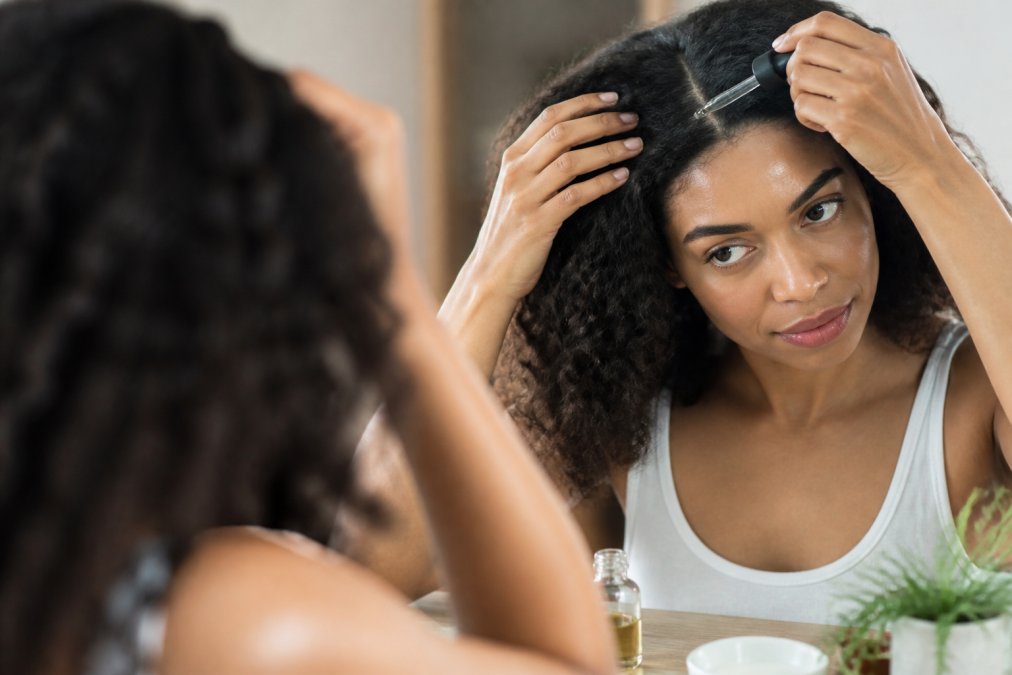
- Pre-oil before you wash. Apply a botanical scalp oil to dry skin 20 minutes before showering. The oil creates a buffer that reduces how much surfactant reaches the skin, which is when most irritation happens. Argan, jojoba, and squalane are the most commonly tolerated.
- Rinse with lukewarm water, never hot. Hot water dissolves sebum faster than the scalp can replace it and amplifies the stripping effect of any surfactant that remains.
- Do not scratch. Scratching breaks the skin barrier and opens the door to secondary infection, which turns a simple irritation into a multi-week problem. If itching is severe, a cool compress is the safer interrupt.
- Give it two to four weeks before judging results. Barrier recovery is not linear. Week one often feels worse than the starting point.
The Detox Phase: What to Expect When You Switch
The detox phase is the adjustment period your scalp goes through when you stop using harsh conventional products.
Expect this timeline:
Why This Works: The Mechanism
When to See a Dermatologist
Benefits of Formaldehyde-Free Hair Treatments
The Detox Phase: What to Expect When You Switch
Expect these changes:
How to Spot Real Organic Hair Care vs. Greenwashing
Use this checklist before you buy:
Pros and Cons of Organic Hair Care for Sensitive Scalps
| Factor | Pros | Cons |
|---|---|---|
| Irritation | Fewer reactive ingredients | Detox phase can feel worse first |
| Cost | Longer-term scalp health | Higher upfront price |
| Lather | Gentler on barrier | Less foam than sulfates |
| Results | Supports moisture retention | Takes weeks to see full effect |
Conclusion
Frequently Asked Questions
What ingredients should I avoid if I have a sensitive scalp?
The biggest triggers are sulfates, parabens, synthetic fragrances, and formaldehyde-releasing preservatives. Sulfates strip natural oils and leave the scalp tight and itchy, while synthetic fragrances are a leading cause of contact dermatitis. Check labels for sodium lauryl sulfate, methylparaben, propylparaben, and 'fragrance' listed near the top. Formulas built around plant-based ingredients and certified organic botanical extracts are far less likely to provoke redness or allergic reaction.
How do synthetic chemicals affect sensitive scalps?
Synthetic surfactants and preservatives can disrupt the scalp microbiome, the balance of good bacteria and yeast that keeps skin calm. When that balance shifts, sebum regulation suffers and you get more itchiness, flaking, and scalp inflammation. Formaldehyde, still used in some smoothing treatments, is a known irritant and sensitizer. Switching to nontoxic, sulfate-free and paraben-free formulas gives the barrier time to recover and reduces the chance of a repeat reaction.
Are organic hair treatments effective?
Yes, when they are formulated well. Organic hair care built around keratin, argan oil, and other botanical extracts can rebuild hair strength and improve moisture retention without the irritation that harsh formulas cause. The key is pairing certified organic ingredients with proven actives rather than relying on marketing claims alone. A formaldehyde-free keratin treatment, for example, smooths and strengthens hair while staying gentle enough for a scalp that reacts easily to conventional products.
What do dermatologists recommend for a sensitive scalp?
Dermatologist-recommended routines usually start with a gentle, sulfate-free shampoo, lukewarm water, and avoiding known irritants like synthetic fragrances and formaldehyde. Many suggest patch-testing new products before full use and limiting how often you apply strong treatments. If redness, scaling, or itching persists, see a dermatologist, since conditions like dermatitis or dandruff may need targeted care beyond what a shampoo alone can address.
What are the signs that my scalp is healthy?
A healthy scalp feels comfortable, not tight or itchy, and shows no persistent redness or flaking. Hair looks shiny, holds moisture well, and sheds at a normal rate. When you switch to organic hair care, expect a short adjustment period in which oil production rebalances. After that, most people notice less itchiness, calmer skin, and better hair strength and moisture retention within a few weeks.
Will a formaldehyde-free keratin treatment irritate my sensitive scalp?
Formaldehyde-free formulas remove the most common irritant linked to traditional smoothing treatments, so they are a better fit for reactive scalps. Kerarganic's Organic Keratin System, for example, uses plant-based ingredients and argan oil instead of formaldehyde. Even so, patch-test any new treatment on a small area first and avoid applying product directly to broken or inflamed skin until the scalp has calmed.