
Last Updated: October 31, 2026
Quick Summary
The essential certifications for professional hair stylists build on a state license with cutting and styling credentials, hair coloring and chemical-treatment certifications, and specialty credentials in extensions, braiding, or textured hair. A license is a legal requirement to practice, while certifications are voluntary credentials that confirm specialized training and assessment.
- A state license confirms safety and sanitation training, not advanced technique or specialization.
- Prioritize a cutting credential first because every client needs a cut and it transfers nationally.
- Board certified hair colorist credentials typically require documented experience plus written and practical exams.
- Pick one specialty and go deep rather than collecting shallow certificates clients do not value.
- Confirm your state board accepts free training hours before counting them toward license renewal.
Table of Contents
- Why Hair Stylist Certifications Matter Beyond a License
- Hairstylist License Requirements: The Foundation Every Stylist Needs
- Cosmetology License vs Certification: What's the Real Difference?
- 1. Hair Cutting and Styling Credentials
- 2. Hair Coloring and Chemical-Treatment Certifications
- How to Verify Accreditation and Compare Credential Costs
- Frequently Asked Questions
Why Hair Stylist Certifications Matter Beyond a License
A state license proves you can legally work behind the chair. It does not prove you can formulate a corrective color, handle a textured-hair client, or manage a chemical service without damaging someone's hair.
A license gets you in the door; a certification tells clients and hiring managers what you specialize in. Newly certified stylists can learn how to run a professional hair care consultation as part of delivering credentialed service.
The distinction matters because most state boards regulate safety and sanitation, not advanced technique.
Hairstylist License Requirements: The Foundation Every Stylist Needs
Every path starts with state licensing, and there is no shortcut around it.
Because hours and renewal rules differ by state, confirm current requirements with your own state board rather than relying on a general guide.
What the license does not cover is where most earning potential lives.
Keep license and certification renewal dates on one calendar. Lapsed licenses and lapsed credentials create the same problem: a stylist who cannot legally or credibly perform the service they advertise.
Cosmetology License vs Certification: What's the Real Difference?
The cosmetology license vs certification question trips up a lot of new stylists, so here is the clean version. A license is a legal requirement issued by a state board that permits you to practice.
Neither replaces the other. You cannot practice without a license, and a certification will not substitute for one, but certifications carry real weight in hiring and pricing because they signal specialization.
Here is how the two compare in practice:
| Feature | State License | Voluntary Certification |
|---|---|---|
| Issued by | State board | Training provider, association, or brand |
| Required to practice | Yes | No |
| Focus | Safety, sanitation, core skills | Specific technique or specialty |
| Renewal | Fixed cycle set by state | Varies by issuer, often continuing education |
| Portability | State-specific | Usually recognized nationally |
| Career impact | Entry requirement | Differentiation and pricing power |
Certification sits on top of your license and tells clients what you do best.
1. Hair Cutting and Styling Credentials
Cutting and styling credentials are the most broadly useful certifications a stylist can hold, because every client needs a cut.
The assessment separates a good cutting credential from a weak one.
Cutting certifications are also the most transferable: a client moving across the country can find you, and your credential travels in a way a state license does not.
For stylists early in their career, prioritize this credential first. It improves every service you offer and lays a foundation for specialty credentials.
2. Hair Coloring and Chemical-Treatment Certifications
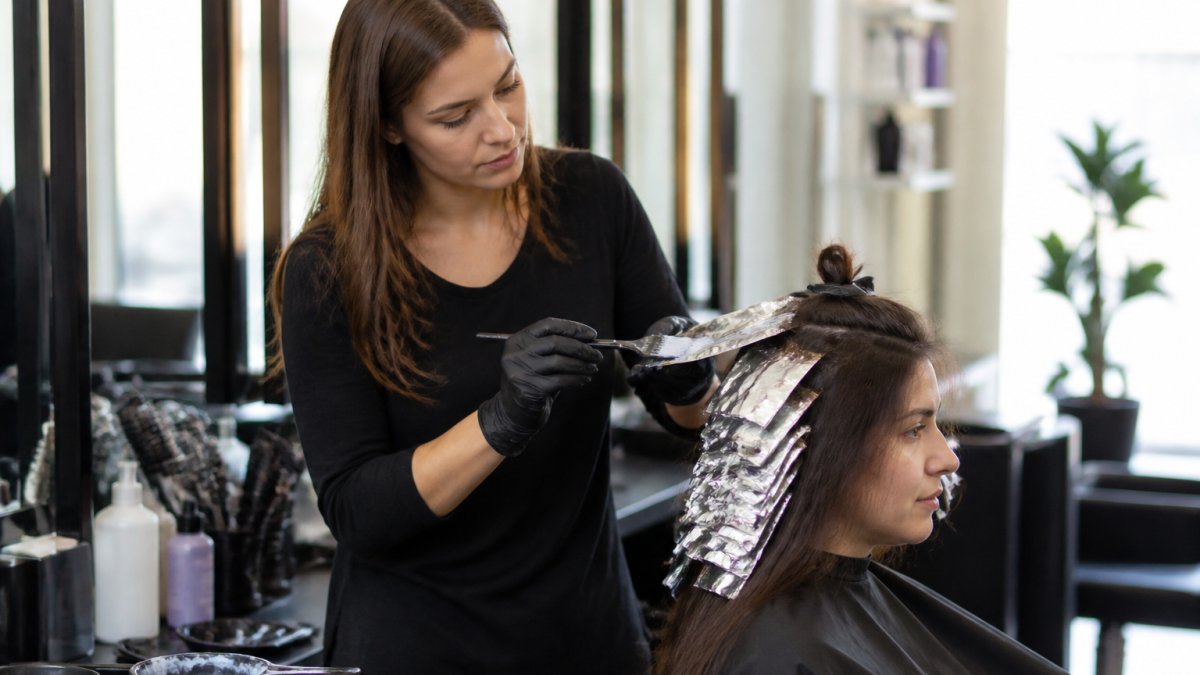
Color is where certifications start paying for themselves.
How to Verify Accreditation and Compare Credential Costs
Accreditation matters because it determines whether the credential will be recognized by employers, state boards, or clients.
A simple verification checklist:
- Confirm the issuing organization is a recognized training provider, association, or manufacturer
- Check whether the program includes a hands-on assessment, not just video modules
- Ask whether the hours count toward your state's continuing education requirement
- Request the renewal terms and any ongoing fees in writing
- Search for the credential name plus "scam" or "reviews" before paying
Compare costs past the sticker price. Cost-conscious stylists can also read tips for sourcing high quality wholesale salon supplies to find better prices.
One more check: ask a working stylist you respect whether they have heard of the credential.
The certification landscape rewards stylists who choose deliberately rather than collecting badges.
When your color and smoothing services depend on the products behind them, the formulation matters as much as the technique.
Frequently Asked Questions
What certifications do you need to be a hairstylist?
You need a state-issued cosmetology or hairstylist license to work legally, which requires completing a state-approved program and passing a written and practical exam. Beyond that, hair stylist certifications are voluntary. Cutting, coloring, extensions, and textured-hair credentials each signal a specific skill set to clients and salon owners, but none replace the license itself.
What is the difference between a cosmetology license and a hair stylist certification?
A cosmetology license is a legal requirement issued by your state board, and you cannot work or charge clients without it. A certification is a voluntary credential from a trade association, manufacturer, or training body that proves you completed a specific course or passed an assessment. Licenses cover the full scope of practice; certifications let you specialize and market expertise in one area, such as color or extensions.
Are there free cosmetology certifications worth pursuing?
Yes, though they usually come from product manufacturers rather than independent boards. Brands often provide free online course modules and certificates to stylists who use their color or treatment lines, and some professional associations offer member-only training at no extra cost. Whether a free credential carries weight depends on the issuer, so confirm recognition before relying on it.
How do you become a board certified hair colorist?
Board certification in hair coloring is offered by independent credentialing bodies. Confirm the current eligibility requirements, examination format and fees directly with the issuing board, since these change over time.
