
Table of Contents
- Pre-Dry Your Hair to Reduce Hair Blow Dry Time
- Choose the Best Microfiber Hair Towel for Drying
- Section Hair for Faster Blow Drying
- Apply Heat Protectant Spray Before Blow Drying
- Master Blow Dryer Settings and Attachments
- Maintain Your Blow Dryer for Consistent Performance
- Address Hair Type-Specific Drying Times
- Conclusion
Last Updated: August 24, 2026
Pre-Dry Your Hair to Reduce Hair Blow Dry Time
The fastest blow dry starts before you even pick up the tool. Air drying for 10-15 minutes before blow drying removes a significant portion of moisture, cutting your total styling time substantially. This pre-drying phase is where many people miss an easy opportunity to reduce hair blow dry time without any additional investment.
When hair is dripping wet, your blow dryer works overtime fighting excess water. By letting gravity and air circulation do some of the work first, you're reducing the thermal load on your strands. This approach also means less heat exposure overall, which protects the hair cuticle and reduces the risk of thermal damage.
Start by gently squeezing water from your hair with your hands, don't wring or twist. Then wrap your hair loosely in a microfiber towel or cotton t-shirt for 10-15 minutes while you get ready. The microfiber absorbs moisture faster than terry cloth, which is why it's worth the switch if you're currently using a standard bath towel (peer-reviewed research).
Using a wet brush during this phase is equally important. A wet brush or detangler allows you to work through tangles while hair is still damp but not dripping, preventing breakage that would otherwise occur if you tried to brush completely dry hair. This step takes two minutes and saves you time during the actual blow dry because you won't be fighting knots.
Choose the Best Microfiber Hair Towel for Drying
Microfiber towels absorb moisture significantly faster than traditional terry cloth because of their tightly woven synthetic fibers. A best microfiber hair towel for drying will pull water from your hair in half the time of a regular towel, which directly reduces the amount of blow drying you'll need to do afterward.
The difference comes down to surface area and fiber structure. Microfiber creates friction that lifts water away from the hair shaft, while terry cloth relies on absorbency alone. For anyone trying to reduce hair blow dry time, this single swap is one of the highest-impact changes you can make.
Proper towel technique matters as much as the towel itself. Instead of rubbing your hair vigorously, which causes frizz and breaks the hair cuticle, use a gentle squeezing motion. Wrap the towel around a section of hair and hold it there for 10-15 seconds, allowing the microfiber to absorb moisture without friction. Work section by section from roots to ends.
Never twist or wring your hair in a towel. This compresses the cuticle and creates the exact conditions that lead to frizz and breakage. The goal is moisture absorption without mechanical stress. A microfiber towel's gentleness makes this easier because you don't need to apply as much pressure to move water out of your hair.
Section Hair for Faster Blow Drying
Dividing your hair into 4-6 sections based on density is the single most efficient way to reduce hair blow dry time. When you work with manageable sections, you have better control, faster drying, and more even heat distribution.
Start by parting your hair down the middle from forehead to nape. Then create a second part from ear to ear across the crown. This gives you four quadrants. If you have thick or long hair, subdivide each quadrant into smaller sections. Use clips to keep unstyled sections out of the way while you work on one section at a time.
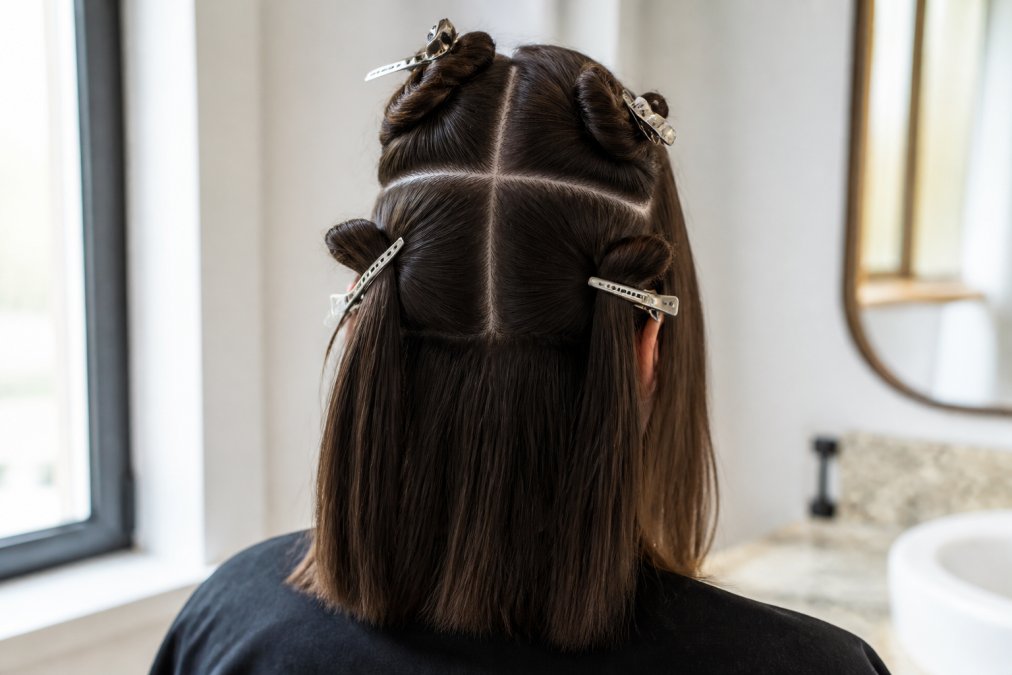
Working section by section means your blow dryer doesn't have to fight through all your hair at once. Each section dries faster because the airflow is concentrated. You're also less likely to miss spots or have to go back and re-dry areas. This methodical approach reduces overall drying time by preventing the inefficiency of random, all-over drying.
The density-based approach is key. Thicker sections need more time, so tackle those first when you have the most energy and focus. Finer sections dry quickly, so save those for last. This prevents over-drying delicate hair while ensuring thick sections get adequate heat and time.
Apply Heat Protectant Spray Before Blow Drying
A heat protectant spray creates a barrier between your hair and high temperatures, which reduces thermal damage and helps your hair retain moisture during drying. When your hair holds onto moisture better, it dries more efficiently, meaning less time with heat running through it.
Timing matters significantly. Apply the heat protectant spray to damp hair before you start sectioning, or immediately after. The spray works best on hair that still has some moisture in it. Spray each section lightly and let it dry for 30 seconds before applying heat. Over-saturating with product slows drying, so use a light hand.
How heat protectants improve moisture retention comes down to chemistry. These products coat the hair cuticle, reducing water evaporation. Less water loss means your hair stays in the optimal moisture range longer, which means faster drying times overall. It's a counterintuitive benefit: adding a lightweight product actually speeds up your blow dry.
Most heat protectants also contain ingredients that reduce frizz and smooth the cuticle. This means you'll spend less time fighting frizz during and after blow drying. The combination of faster drying plus smoother results makes heat protectant spray essential for anyone serious about reducing blow dry time.
Master Blow Dryer Settings and Attachments
Your blow dryer's settings and attachments have a direct impact on how fast and effectively you can reduce hair blow dry time. High heat and speed settings work best on damp hair, not soaking wet, and not nearly dry. This is where your pre-drying and sectioning work pays off.
Use the high heat and high speed setting on the first pass through each section. This phase removes the bulk of moisture quickly. Once hair reaches about 60-70% dry, switch to medium heat and medium speed to finish. The cool shot button is your final step, use it for the last 10-15 seconds on each section to seal the cuticle and lock in shine.
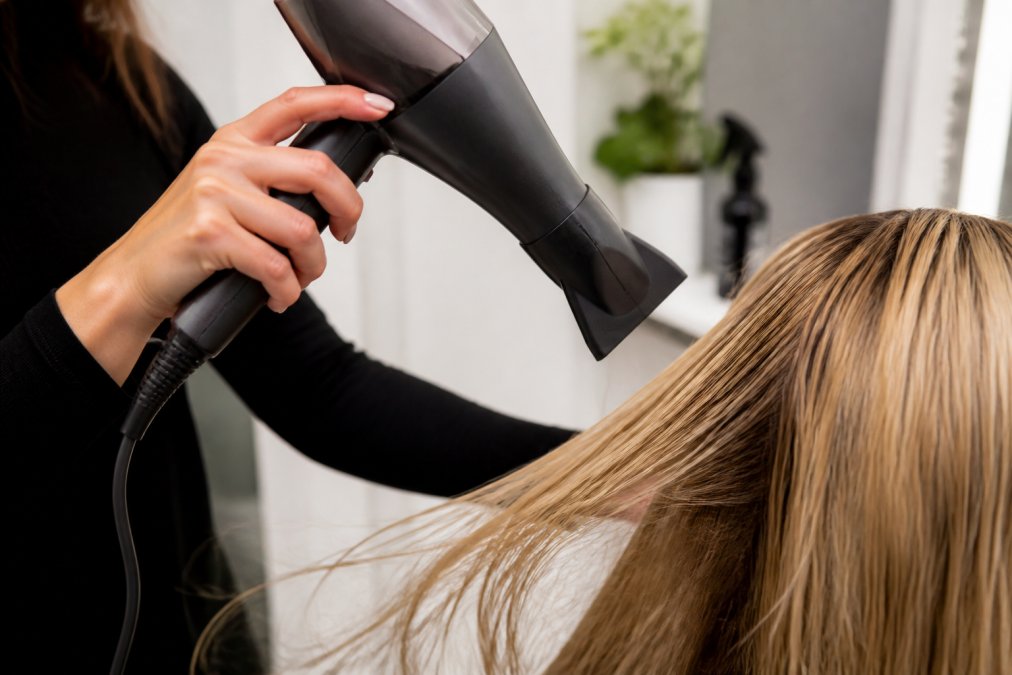
A concentrator nozzle is essential for reducing blow dry time. This attachment narrows the airflow, directing heat precisely where you need it rather than dispersing it everywhere. You'll dry individual sections faster and more evenly. A diffuser attachment, by contrast, is better for curly or textured hair where you want to enhance natural texture rather than smooth it down.
Wattage and ionic technology both matter. Higher wattage blow dryers generate more heat and airflow, which speeds drying. Ionic technology breaks water molecules into smaller particles, allowing them to evaporate faster from the hair shaft. A professional-grade blow dryer with both high wattage and ionic technology can cut your drying time by 20-30% compared to a basic model (peer-reviewed research).
The cool shot button isn't just for finishing, it's a productivity tool. A quick cool shot closes the hair cuticle, which stops frizz immediately. This means less time fussing with your hair after blow drying and better longevity for your style.
Maintain Your Blow Dryer for Consistent Performance
A clogged blow dryer filter is one of the most common reasons drying time increases over time. Dust and lint accumulate on the intake filter, reducing airflow. Less airflow means the motor has to work harder and heat doesn't distribute as effectively. Cleaning your filter every two weeks takes 30 seconds and directly impacts how fast your blow dryer performs.
Remove the filter from your blow dryer and use a soft brush or old toothbrush to gently remove lint and dust. Some filters can be rinsed under warm water, check your manual. A clean filter restores airflow to manufacturer specifications, which means your blow dryer performs as designed.
The nozzle attachment also collects product residue and dust. Every few weeks, wipe the inside of the nozzle with a damp cloth. If product buildup is heavy, soak the nozzle in warm water for a few minutes, then gently scrub. This prevents blockages that slow airflow and reduce heat efficiency.
How tool maintenance directly affects drying speed is straightforward: restricted airflow forces your motor to work harder and your hair to dry slower. A well-maintained blow dryer is 20-30% more efficient than a neglected one. Regular maintenance is the easiest way to ensure your blow dryer performs consistently, which means you can reliably reduce hair blow dry time every single time you style.
Address Hair Type-Specific Drying Times
Fine or thin hair requires a different approach than thick or textured hair. Fine hair dries quickly but is prone to heat damage, so use lower heat settings and shorter drying times. Your goal is to get hair to 80-90% dry and stop, over-drying fine hair creates frizz and breakage. Most fine hair reaches this point in 8-12 minutes with proper sectioning and a concentrator nozzle.
Thick or textured hair needs more heat and time, but sectioning becomes even more important. Divide thick hair into smaller sections, aim for 6-8 sections rather than 4. This ensures every strand gets adequate heat and drying time. Textured hair also benefits from a heat protectant spray because the cuticle structure is more prone to drying out. Expect 15-20 minutes of actual blow drying time for thick hair.
Curly hair is best dried with a diffuser attachment rather than a concentrator nozzle. The diffuser disperses airflow more gently, which preserves curl pattern and reduces frizz. Apply a lightweight leave-in conditioner before blow drying to help with moisture retention during the process. Curly hair typically takes 12-18 minutes depending on density and length, and rushing the process leads to frizz and undefined curls.
Understanding your specific hair type allows you to optimize your technique. A one-size-fits-all approach to blow drying doesn't work because different hair structures respond differently to heat and airflow. The time you invest in learning your hair's specific needs pays off in faster, more consistent results.
Reducing blow dry time doesn't require expensive tools or complicated techniques, it requires understanding the fundamentals and executing them consistently. At Kerarganic Cosmetics, LLC, we recommend starting with the pre-drying phase and a microfiber towel, then adding sectioning and a heat protectant spray. These four steps alone can cut your blow dry time by 30-40%.
The remaining gains come from using the right blow dryer settings, maintaining your tools, and tailoring your approach to your hair type. Each step builds on the previous one. Skip the foundation and you'll spend more time styling. Master the basics and you'll see immediate results.
Your hair health improves when you spend less time under heat. The combination of proper technique, quality tools, and consistent maintenance creates an environment where your hair dries faster and healthier. That's the real win, not just saving time, but protecting the strength and vibrancy of your hair in the process. The American Academy of Dermatology emphasizes that heat damage is cumulative, making efficient drying techniques essential for long-term hair health.
When you're ready to protect your hair during styling, Kerarganic Cosmetics, LLC offers formaldehyde-free keratin treatments and heat-protective serums designed to work alongside these techniques. Our products rebuild strength in over-processed hair and extend the results of professional treatments, ensuring your styling investment pays off with healthier, more manageable hair.
| Hair Type | Optimal Drying Time | Best Attachment | Heat Setting |
|---|---|---|---|
| Fine/Thin | 8-12 minutes | Concentrator | Low-Medium |
| Thick/Textured | 15-20 minutes | Concentrator | Medium-High |
| Curly | 12-18 minutes | Diffuser | Medium |
| Straight | 10-15 minutes | Concentrator | High |
Frequently Asked Questions
Does towel drying hair reduce blow dry time?
Yes. Using a microfiber towel to remove excess moisture before blow drying significantly cuts total drying time. Microfiber absorbs water faster than terry cloth, removing 30-40% more moisture in the same time. The less water your blow dryer needs to evaporate, the faster you finish styling. Avoid aggressive rubbing; instead, gently squeeze sections of hair wrapped in the microfiber towel to prevent breakage and frizz.
What is the best way to prep hair for a faster blowout?
Start with a microfiber towel to remove excess water, then apply a heat protectant spray to damp hair. Section your hair into 4-6 manageable parts using clips. This prep work reduces overall drying time by 30-40% and protects your hair cuticle from thermal damage. For over-processed or frizzy hair, a keratin-infused heat protectant also improves moisture retention during the blow dry process, so your hair stays smoother and healthier.
How to make hair less frizzy when blow drying?
Apply heat protectant spray before blow drying to seal the hair cuticle and reduce moisture loss. Use a microfiber towel instead of regular towels to minimize friction and frizz during pre-drying. Blow dry in sections from root to tip to smooth the cuticle layer. Finish with the cool shot button on your dryer to lock in shine and seal moisture. For best results, use a concentrator nozzle attachment to direct airflow smoothly through each section.
What are common blow drying mistakes that slow you down?
The biggest mistake is skipping pre-drying and jumping straight to the blow dryer, this doubles your time. Avoid using regular terry cloth towels, which absorb less and cause frizz. Don't skip sectioning; trying to dry all your hair at once wastes time and creates uneven results. Never apply heat protectant to soaking wet hair; apply it to damp hair for maximum effectiveness. Finally, using a low-wattage dryer or neglecting to clean the filter reduces airflow and slows drying significantly.
This article was written using GrandRanker