
Table of Contents
- Why Organic Hair Smoothing Products Are Worth the Switch
- Top Organic Hair Smoothing Products at a Glance
- 1. Kerarganic Organic Keratin System Step 2: Best Overall
- 2. Kerarganic Premium Organic Keratin Treatment: Best for Long-Lasting Results
- 3. Kerarganic OneStep Hair Smoothing and Hair Botox Bundle: Best for Blonde and Color-Treated Hair
- 4. Kerarganic Fiberplasty 3-Step Bundle: Best for Over-Processed Hair
- 5. Kerarganic Ultra Gold Quaternized Keratin System: Best Budget Professional Option
- 6. Kerarganic DIY Organic Keratin Treatment Set: Best for At-Home Beginners
- How to Choose the Right Formula for Your Hair Type
- Maintaining Results After Treatment
- Frequently Asked Questions
Last Updated: September 10, 2026
Why Organic Hair Smoothing Products Are Worth the Switch
Many "keratin" treatments on salon shelves contain formaldehyde or a derivative like formalin, the fact that drives the entire case for organic hair smoothing. This guide from Kerarganic Cosmetics, LLC breaks down organic hair smoothing products and which fits your hair type.
Formaldehyde-free hair smoothing treatment matters because the conventional salon version works by releasing formaldehyde gas when heated with a flat iron (the FDA). The FDA warning on formaldehyde in hair smoothing products documents the health concerns, including respiratory irritation and allergic reactions. Organic formulas swap that chemistry for plant-based proteins, amino acids, and natural oils that smooth the hair cuticle without the fumes.
What Makes a Smoothing Product Truly Organic
A truly organic smoothing product uses plant-derived ingredients, avoids formaldehyde and its derivatives, and skips harsh sulfates and parabens. Look for hydrolyzed keratin, argan oil, shea butter, and coconut oil near the top of the ingredient list, and treat "organic" as a claim to verify.
Top Organic Hair Smoothing Products at a Glance
Six options cover every hair type and budget, from a single-step treatment to full salon bundles.
Feature Comparison Table
| Product | Price | Best For | Key Feature |
|---|---|---|---|
| Organic Keratin System Step 2 | $55.10 | Most users | 24kt gold nanoparticles |
| Premium Organic Keratin Treatment | $158.60 | Long-lasting results | Up to 5 months smooth |
| OneStep Smoothing + Botox Bundle | $391.90 | Blonde, color-treated | Tones brassiness |
| Fiberplasty 3-Step Bundle | $274.20 | Over-processed hair | Cationic restructuring |
| Ultra Gold Quaternized System | $46.20 | Budget professional | Quaternized keratin |
| DIY Organic Keratin Set | $45.50 | At-home beginners | One-application kit |
1. Kerarganic Organic Keratin System Step 2: Best Overall
The best overall organic smoothing treatment is the Organic Keratin System Step 2 at $55.10, salon-grade smoothing without the salon markup.


It's the only product of its kind with 24kt gold nanoparticles to intensify brilliance, paired with argan oil, hydrolyzed keratin, silk amino acids, shea butter, and coconut oil. The absence of formaldehyde and its derivatives means pregnant and breastfeeding women and young girls can use it.
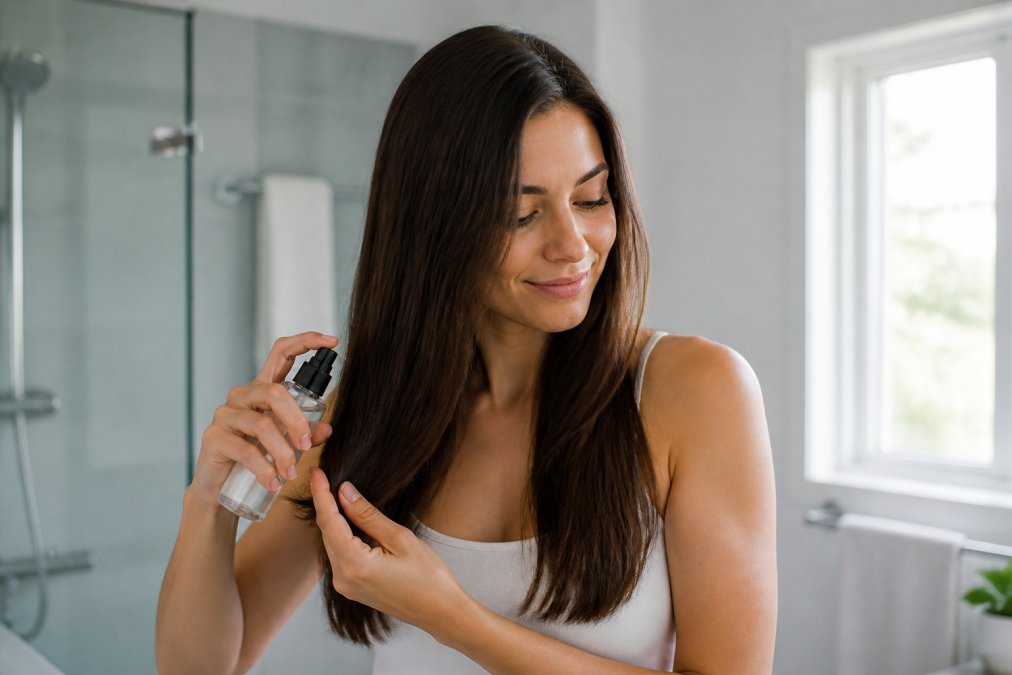
Where it falls short: It's a single-step treatment, so you'll want a separate clarifying shampoo and post-treatment mask for the best results. The 400°F flat-iron step is non-negotiable, and that's a lot of heat for fine hair.
Verdict: Best for most people who want one reliable, formaldehyde-free product.
2. Kerarganic Premium Organic Keratin Treatment: Best for Long-Lasting Results
If longevity tops your list, the Premium Organic Keratin Treatment delivers up to 5 months of smooth, manageable hair for $158.60.
The formula leans on glyoxyloyl keratin amino acids and hydrolyzed keratin to reduce frizz, while argan oil, silk amino acids, and hydrolyzed collagen handle moisture and shine. It suits all hair types, and you can shampoo immediately after application.
The tradeoff: At $158.60, it's a real investment. The one drawback is that the results depend heavily on your flat-iron technique, so sloppy application shortens the lifespan fast.
3. Kerarganic OneStep Hair Smoothing and Hair Botox Bundle: Best for Blonde and Color-Treated Hair
Blonde and color-treated hair needs a different approach, and the OneStep bundle at $391.90 pairs the standard OneStep Treatment Solution with a Blonde Treatment Solution for smoothing and brassiness correction.

Violet pigments in the blonde formula neutralize yellow and orange tones while amino acids and natural oils repair damage; the standard solution brings caviar extract, cupuaçu butter, and mango seed oil for deep hydration. Together they eliminate frizz, strengthen strands, and improve shine without stripping color.
Where it falls short: The price reflects two full 1000ml solutions, which is more than a home user needs. This one makes the most sense for stylists or anyone maintaining a large volume of blonde hair.
4. Kerarganic Fiberplasty 3-Step Bundle: Best for Over-Processed Hair
Over-processed hair doesn't need more smoothing, it needs rebuilding. The Fiberplasty 3-Step Bundle at $274.20 treats damaged hair as a repair job first, a straightening job second.
Three stages: a micellar prep shampoo removes buildup without stripping moisture; a cationic straightening system restructures hair from the inside out; an endothermic sealer uses heat to close the cuticle and lock in ceramides and botanical oils. The result is frizz control and moisture retention. satin headwraps.
The honest limitation: This is the slowest system here, and it's designed for salon use. Home users can manage it, but expect a longer session than a single-step treatment.
5. Kerarganic Ultra Gold Quaternized Keratin System: Best Budget Professional Option
The Ultra Gold Quaternized Keratin System is the budget pick for licensed professionals at $46.20, using quaternized keratin protein particles whose positive charge binds to damaged, negatively charged hair.
Colloidal gold, bamboo extract, and coconut oil round out the formula, penetrating the shaft to repair outer and inner layers. It smooths curls, eliminates frizz, and adds shine.
Where it falls short: It contains no formaldehyde derivatives. The tradeoff for the low price is a narrower ingredient story.
6. Kerarganic DIY Organic Keratin Treatment Set: Best for At-Home Beginners
First-time users should start with the DIY Organic Keratin Treatment Set. The 2oz kit runs $45.50 and covers one application for shoulder-length hair; the 4oz version at $75.60 handles longer or thicker hair. Both include a pre-treatment shampoo, the keratin treatment, and a post-treatment mask with argan oil.
The appeal is simplicity: everything arrives in one box, the steps are numbered, and there's no guesswork. It's formaldehyde-free, so you skip the fumes that make DIY keratin sessions unpleasant.
The catch: One application per kit means you'll reorder for maintenance. If you plan to treat regularly, buying the larger Step 2 bottle is more economical over time.
How to Choose the Right Formula for Your Hair Type
What determines whether a smoothing treatment works is the interaction between three variables: your porosity, your color history, and the specific protein or polymer doing the smoothing.
Start With Porosity, Not Curl Pattern
Curl pattern tells you almost nothing about how a smoothing treatment will behave. Porosity, how readily your cuticle absorbs and releases moisture, tells you almost everything.
- Low porosity (hair floats, product sits on top): the cuticle is tightly sealed, so heavy protein formulas read as greasy. Clarify first, then choose a lighter amino-acid-based formula.
- Medium porosity (hair gets wet easily, holds a style): the widest range of formulas works here, and a single-step keratin system performs best.
- High porosity (hair soaks up water instantly, feels rough or straw-like): the cuticle is lifted and porous, so it needs a restructuring system, cationic proteins, ceramides, and botanical butters, rather than a surface coating.
A quick at-home test: drop a clean strand in room-temperature water. Floats for several minutes means low porosity; sinks within a minute or two means high; in between is medium.
Match the Chemistry to the Condition
Once you know your porosity, look at what the formula actually uses to smooth:
- Hydrolyzed keratin and silk amino acids, small enough to penetrate the cortex and fill gaps in damaged protein. Best for medium-porosity, mildly stressed hair.
- Quaternized keratin, positively charged proteins that bind to negatively charged damaged hair. Best for high-porosity or chemically lightened hair.
- Glyoxyloyl keratin amino acids, a formaldehyde-free smoothing chemistry that cross-links with the hair's own proteins under heat. Best for the longest result window.
- Cationic restructuring systems, rebuild internal bonds rather than coat the outside. Best for over-processed hair that snaps or feels gummy when wet.
- Plant butters and oils (argan, shea, cupuaçu, coconut), moisture and slip, not smoothing agents. They matter for feel and shine, not structural work.
Decode the Label Before You Buy
"Organic" is not a regulated cosmetic claim the way most shoppers assume. A bottle can say "organic keratin" and still be mostly water, silicone, and fragrance. How to spot the difference:
- Read the first five ingredients. Ingredients are listed in descending order of concentration. If water is first, that's normal. If the next four are silicones (anything ending in -cone, -siloxane, or -conol), you're buying a coating, not a treatment.
- Look for the smoothing agent by name. Hydrolyzed keratin, quaternized keratin, glyoxyloyl keratin amino acids, or a named plant protein. If none appear before the preservatives, the "keratin" on the front is marketing.
- Check for formaldehyde releasers. Methylene glycol, formalin, methanal, and methylene oxide are all formaldehyde by another name. A genuinely formaldehyde-free formula won't list any of them.
- Treat "organic" as a claim, not a certification. Unless you see a USDA Organic seal, the word is unregulated on a cosmetic label. The ingredient list is the only thing you can verify.
- Watch for greenwashing tells. Leaf graphics, "botanical," "plant-powered," and "salon-grade" are design choices, not chemistry. The INCI list is the chemistry.
A Simple Decision Path
- Fine, healthy, medium porosity → single-step hydrolyzed keratin system.
- Color-treated or blonde → a dedicated toning-plus-smoothing formula so you don't strip or yellow the color.
- Over-processed, snapping, gummy when wet → a multi-step cationic restructuring system, not a single-step smoother.
- High porosity, dry, rough → quaternized keratin plus ceramides and butters.
- Low porosity, product sits on top → clarify first, then a light amino-acid formula.
Compatibility With Color-Treated Hair
A formaldehyde-free smoothing treatment does not strip color the way a traditional relaxer can, because it works on surface and cortex proteins rather than lifting the cuticle with high-pH chemistry. Two rules matter:
- Don't treat and color in the same week. Space them at least 14 days apart, and always color first, smooth second.
- Choose a formula built for color. Violet-pigmented or color-safe smoothing solutions neutralize brassiness while they smooth, so you get two jobs done in one session instead of layering services that stress the strand.
If your hair is double-processed (bleached and then toned), treat it as high porosity and lean toward a restructuring system.
Maintaining Results After Treatment
Aftercare is where most smoothing treatments succeed or fail. The goal isn't just to stretch your results, it's to come out of each cycle with healthier hair than you started with.
What Actually Makes Results Fade
Results erode through four mechanisms, each with a countermeasure:
- Surfactant stripping. Sulfates and other harsh surfactants lift the cuticle and wash out the protein layer that took an hour to bond. This is the single biggest factor in how long a treatment lasts.
- Mechanical abrasion. Rough towel-drying, brushing wet hair, and tight elastics break the cuticle edges and create the frizz you just paid to remove.
- Mineral and chlorine buildup. Hard water minerals and pool chlorine sit on the cuticle and block moisture, making hair feel rough even when the treatment is intact.
- Heat without protection. Repeated flat-ironing without a heat protectant degrades the protein bonds faster than the treatment can hold them.
The Maintenance Routine That Protects the Cuticle
- Shampoo with a sulfate-free, paraben-free formula. A dermatologist guidance on sulfate-free hair care explains how harsh surfactants lift the cuticle and accelerate moisture loss. Wash no more than two to three times per week.
- Use a heat protectant before every hot tool. Not just on treatment day, every time. Thermal protection is what keeps the bonds you paid for from breaking down.
- Add a weekly post-treatment mask. Replenishing amino acids and oils between washes keeps the cuticle sealed and the surface smooth.
- Rinse chlorine and saltwater immediately. If you swim, wet your hair with fresh water first so it absorbs less pool water, then rinse thoroughly after.
- Detangle damp, never dry. Use a wide-tooth comb on damp hair with conditioner in it. Dry brushing is the fastest way to rough up a smooth cuticle.
- Sleep on silk or satin. Cotton pillowcases create friction that frays the cuticle overnight, night after night.
The Long-Term View: What Repeated Treatments Do to Your Hair
The more useful question is what happens to your cuticle over months of treatment cycles.
A formaldehyde-free smoothing treatment deposits protein and forms cross-links on and within the hair. Done correctly and spaced properly, that's a net positive: the cuticle lays flatter, moisture retention improves, and the strand resists friction and humidity better. Done too often or on compromised hair, the same process can over-fill the cortex with protein, showing up as stiffness, brittleness, and hair that snaps instead of stretching.
A common pattern observed:
- Months 1-2: hair looks and feels smoother, frizz is controlled, styling time drops.
- Months 3-5: results fade gradually; hair returns toward its natural texture but often stays softer than before.
- Repeat treatments stacked too close together: protein overload risk rises, especially on fine or low-porosity hair.
The takeaway is spacing. It is recommended to wait the full result window, typically two to five months, before re-treating, and alternating smoothing with a moisturizing or bond-building service rather than stacking smoothing on smoothing.
Signs You Should Pause, Not Re-Treat
- Hair feels stiff or straw-like even when wet
- Strands snap instead of stretching when you pull a shed hair
- The ends look rough while the roots look smooth
- Your hair takes longer to dry than it used to
If any of those show up, skip the next smoothing appointment and focus on moisture and bond repair first. Smoothing a compromised cuticle makes the damage worse, not better.
When to Book the Next Treatment
Use your own hair as the gauge, not the calendar. Re-treat when frizz returns across the mid-lengths and ends, not just the roots, and when styling time creeps back up. If unsure, wait two more weeks, a slightly overdue treatment is far less damaging than one applied to hair that hasn't recovered.
Frequently Asked Questions
What is the healthiest hair smoothing treatment?
Formaldehyde-free keratin treatments are the healthiest option. They use ingredients like glyoxyloyl carbocysteine and hydrolyzed keratin to smooth the hair cuticle without releasing toxic fumes. Look for products labeled formaldehyde-free, paraben-free, and sulfate-free. Kerarganic's Organic Keratin System uses natural oils like argan oil and shea butter alongside keratin proteins to smooth and repair hair without harsh chemicals.
Are organic hair smoothing products effective for thick, curly hair?
Yes. Organic smoothing treatments work on all hair textures, including thick and curly hair. They relax the curl pattern and reduce frizz without the harsh chemicals found in traditional straightening treatments. Kerarganic's Fiberplasty 3-Step Bundle is designed for over-processed and chemically treated hair, while the Ultra Gold Quaternized Keratin System smooths curls and eliminates frizz using keratin proteins and natural oils.
How can I fix brittle hair at home after a smoothing treatment?
Use a sulfate-free shampoo and a deep conditioning mask weekly to restore moisture. Avoid heat styling when possible, and always apply a heat protectant before using flat irons or blow dryers. Kerarganic's DIY Organic Keratin Treatment Set includes a pre-treatment shampoo, keratin treatment, and argan oil mask designed specifically for at-home repair. Trim split ends every six to eight weeks and sleep on a silk pillowcase to reduce friction.
What are some non-toxic hair smoothing treatments?
Non-toxic smoothing treatments avoid formaldehyde, formaldehyde derivatives, and harsh sulfates. Look for formulas with plant-based ingredients like argan oil, shea butter, coconut oil, and hydrolyzed keratin. Kerarganic's entire organic keratin line is formaldehyde-free and cruelty-free, with products like the Organic Keratin System Step 2 and the Premium Organic Keratin Treatment delivering salon-quality results without toxic chemicals. These are safe for color-treated hair and sensitive scalps.
What is the best product for smoothing hair naturally?
The best natural smoothing products combine keratin proteins with plant-based oils to smooth the hair cuticle and lock in moisture. Kerarganic's Organic Keratin System Step 2 features 24kt gold nanoparticles, argan oil, shea butter, and hydrolyzed keratin. It reduces frizz, adds shine, and strengthens hair without formaldehyde. For a complete routine, pair it with a sulfate-free shampoo and a weekly deep conditioning mask to maintain results between treatments.