
Table of Contents
- Signs of Chemical Hair Damage: Beyond Split Ends
- Why Bleached Hair Snaps: The Bond Breakdown
- The Repair Process: How to Repair Hair Breakage From Bleaching
- A Deep Conditioning Routine for Bleached Hair That Works
- The Best Products for Bleach Damaged Hair: A Bond-Building Stack
- Daily Habits That Prevent Further Breakage
- Patience and Nutrition: What Shampoo Can't Fix
- Conclusion: Your Hair Integrity Roadmap
- Frequently Asked Questions
Last Updated: September 9, 2026
Bleached hair that snaps, stretches like elastic, or feels like straw has moved beyond simple dryness into structural damage. The hair shaft has lost the protein bonds that give it strength, and no amount of surface conditioner will fix that. Repairing hair breakage requires rebuilding bonds from the inside out.
Most bleach damage is reversible with a consistent routine built on protein, moisture balance, and patience. Most guides recommend piling on more products when the real fix is stopping the damage and giving your hair the specific building blocks it lost.
Signs of Chemical Hair Damage: Beyond Split Ends
Chemical damage from bleaching shows up long before you see split ends. The earliest warning sign is a change in how your hair feels when wet. Healthy hair has a firm, springy resistance; over-processed hair stretches and snaps when you pull it gently. This loss of elasticity means the protein structure inside the hair shaft is compromised.
Other signs include rough or brittle hair when dry, a dull appearance that does not respond to shine serums, and tangling despite detangling products. Increased porosity means the cuticle layers have lifted and cannot hold moisture. Hair snapping during brushing, especially mid-strand rather than at the end, is another clear indicator that the damage runs deeper than the surface.
Why Bleached Hair Snaps: The Bond Breakdown
Bleaching works by opening the cuticle and dissolving melanin, the pigment inside the hair shaft (peer-reviewed research). To lift color, the bleach must break through the protective outer layer, and in doing so, it also disrupts the disulfide and hydrogen bonds that give hair its strength and shape. These bonds hold keratin proteins together, and when they break, the hair loses its structural integrity.
Think of your hair as a rope made of thousands of tiny fibers. Bleaching frays those fibers, and once enough snap, the whole strand gives way. Protein treatments supply amino acids and keratin that help rebuild broken bonds; moisture alone cannot repair a broken bond. You need both protein to rebuild structure and hydration to restore flexibility.
The Repair Process: How to Repair Hair Breakage From Bleaching
Repairing bleach-damaged hair follows a predictable sequence; skipping steps or rushing the timeline is the most common reason home treatments fail. The full process takes several weeks, but each stage builds on the last.
Step 1: Stop the Bleach and Assess the Damage
The first step is non-negotiable: stop all chemical processing immediately. No touch-ups, no bleach baths, no at-home color corrections. Every additional chemical treatment breaks more bonds than your repair routine can rebuild in the same period.
Assess the damage honestly. Take a small strand of wet hair and gently stretch it. If it snaps without stretching, the protein structure is severely compromised. If it stretches and returns to normal, the damage is moderate. If it stretches and does not return, the bonds are broken and need immediate protein intervention.
Step 2: The Emergency Protocol for Active Breakage
If your hair is snapping off right now, switch to an emergency stabilization protocol. The goal is to stop the breakage and create a protective environment for the hair that remains.
- Stop all manipulation: Do not brush, comb, or even touch your hair more than necessary. When you must detangle, do it only in the shower with a generous amount of slippery conditioner and a wide-tooth comb, working from the ends up.
- Skip the shampoo: For the first two weeks, do not use shampoo at all. Instead, co-wash with a silicone-free conditioner to gently cleanse the scalp and hair without stripping the fragile fiber. Focus the conditioner on the mid-lengths and ends.
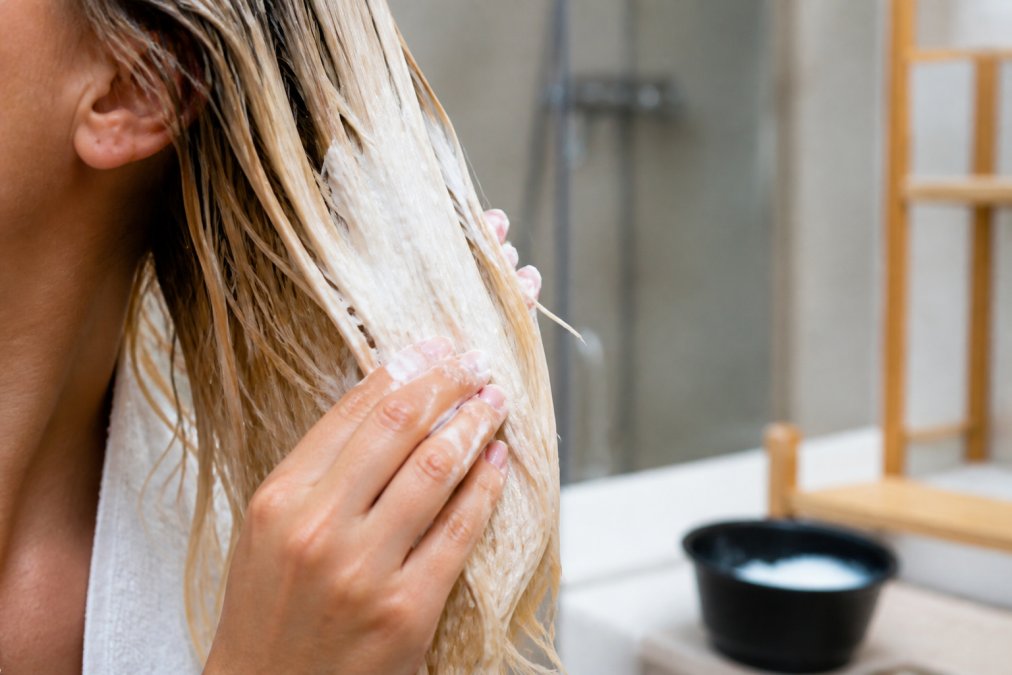
- Apply a bond-building treatment: Use a concentrated bond-building product like the KERAR-PLEX STEP 2 - GEL BOND & HAIR FIBER RECONSTRUCTOR. Apply it to damp, towel-blotted hair in generous sections. Leave it on for the full recommended time, which is often 10-15 minutes, to allow the active ingredients to penetrate and form new bonds.
- Seal with a leave-in: After rinsing the treatment, apply a leave-in conditioner or a lightweight oil to seal the cuticle and reduce friction. This is your hair's only line of defense against the outside world.
Step 3: Switch to a Protein and Bond Rebuilding Routine
With the immediate breakage under control, transition to a maintenance routine. Your hair needs protein to rebuild bonds and moisture to restore flexibility. A common mistake is using only protein treatments, which leaves hair stiff and brittle, or only deep conditioners, which plump the hair temporarily but do nothing to restore its structure.

A bond-building routine should include a gentle, sulfate-free shampoo to cleanse without stripping the hair fiber, a protein-rich reconstructor to fill broken bonds, and a hydrating treatment to lock in moisture balance. The KERAR-PLEX system from Kerarganic Cosmetics, LLC is designed for this sequence. The KERAR-PLEX STEP 1 - PRIMING SHAMPOO cleanses without harming the hair fiber structure, while the KERAR-PLEX STEP 2 - GEL BOND & HAIR FIBER RECONSTRUCTOR delivers the protein and bond-rebuilding ingredients that repair hair from bleach damage.

Step 4: The Weekly Rebuilding Schedule
Consistency separates a successful recovery from a cycle of breakage. Here is a sample weekly schedule:
- Monday: Gentle cleanse with a sulfate-free shampoo. Apply a lightweight leave-in conditioner.
- Wednesday: Co-wash or rinse hair with water. Apply a small amount of a bond-rebuilding leave-in to the mid-lengths and ends.
- Friday: Deep cleanse with a sulfate-free shampoo. Apply the KERAR-PLEX STEP 2 reconstructor for 10 minutes. Rinse and follow with the KERAR-PLEX STEP 3 - OMEGA HYDRATOR & VOLUME BUILDER HAIR TREATMENT for 20-30 minutes with a shower cap.
- Sunday: Apply a small amount of a nourishing hair oil to the ends to seal in moisture and prevent split ends.
Adjust the frequency of the protein treatment based on your elasticity test. If your hair feels mushy or stretches too much, increase protein. If it feels stiff and brittle, increase moisture.
A Deep Conditioning Routine for Bleached Hair That Works
Deep conditioning rebuilds the moisture balance that bleach strips away. The goal is to penetrate the hair shaft with ingredients that restore flexibility and shine. Look for treatments containing hyaluronic acid, amino acids, and natural oils that mimic the hair's own lipid barrier.
For severely damaged hair, apply a deep conditioning mask once a week and leave it on for 20 to 30 minutes with heat. A shower cap traps body heat and helps the treatment penetrate the lifted cuticle. After rinsing, follow with a leave-in conditioner to seal the cuticle and protect against friction throughout the day. The KERAR-PLEX STEP 3 - OMEGA HYDRATOR & VOLUME BUILDER HAIR TREATMENT is formulated to replenish and store moisture in the hair shaft, and the KERAR-PLEX STEP 4 - CUTICLE SEALING COMPLEX locks in those nutrients while repairing damaged cuticles.

The Best Products for Bleach Damaged Hair: A Bond-Building Stack
When your hair is actively breaking, you need a coordinated system rather than random products. The best products for bleach damaged hair work together to cleanse, rebuild, hydrate, and seal. Here is how the four-step KERAR-PLEX system addresses each stage:
| Step | Product | Primary Function | Key Benefit |
|---|---|---|---|
| Step 1 | Priming Shampoo | Gentle cleansing | Sulfate-free, preserves hair fiber |
| Step 2 | Gel Bond & Fiber Reconstructor | Protein and bond repair | Rebuilds broken bonds and damaged fibers |
| Step 3 | Omega Hydrator & Volume Builder | Deep moisture | Replenishes and stores hydration |
| Step 4 | Cuticle Sealing Complex | Leave-in protection | Seals cuticle, prevents future damage |
This stack covers the full repair cycle, and each product is formulated to work with the others. A single product cannot rebuild hair that has lost its internal structure, but a coordinated routine can.
Daily Habits That Prevent Further Breakage
Your repair routine only works if your daily habits stop causing new damage. Heat styling is the biggest offender: flat irons and curling wands heat the water inside the hair shaft until it expands and bursts the weakened protein structure (the American Academy of Dermatology). Air dry whenever possible; if you must use heat, apply a heat protectant and keep the temperature below 350 degrees Fahrenheit.
Switch to a microfiber towel to dry your hair instead of a cotton one. Cotton fibers create friction that lifts the already-damaged cuticle and causes hair snapping. A microfiber towel absorbs water without roughing up the hair surface. Sleep on a silk pillowcase to reduce overnight friction, and always detangle with a wide-tooth comb starting from the ends, working upward in small sections. Never brush wet hair with a paddle brush.
Patience and Nutrition: What Shampoo Can't Fix
No topical product can replace hair that has already broken off. The hair you see is dead protein, and once the strand snaps, it is gone. What you can do is strengthen the new hair growing from the scalp, which means your internal health matters as much as your external routine.
Hair is made of keratin, and keratin is built from protein. A diet low in protein, iron, and essential fatty acids will produce weak hair regardless of what you apply to the outside. Many people see faster results from adding a daily protein source and a supplement containing biotin and zinc than from buying more expensive conditioners. Hair grows slowly, roughly half an inch per month, so visible improvement in the new growth takes time (medlineplus.gov). The damaged ends may need to be trimmed gradually over several months to prevent split ends from traveling up the hair shaft.
The Waiting Game: Managing Expectations and Emotions
The psychological toll of severe hair breakage is often underestimated. Seeing clumps of hair in your brush or feeling the uneven texture can be distressing. It is normal to feel frustrated, anxious, or even embarrassed. Acknowledging this emotional component is the first step toward recovery.
Here is a realistic timeline to help you manage expectations:
- Weeks 1-2: You will see a reduction in active breakage as the emergency protocol takes hold. The hair will feel less fragile, but it will still look damaged.
- Months 1-3: New growth will begin to appear at the scalp. This hair will be healthier if you have maintained your protein and moisture balance. The existing damaged hair will still be fragile, so continue protective styling.
- Months 4-6: You will have a noticeable band of new, healthy growth. The damaged ends will be more obvious, and you can begin trimming them gradually.
- Months 6-12: Depending on your hair's growth rate and the severity of the damage, you may have grown out a significant portion of the bleached hair. This is when you can start making decisions about your long-term style.
The Transition Strategy: Growing Out vs. Cutting Off
One of the most important decisions you will face is whether to gradually grow out the damaged hair or to cut it all off and start fresh. There is no right answer, but there is a clear framework to help you decide.
Choose the gradual transition if:
- Your hair is not breaking off at the root.
- You are willing to commit to a strict low-manipulation routine for 6-12 months.
- You are comfortable with a two-texture look (healthy new growth vs. damaged ends) and are willing to use styling techniques like braids, buns, or headbands to blend them.
- You want to preserve your length.
Choose the 'big chop' if:
- The damage is so severe that your hair is breaking off at the root or in large chunks.
- You find the maintenance routine too emotionally or financially draining.
- You are ready for a fresh start and are willing to embrace a very short style.
- The damaged hair is beyond repair and is causing constant tangling and matting.
If you choose the gradual route, protect the new growth while managing the old. Keep the bleached ends healthy with regular trims (every 8-12 weeks), use low-manipulation hairstyles, and avoid heat or chemical treatments on the damaged portion. Consider 'search and destroy' trimming, where you carefully snip off individual split ends at home to extend the life of your length between salon visits.
Conclusion: Your Hair Integrity Roadmap
Repairing bleach damage is not a single treatment but a sustained process of rebuilding hair integrity. Stop the chemicals, introduce a protein and bond-rebuilding routine, restore moisture balance, protect the hair from heat and friction, and support new growth with proper nutrition. The results take weeks to appear, but the hair that grows in will be stronger than what you had before.
Our formaldehyde-free, keratin-infused formulas rebuild strength for over-processed hair without harsh salts or sulfates, and they protect the results of professional salon treatments between visits. Get started with Kerarganic Cosmetics, LLC and give your hair the structural repair it needs to grow long, strong, and healthy again.
Frequently Asked Questions
Is it possible to heal bleach damaged hair?
Yes, but with one caveat: the hair fiber that has snapped cannot be reattached. What you can repair is the remaining hair shaft. Products like bond builders and protein treatments work on the hair's internal structure to restore elasticity and reduce further breakage. The goal is to strengthen the hair from the root to the ends so it stops snapping. You will likely need a trim to remove the most damaged ends, but the rest of your hair can recover with consistent care.
How long does it take for bleached hair to recover?
Hair grows roughly half an inch per month, so full recovery of a severely over-processed head can take 6 to 12 months. However, you should see reduced hair breakage and improved texture within 2 to 4 weeks of starting a protein and moisture routine. The key is consistency. Using a bond reconstructor like KERAR-PLEX Step 2 once a week and a deep conditioning routine for bleached hair twice a week will rebuild strength and elasticity in the existing hair shaft while new, healthy hair grows in.
How do I stop bleached hair from feeling like straw?
Straw-like texture means the cuticle is lifted and the hair is dehydrated. You need to restore moisture balance with a two-part approach. First, use a protein treatment to rebuild the hair fiber and give it structure. Second, follow with a heavy hydrating mask to lock in moisture. Leave-in conditioners with amino acids and hyaluronic acid are also critical after every wash. Finally, swap your cotton towel for a microfiber towel and sleep on a silk pillowcase to reduce friction and prevent the cuticle from catching and tearing.
What are the best products for bleach damaged hair?
Look for a system that addresses both protein loss and moisture deficit. A complete stack includes a sulfate-free priming shampoo, a bond-building reconstructor, and a hydrating leave-in conditioner. For example, the KERAR-PLEX system is designed for this exact scenario: Step 1 Cleansing Shampoo preps the hair, Step 2 Gel Bond & Fiber Reconstructor rebuilds broken bonds, and Step 4 Cuticle Sealing Complex protects the hair from future damage. This approach can be beneficial compared to using a single product from different brands that may not work in synergy.
This guide was published by Kerarganic Cosmetics, LLC, a provider of professional-quality, keratin-infused hair care solutions. For more information on repairing chemically damaged hair, consult resources from the American Academy of Dermatology on hair care and the National Institutes of Health on hair structure and growth.