
Table of Contents
- Why Brittle Hair Needs a Different Leave-In Conditioner
- How to Repair Brittle Hair: What Actually Works
- Best Ingredients for Hair Breakage and Cuticle Repair
- Moisture vs Protein Balance for Hair: Finding the Right Ratio
-
Best Leave-In Conditioners for Brittle Hair: Top Picks
- Fiberplasty Cuticle Resurfacing Leave-In Conditioner
- Xtreme Repair Leave-In Conditioner Protein Complex
- Kerar-Plex Step 4 Cuticle Sealing Complex Leave-In Conditioner
- Keratin Leave-In Conditioner Ultra Moisturizer Premium Hair Spray
- Angel Touch Color Guardian Protective Shield Leave-In Conditioner
- Keratin Leave-In Conditioner Hair Spray
- How to Apply Leave-In Conditioner for Maximum Absorption
- Frequently Asked Questions
Last Updated: October 3, 2026
Why Brittle Hair Needs a Different Leave-In Conditioner
Brittle hair has lost its internal moisture and protein structure, leaving strands prone to snapping, splitting, and rough texture.
If your hair snaps when wet, feels straw-like when dry, and frizzes the moment humidity rises, your cuticle layer is damaged. The cuticle is the outer shell of each strand.
That explains the theory. Here is what actually matters when you shop.
The Difference Between Rinse-Out and Leave-In Conditioners
Rinse-out conditioner coats, detangles, and washes away. Leave-in conditioner stays on the shaft, delivering humectants, emollients, and proteins over hours rather than minutes.

For brittle strands, that difference is the point: a rinse-out deposits only so much before it goes down the drain, while a leave-in keeps hydrating all day.
The trade-off is weight: leave-ins can build up if you apply too much or pick a formula too heavy for your density. Fine hair needs a lightweight formula; coarse hair can handle richer creams.
How to Repair Brittle Hair: What Actually Works
Repairing brittle hair comes down to three things: stop the damage, restore moisture, and rebuild structure with protein. Skip one and progress stalls.
Most people jump straight to deep conditioning and wonder why nothing changes. The real fix starts with removing the cause.
- Stop the damage first. Pause bleach, relaxers, and daily high-heat ironing. New damage outpaces repair every time.
- Restore moisture retention. Humectants like glycerin and panthenol draw water into the hair shaft and hold it there.
- Rebuild with protein. Hydrolyzed keratin, wheat protein, and silk protein fill gaps in the cuticle and improve hair elasticity.
- Seal the cuticle. Oils and ceramides smooth the outer layer so moisture stays in and environmental stressors stay out.
- Trim split ends. Split end prevention is not possible once a strand has split. Cutting above the split stops it traveling up the shaft.
That last point is where most routines fail. You cannot glue a split end back together, no matter what a label claims.
Cream vs. Spray Formulas for Damaged Strands
Cream leave-ins suit coarse, thick, or tightly textured hair that needs weight and slip. Sprays suit fine hair, daily refresh, and even distribution without heaviness.
Sprays also double as styling aids, detangling, adding shine, and providing thermal protection before blow drying. Creams deliver more intense nourishment but can flatten fine hair if you overdo it.
If you are unsure, start with a spray and add a cream only on your mid-lengths and ends.
Best Ingredients for Hair Breakage and Cuticle Repair
The best ingredients for hair breakage fall into three groups: humectants that pull in water, emollients that soften and seal, and proteins that rebuild structure. A formula covering all three does more than one leaning on a single hero ingredient.
Here is how to read a label:
- Humectants: glycerin, panthenol (vitamin B5), hyaluronic acid, aloe vera
- Emollients: argan oil, sunflower seed oil, squalane, wheat germ oil
- Proteins: hydrolyzed keratin, hydrolyzed wheat protein, silk proteins, soy protein
- Barrier support: ceramides, triglycerides, phytosphingosine
- Antioxidants: vitamin E, beet root extract, baobab extract
Cuticle repair depends on this combination. Panthenol improves smoothness and elasticity. Ceramides strengthen the hair's natural barrier so moisture retention improves over time. Hydrolyzed proteins are small enough to penetrate the hair shaft rather than sit on top of it.
Silicone-Free, Sulfate-Free, and Paraben-Free Formulas
Sulfate-free matters most for anyone maintaining a salon smoothing treatment, since harsh sulfates strip it out faster. Paraben-free is a preservation choice many shoppers prefer. Silicone-free is more nuanced.
Some silicones, like amodimethicone, attach to damaged areas and reduce frizz without heavy buildup; others coat the strand and block moisture.
If your hair feels coated, dull, and stiff despite conditioning, product buildup is the likely cause. A clarifying wash every few weeks resets the strand.
Moisture vs Protein Balance for Hair: Finding the Right Ratio
Moisture vs protein balance for hair means keeping hydration and structural protein in proportion. Too little protein leaves hair limp and stretchy; too much turns it stiff, brittle, and snapping.
| Hair Condition | Likely Imbalance | What to Add | What to Avoid |
|---|---|---|---|
| Stretches and snaps when wet | Too little protein | Hydrolyzed keratin, wheat protein | Heavy oils alone |
| Stiff, straw-like, snaps dry | Too much protein | Humectants, ceramides, squalane | Weekly protein masks |
| Frizzy, dull, rough cuticle | Moisture loss | Glycerin, panthenol, argan oil | Daily high heat |
| Limp, greasy at roots | Buildup | Clarifying wash, lightweight spray | Creams on roots |
A practical rule: alternate. Use a protein-forward leave-in two or three times a week and a moisture-forward one on the other days. If hair feels crunchy, back off protein; if it feels mushy and weak, add it back.
Best Leave-In Conditioners for Brittle Hair: Top Picks
The best leave-in conditioners for brittle hair combine protein for structure, humectants for moisture retention, and oils or ceramides to seal the cuticle. Every pick below does at least two of those three, and all six come from our own line.
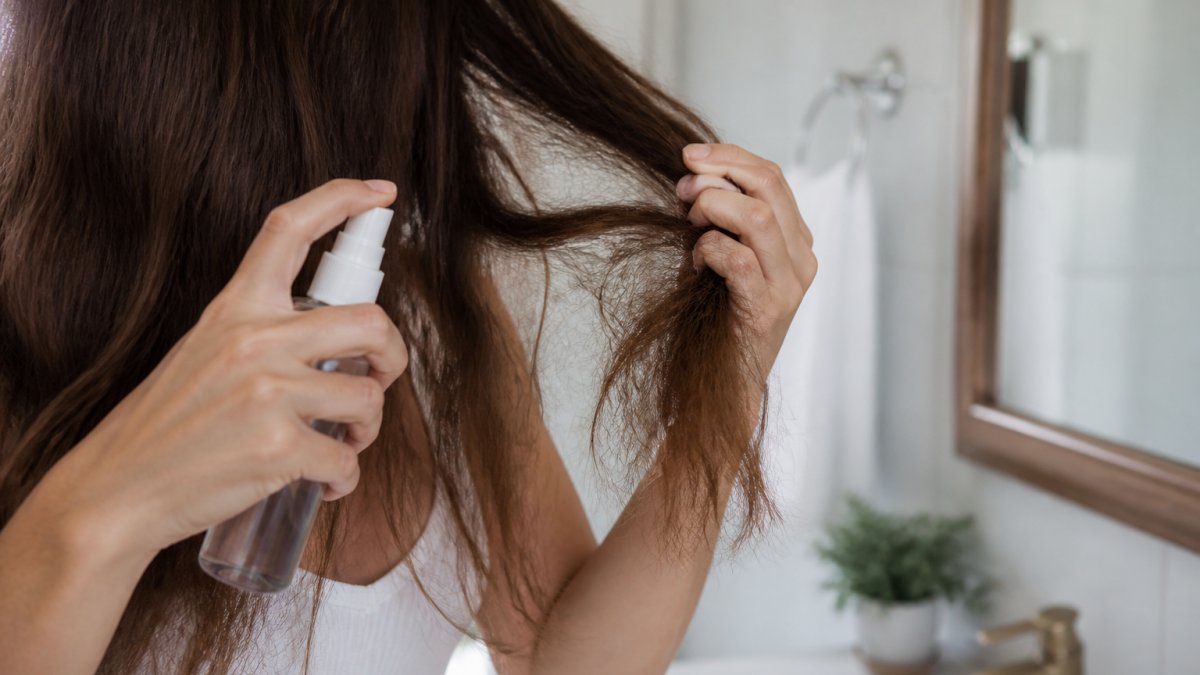
Here is the short version before the detail:
| Product | Price | Format | Best For |
|---|---|---|---|
| Fiberplasty Cuticle Resurfacing | $19.20 | Spray | Damaged, rough cuticles |
| Xtreme Repair Protein Complex | $18.30 | Spray | Daily protein and moisture |
| Kerar-Plex Step 4 Cuticle Sealing | $19.20 | Leave-in cream | Bleached and dyed hair |
| Keratin Ultra Moisturizer Premium | $18.90 | Spray | Deep conditioning and detangling |
| Keratin Leave-In Conditioner | $18.80 | Spray | Everyday softness and UV defense |
| Angel Touch Color Guardian | $18.20 | Spray | Color protection and daily wear |
Fiberplasty Cuticle Resurfacing Leave-In Conditioner
Our top pick for genuinely damaged cuticles is the Fiberplasty Cuticle Resurfacing Leave-In Conditioner, at $19.20, built on our Cuticle Resurfacing Complex: plant-based ceramides, UV and heat protectors, and light oils.

What makes it different is the ceramide and amino acid load: alongside hydrolyzed keratin and panthenol, it carries collagen, soy protein, beet root extract, and amino acids including arginine.
In practice, this is the one we reach for when hair feels rough and frizz returns within an hour of styling.
The honest limitation: it is a spray, so very coarse hair may want a cream layered underneath for extra weight.
Xtreme Repair Leave-In Conditioner Protein Complex
For daily protein and moisture in one step, the Xtreme Repair Leave-In Conditioner Protein Complex at $18.30 is the workhorse, replenishing both while controlling frizz and holding shine.
The protein blend is the story: hydrolyzed wheat, rice kernel, and silk proteins, plus squalane for deep hydration and argan oil for softness.
FIBERPLASTY CUTICLE RESURFACING LEAVE-IN CONDITIONER →
Where it falls short: if your hair is already protein-saturated and stiff, this is not the pick. Choose a moisture-forward formula instead.
Kerar-Plex Step 4 Cuticle Sealing Complex Leave-In Conditioner
Bleached, dyed, or chemically processed hair has a specific problem: the cuticle has been opened and internal bonds compromised. The Kerar-Plex Step 4 Cuticle Sealing Complex at $19.20 is designed for exactly that.
This is the most repair-focused formula in the lineup, loaded with vitamin E, panthenol, antioxidants, and amino acids.
The application is different from the sprays. Apply to clean, wet hair, do not rinse, then blow dry and style. That makes it a treatment step rather than a refresh step.
The drawback is flexibility. Because it goes on wet hair only, it does not work as a mid-day touch-up the way a spray does.
Keratin Leave-In Conditioner Ultra Moisturizer Premium Hair Spray
If your priority is deep conditioning and detangling in one pass, the Keratin Leave-In Conditioner Ultra Moisturizer Premium at $18.90 delivers: a stay-on spray that nourishes, softens, and detangles without a rinse step.

Hydrolyzed keratin strengthens fibers and reduces frizz and breakage, while argan oil and sunflower seed extract provide softness and brilliance. It penetrates the shaft for deep conditioning, unusual for a spray.
It doubles as a heat, UV, and color protector, and the light fragrance is a nice touch if you like a finished feel after styling.
The one caveat: because it is a moisturizer-forward formula, it will not rebuild protein structure on its own. Pair it with a protein leave-in if your hair is chemically damaged.
Angel Touch Color Guardian Protective Shield Leave-In Conditioner
Colored hair loses tone faster when the cuticle stays open. The Angel Touch Color Guardian Protective Shield Leave-In Conditioner at $18.20 forms a protective shield from natural oils, extracts, vitamins, and proteins to keep cuticles sealed and color vibrant.
For anyone who colors their hair and lives in a sunny climate, this is the daily-wear pick. It protects against chlorine, salt water, and UV rays.
The trade-off: it contains a silicone-based conditioning agent, so if you are strictly silicone-free, look at the Fiberplasty or Xtreme Repair formulas instead.
Keratin Leave-In Conditioner Hair Spray
Rounding out the lineup is the Keratin Leave-In Conditioner Hair Spray at $18.80, built for everyday softness and detangling.
Argan oil and sunflower seed extract provide softness and brilliance, while hydrolyzed wheat protein, rice protein, and silk improve manageability and shine.
It protects against UV rays and works as a heat protector during ironing, adding extra shine and softness.
The limitation is the flip side of its versatility: it is a generalist. For severe chemical damage, the Kerar-Plex Step 4 does more targeted work.
How to Apply Leave-In Conditioner for Maximum Absorption
Maximum absorption comes down to three variables: hair state, section size, and heat.
Start on damp hair for repair-focused formulas and dry hair for refresh sprays.
Work in sections. Most people spray the top layer and miss the under-layers where breakage happens.
Then use heat.
Finally, do not over-apply. Buildup is the fastest way to make brittle hair feel worse.
Brittle hair rarely improves from one product alone. It improves when you stop new damage, restore moisture retention, and rebuild structure consistently, week after week.
Frequently Asked Questions
What causes hair to become brittle and prone to breakage?
Brittle hair typically results from a compromised cuticle layer. Chemical treatments, heat styling, and environmental stressors strip away the natural lipids that keep the hair shaft flexible. When the cuticle is damaged, moisture escapes and the inner cortex becomes exposed, leading to split ends and snapping. Using a leave-in conditioner for brittle hair helps resurface the cuticle and lock in hydration.
How often should you use leave-in conditioner on brittle hair?
You can apply a lightweight leave-in conditioner daily, especially if you heat style or spend time outdoors. For deeper repair, use a protein-rich formula two to three times a week. If your hair feels stiff or straw-like, reduce protein treatments and focus on moisture-based leave-ins until elasticity returns.
Can leave-in conditioner help repair split ends?
Leave-in conditioners cannot fuse split ends back together, but they can prevent them from worsening. Ingredients like hydrolyzed keratin, panthenol, and ceramides smooth the cuticle and seal moisture into the hair shaft. Regular use of a leave-in treatment for brittle hair reduces friction and breakage, which stops new split ends from forming.
What ingredients should I look for in a leave-in conditioner for damaged hair?
Look for a balance of humectants, emollients, and proteins. Glycerin and hyaluronic acid draw moisture into the hair, while argan oil and squalane seal it in. Hydrolyzed keratin, silk proteins, and panthenol strengthen the hair shaft and improve elasticity. Avoid heavy silicones if you want to prevent product buildup on fine or low-porosity hair.
Is it better to use a cream or spray leave-in conditioner for brittle hair?
Spray leave-ins are lighter and work well for fine or medium hair that gets weighed down easily. Cream formulas provide more concentrated moisture and are better for coarse, thick, or highly porous hair. If your hair is brittle but fine, start with a spray and layer a small amount of cream only on the ends.