

Quick Summary
A hair botox treatment is applied to clean, damp hair in sections, left on for the time on the product label, rinsed, blow-dried, then sealed with a flat iron. It conditions and fills the hair fiber rather than chemically straightening it, so results smooth frizz while keeping your natural texture.
- Cleanse with a clarifying or prep shampoo and skip conditioner before applying.
- Section hair into four quadrants and coat every strand from roots to ends.
- Leave the treatment on for the exact time listed on the product label.
- Flat-iron small sections to seal the product in, keeping the iron moving.
- Avoid washing or tying hair tightly for the first 72 hours after treatment.
Table of Contents
- What You Need Before You Start
- Step-by-Step: How to Apply Botox Hair Treatment at Home
- Hair Botox Aftercare Routine for Lasting Smoothness
- How Long Hair Botox Lasts and When to Reapply
- Hair Botox Disadvantages, Chemical Compatibility and Troubleshooting
- Booking Your First Hair Botox Treatment at Home
- Frequently Asked Questions
What Hair Botox Treatment Does and How It Works
Hair botox treatment is a deep conditioning smoothing service that aims to leave strands softer, shinier and easier to manage. This guide explains how the process works and how to use it well. The short answer: a hair botox treatment conditions and reconstructs the hair fiber rather than chemically straightening it.
Most people confuse hair botox with traditional keratin smoothing. The difference matters, because it changes how you care for your hair afterward.
Hair botox is generally described as a repair and hydration treatment. These services are often marketed for repair rather than permanent straightening. The goal is to tame frizz while keeping your natural hair texture.
How it works, in plain terms:
- The product coats the hair shaft and helps fill in thin or broken areas of the cuticle.
- Heat from blow-drying and flat ironing helps seal the product into the hair.
- The result is smoother strands that reflect light and resist frizz.
What You Need Before You Start
Gather your supplies before you open any product. A clean, organized setup keeps the process fast and prevents mistakes.
For a complete at-home system, the ONE STEP hair smoothing and hair botox bundle includes the core treatment products. If your hair is heavily damaged, the Fiberplasty 3-step damaged hair treatment and botox bundle adds a prep shampoo, a reconstructor and a sealer.


Plan on the following:
- A clarifying prep shampoo to remove buildup
- A reconstructing treatment for the hair fiber
- A sealer to lock in the product
- A wide-tooth comb and clips for sectioning
- A tint brush or applicator bottle
- A blow dryer and flat iron
- Gloves and a towel
Read the instructions included with your products. Each system can use slightly different timing, so the label always comes first.
Step-by-Step: How to Apply Botox Hair Treatment at Home
Applying a hair botox treatment at home takes planning and patience. The full process typically takes some time, so plan for a dedicated session. The exact timing and technique shift with your hair's texture and porosity, so use the steps below as a framework and adjust as noted for your hair type.
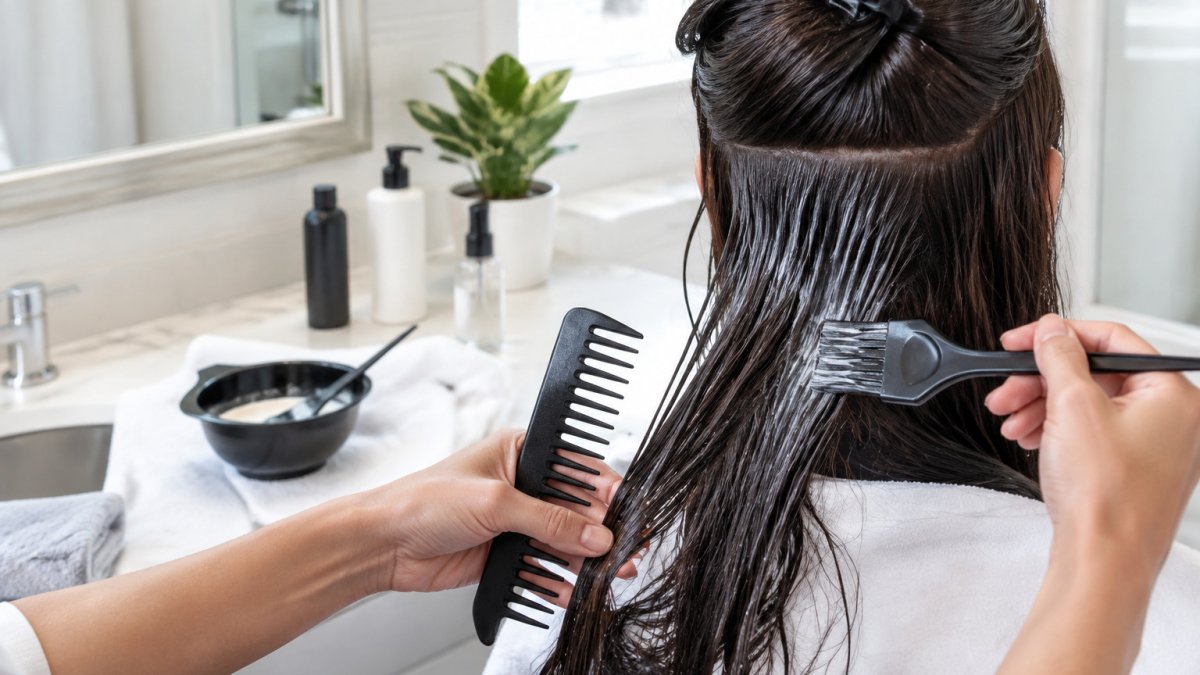
Preparing and Cleansing the Hair
Start with clean hair. Wash it with a clarifying or prep shampoo to strip away oil, styling product and buildup. Then towel-dry until the hair is damp but not dripping. Product grips best on clean, evenly damp strands.
Skip the conditioner at this stage. Conditioner can block the treatment from penetrating the hair shaft.
Hair type adjustment: If your hair is fine or low-porosity, do not over-saturate with water before applying the treatment. Excess water dilutes the product and can make it run. For thick, high-porosity or 4C coils, you may need to cleanse twice to remove heavy butters and oils, and you should leave the hair slightly wetter so the product spreads evenly through dense sections.
Applying, Processing and Sealing
Section your hair into four quadrants with clips. Work the treatment in from roots to ends using a tint brush, and make sure every strand is coated. Leave it on for the time listed on your product label. Keep a timer nearby so you do not overprocess.
Rinse thoroughly, then blow-dry the hair. Use a flat iron in small sections to seal the product into the shaft. The heat activates the formula, so keep the iron moving and avoid lingering on one spot.
Hair type adjustment: Fine, straight hair needs a thinner application and a lower flat-iron temperature to avoid stiffness and a greasy feel. Start with a small amount and add more only where the hair looks dry. Thick, curly or coily hair (including 4C) benefits from smaller sections, more product per section, and a slightly higher heat setting to ensure the cuticle seals. For coils, stretch each section with the blow dryer before flat-ironing so the iron glides through without snagging. If you have chemically relaxed or bleached hair, reduce the flat-iron temperature and do a strand test first, because compromised bonds absorb product unevenly and can turn stiff.
Watch out: skipping the rinse or leaving the product on too long can leave hair stiff or dull. Follow the label exactly, and when in doubt, under-apply rather than over-apply.
The core application steps are summarised below so you can follow them in order during a session.
| Step | What to do | Timing or note |
|---|---|---|
| Cleanse | Wash with a clarifying or prep shampoo | Skip conditioner |
| Dampen | Towel-dry until damp, not dripping | Product grips clean, evenly damp strands |
| Section | Split hair into four quadrants with clips | Use a wide-tooth comb |
| Apply | Work treatment from roots to ends with a tint brush | Coat every strand |
| Process | Leave on for the time on the product label | Keep a timer nearby |
| Rinse and dry | Rinse thoroughly, then blow-dry | Do not skip the rinse |
| Seal | Flat-iron small sections to lock product in | Keep the iron moving |
Hair Botox Aftercare Routine for Lasting Smoothness
Aftercare decides how long your results last. Most people see the smoothest hair in the first few days, then gradually lose some sleekness without good habits.
For the first 72 hours, avoid washing your hair, tying it tightly or clipping it up. Let the treatment set. After that, switch to sulfate-free products. Kerarganic's formulas are designed to nourish without harsh salts or sulfates.
Keep this routine going:
ONE STEP - HAIR SMOOTHING AND HAIR BOTOX BUNDLE →
- Wash with a gentle, sulfate-free shampoo two to three times a week
- Use a deep conditioner once a week
- Apply a heat protectant before any styling with heat
- Use a smoothing serum on damp or dry ends, and learn how to use a cuticle sealing complex to help extend smoothness between treatments.
Proper aftercare reduces frizz and extends time between touch-ups.
How Long Hair Botox Lasts and When to Reapply
Results typically last several weeks, and the right interval for repeating the treatment depends on your hair's condition and texture.
Reapply sooner if you notice:
- Frizz returning within the first few weeks
- Hair feeling dry or rough again
- Loss of shine and smoothness
Hair that is heavily bleached or chemically processed may need more frequent care. Your stylist can help you find the right schedule.
Hair Botox Disadvantages, Chemical Compatibility and Troubleshooting
Hair botox is not right for everyone, and it helps to know the trade-offs before you start.
Possible disadvantages:
- Results are temporary and need regular maintenance
- Smoothing can mask existing brittleness or dryness rather than fix it
- Over-application can leave hair stiff, heavy or dull
Chemical compatibility and contraindications: This is where most guides stay vague, but it matters for safety. Hair botox is a surface-coating and filling treatment, not a bond-breaker, so it does not chemically straighten the hair. That means it can generally be layered with other services, but timing and order are critical.
- Bleach and lighteners: Do not bleach hair in the same week as a hair botox treatment. Bleach opens the cuticle and breaks disulfide bonds; applying botox immediately before or after can trap product unevenly and leave the hair feeling coated rather than repaired. Wait at least one to two weeks between services, and always do a strand test.
- Relaxers and texturizers: These are strong alkaline services that restructure the hair. Combining them with hair botox in the same session can overprocess the fiber. Most practitioners recommend waiting at least two weeks after a relaxer before applying botox, and longer if the scalp is irritated.
- Color and demi-permanent dye: Color can generally be done before or after botox, but the botox coating may reduce color uptake if applied first. If you color your hair, schedule the color service first, then wait a few days before your botox treatment.
- Formaldehyde concerns: Choose products that are clearly labeled formaldehyde-free, and ventilate your space during heat styling.
Troubleshooting common problems:
- Hair feels greasy after treatment: This usually means too much product was applied or the hair was not rinsed thoroughly. Wash with a clarifying shampoo once, then follow with a lightweight conditioner. On your next session, use less product and focus on the mid-lengths and ends rather than the roots.
- Hair feels stiff or crunchy: Over-application or excessive flat-iron heat is the likely cause. Use a moisturizing deep conditioner and reduce the flat-iron temperature and product amount next time. For fine hair, switch to a lower heat setting and thinner layers of product.
- Hair feels dry after treatment: This can happen if the product was rinsed out too soon or if the hair was not damp enough during application. Reapply a small amount to the dry areas, or use a leave-in conditioner. If dryness persists, your hair may need a protein-free moisturizing treatment before your next botox session.
- Results fade quickly: Review your aftercare routine and reduce heavy styling products. If you have high-porosity or chemically processed hair, you may need to repeat the treatment more often than every 12 weeks.
Watch out: if you are unsure whether your hair can handle hair botox alongside another chemical service, do a patch test on a small section and wait 48 hours before treating the full head. You can also review common mistakes that ruin keratin treatments before you begin.
Booking Your First Hair Botox Treatment at Home
Doing your first treatment at home is a practical choice for many people. Start with a patch test on a small section of hair, read the full label, and set aside enough time to work slowly. If your hair is very damaged, or you have chemically processed hair, a professional consultation is worth the cost.
For a full routine, explore the ONE STEP hair smoothing and hair botox bundle or the Fiberplasty 3-step damaged hair treatment and botox bundle. The ONE STEP bundle is priced at $391.90, and the Fiberplasty bundle is priced at $274.20.
Ready to start? Shop the collection and give your hair the repair it needs.
Frequently Asked Questions
Is hair botox the same as keratin treatment? No. Hair botox is generally described as a deep conditioning and repair treatment, while traditional keratin treatments are often marketed as smoothing or straightening services. Both can reduce frizz, but they work differently.
How long does a hair botox treatment take? Application typically runs between 20 and 90 minutes, according to general guidelines from Healthline (2024). The exact time depends on your hair type and the product label.
Can I do hair botox at home? Yes, many people do. Follow the product instructions carefully, do a patch test first, and consider a professional if your hair is heavily damaged or chemically processed.
How often should I repeat the treatment? Your hair's condition will determine the best schedule.
Frequently Asked Questions
Is hair botox actually good for your hair?
Hair botox is a deep conditioning and repair treatment rather than a chemical straightening process. It focuses on hydration and strength to reduce frizz while keeping natural hair texture. Results are cosmetic and temporary, so the benefit depends on consistent maintenance. Hair that is brittle or chemically damaged may show less improvement, so a strand test and a gentle first application are a sensible start.
Can you apply hair botox at home?
Yes. Kerarganic's FIBERPLASTY 3-Step Damaged Hair Treatment & Botox Bundle is designed for salon use but can be used at home as a weekly ritual. The process involves a micellar prep shampoo, a heat-activated cationic reconstructor and an endothermic sealer. Follow the steps in order, keep the timing consistent, and seal with heat as directed. A patch or strand test before the first full application is a sensible start.
What should you avoid after a hair botox treatment?
Follow the aftercare guidance on your product instructions.
Which is better for smoother hair: keratin smoothing or hair botox?
Keratin smoothing is a chemical straightening process that changes the structure of the hair and typically lasts longer, while hair botox is a conditioning and repair treatment that reduces frizz and keeps natural texture. Hair botox is a conditioning and repair treatment that reduces frizz and keeps natural texture. Choose based on how much change you want and the current condition of your hair.
