
Table of Contents
- Why Heat Damage Happens to Your Hair
- The Best Heat Protectant for Daily Use
- Master the 90% Dry Rule Before Styling
- Safe Temperature for Hair Straighteners and Styling Tools
- Styling Techniques That Minimize Heat Exposure
- How to Repair Heat Damaged Hair at Home
- Natural Alternatives to Daily Heat Styling
- Your Daily Heat Protection Routine
- Frequently Asked Questions
Last Updated: September 28, 2026
Why Heat Damage Happens to Your Hair
Heat styling damages hair because high temperatures break down the protein structure that holds your hair together. When you apply a flat iron or blow dryer, the heat opens up your hair's cuticle layer. This exposes the inner cortex, where moisture and proteins live.
If you don't protect that inner layer, the heat pulls moisture out. Your hair becomes dry, brittle, and prone to breakage. Over time, repeated heat exposure weakens the entire hair shaft. Split ends appear. Frizz takes over. Your hair loses its shine and elasticity.
The damage compounds when you skip protective steps. Each unprotected styling session adds stress to already-weakened strands. This is why how to protect hair from heat styling damage daily matters so much. One good habit prevents weeks of repair work later.
The Best Heat Protectant for Daily Use
A heat protectant is a product that forms a barrier between your hair and heat tools. It works by coating the hair shaft with protective ingredients that absorb and disperse heat evenly. This prevents moisture loss and reduces protein damage.
The best heat protectant for daily use combines three key qualities: it should protect up to high temperatures, leave your hair feeling soft (not heavy or greasy), and work quickly so you're not adding time to your routine.
How Heat Protectants Work
Heat protectants contain silicones, oils, or plant-based polymers that sit on your hair's surface. These ingredients create a thermal barrier. When heat hits your hair, the barrier absorbs it gradually instead of letting it penetrate directly into the hair shaft.
Quality heat protectants also include moisturizing agents like argan oil or keratin. These ingredients seal the cuticle layer and lock in hydration. Some formulas add UV filters for extra sun protection during outdoor styling.

The key difference between effective and ineffective protectants is ingredient quality. Cheap formulas use heavy silicones that build up over time. Premium formulas use lightweight oils and plant-based ceramides that protect without weighing hair down.
At Kerarganic Cosmetics, LLC, we formulate heat protectants with argan oil and plant-based ceramides specifically to protect the hair cuticle while maintaining shine and softness. The FIBERPLASTY CUTICLE RESURFACING LEAVE-IN CONDITIONER combines UV and heat protectors with hydrolyzed keratin to replenish protein while you style.
Applying Your Heat Protectant Correctly
Apply heat protectant to damp hair before blow-drying, or to completely dry hair before flat ironing. The timing matters because the product needs to coat your hair evenly before heat is applied.
Here's the correct application method:
- Spray or apply the protectant generously to mid-lengths and ends
- Use a comb to distribute it evenly through all sections
- Pay extra attention to the most damaged areas (usually the ends)
- Wait 30-60 seconds for the product to set before applying heat
A common mistake is applying too little product. You need enough coverage to create that thermal barrier. Light misting won't protect your hair effectively. Use enough that your hair feels slightly damp or slick to the touch after application.
Master the 90% Dry Rule Before Styling
The 90% dry rule is non-negotiable for protecting hair from heat styling damage daily. It means you should air-dry your hair until it's 90 percent dry before using any heat tool.
Wet hair is extremely vulnerable to heat damage. When water is inside your hair shaft and you apply heat, that water turns to steam. The steam creates pressure inside the hair, rupturing the protein structure from the inside out. This causes permanent damage that no conditioner can fully repair.
Air-drying to 90 percent eliminates this risk. Your hair is still slightly damp, which helps heat distribute evenly. But there's minimal water inside the shaft to cause steam damage.
Here's how to do it:
- Wash your hair with a sulfate-free shampoo and conditioner
- Gently squeeze water out with a microfiber towel (don't rub)
- Leave your hair to air-dry for 20-30 minutes, depending on thickness
- Check by touch: your hair should feel cool and damp, not wet
- Only then apply heat styling tools
This one habit reduces heat damage by more than half. It's the single most important step in how to protect hair from heat styling damage daily.
Safe Temperature for Hair Straighteners and Styling Tools
Temperature control is critical for protecting your hair. Different hair types tolerate different heat levels. Using the wrong temperature causes unnecessary damage.
Most flat irons and curling irons reach 400-450°F. But your hair doesn't need that much heat. In fact, lower temperatures often work better because they require slower, more deliberate passes through your hair.
ARGAN REVITALIZING OIL PREMIUM - OF →
Temperature Guidelines by Hair Type
Fine or damaged hair should never exceed 300°F. Fine hair has a thinner cuticle layer. High heat damages it instantly.
Medium or previously processed hair works best at 300-350°F. This range straightens or curls your hair without excessive damage. Most people find this temperature range gives them the results they want.
Thick or coarse hair can tolerate 350-400°F. Even so, starting lower and increasing only if needed protects your hair better than jumping straight to maximum heat.
Always start at the lowest temperature setting that works for your hair. If 300°F straightens your hair, there's no reason to use 350°F. Lower temperature means less moisture loss and less protein damage.
Styling Techniques That Minimize Heat Exposure
How you use your heat tools matters as much as which tools you use. Proper technique reduces the number of passes you need and protects the hair cuticle.
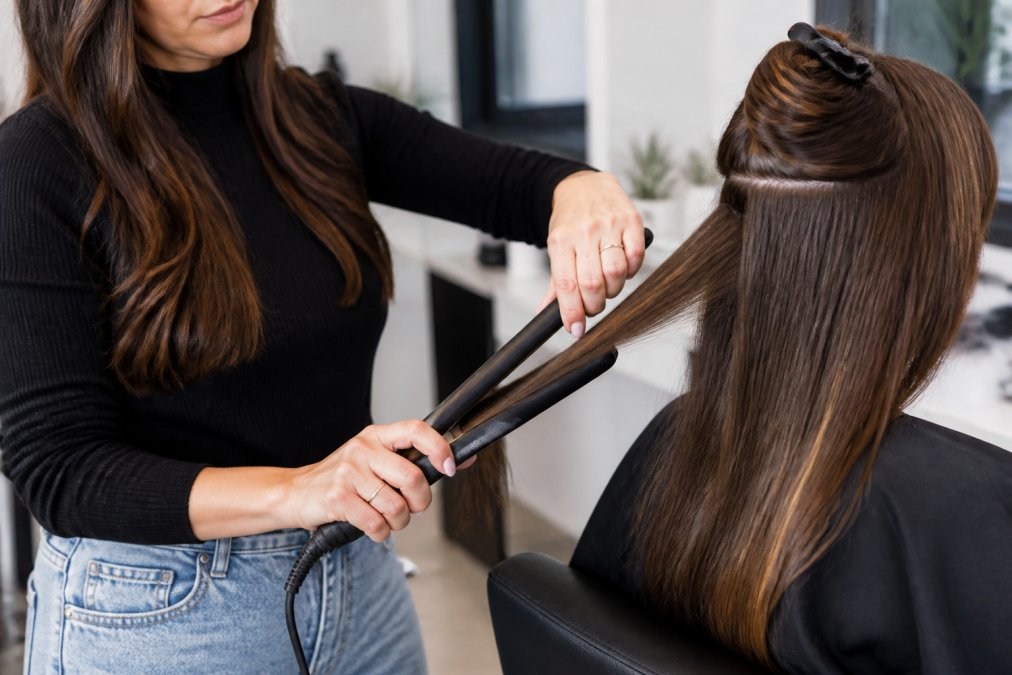
Avoiding Repeated Passes and Multiple Sessions
The biggest mistake people make is running the same section through a flat iron multiple times. Each pass adds heat exposure. Multiple passes don't give you better results, they just damage your hair more.
Use this technique instead:
- Divide your hair into small sections (about 1 inch wide)
- Clamp the flat iron at the roots and pull down slowly in one smooth motion
- Do one pass per section, then move to the next section
- If a section isn't perfectly straight, leave it and move on
One slow pass with proper heat protectant works better than three fast passes without protection. Your hair straightens more evenly, and you cause less damage.
Avoid styling your hair multiple times in one day.
Cooling Your Hair Before Brushing
After you finish styling, let your hair cool completely before brushing. Hot hair is still in a malleable state. Brushing hot hair breaks it and causes frizz.
How to Repair Heat Damaged Hair at Home
If your hair is already damaged from heat styling, you can repair it with the right products and techniques. Repair happens from the inside out, through protein and moisture restoration.
Daily Conditioning and Protein Treatments
Heat-damaged hair needs extra protein and moisture. Protein fills in gaps where the hair structure has broken down. Moisture keeps the cuticle sealed.
Using Leave-In Conditioners and Serums
Leave-in conditioners are essential for protecting and repairing heat-damaged hair. They provide ongoing moisture and protection throughout the day without weighing your hair down.
Natural Alternatives to Daily Heat Styling
If your hair is severely damaged, consider taking breaks from heat styling. Your hair needs time to recover. Natural drying and styling methods give your hair a chance to rebuild its protein structure.
Your Daily Heat Protection Routine
Building a daily routine protects your hair from heat styling damage. Consistency matters more than any single product.
Here's a routine that works:
- Wash with sulfate-free shampoo and conditioner
- Squeeze water out gently with a microfiber towel
- Air-dry to 90 percent (20-30 minutes)
- Apply heat protectant spray evenly through all sections
- Style at the lowest temperature that works for you
- Use one slow pass per section, never repeat
- Cool your hair completely before brushing
- Apply leave-in conditioner and argan oil serum to ends
- Repeat 5-6 days per week; take 1-2 heat-free days
Frequently Asked Questions
Is it okay to heat style hair every day?
Daily heat styling accelerates damage to the hair cuticle and moisture barrier. If you heat style daily, using a heat protectant spray and keeping temperatures below 350°F significantly reduces risk. The 90% dry rule and limiting repeated passes help preserve hair integrity. Consider alternating heat styling days with air-dry styles to give your hair recovery time and minimize cumulative thermal stress.

What is the best heat protectant for daily use?
The best heat protectant for daily use contains thermal-barrier ingredients like argan oil, ceramides, and UV filters. Kerarganic's FIBERPLASTY CUTICLE RESURFACING LEAVE-IN CONDITIONER ($19.20) combines plant-based ceramides with heat protectors and light oils to restore damaged cuticles while shielding hair during styling. Apply it to damp hair before blow-drying or to dry hair before flat ironing for maximum protection against heat exposure.
How can I repair heat damaged hair at home?
Repair heat damaged hair at home by using protein-rich leave-in conditioners and serums regularly. Kerarganic's XTREME REPAIR LEAVE-IN CONDITIONER PROTEIN COMPLEX ($18.30) replenishes protein and moisture daily while controlling frizz and acting as a heat protector. For deep nourishment, apply PREMIUM ARGAN REVITALIZING OIL ($19.70) to damp hair tips to heal split ends. Consistent use of these products rebuilds the hair shaft and restores shine.
What temperature is safe for straightening hair daily?
Safe temperatures for daily hair straightening depend on hair type. Fine or damaged hair should stay below 300°F, normal hair 300-350°F, and thick or coarse hair 350-400°F. Always use a heat protectant before straightening and avoid repeated passes over the same section. A single pass through each strand at the correct temperature minimizes heat damage while still delivering the styling results you need.