
Table of Contents
- 1. Frizz Returns at the First Sign of Humidity
- 2. Your Natural Wave or Curl Pattern Starts Showing
- 3. Your Hair Texture Feels Rougher and Less Smooth
- 4. Styling Time and Effort Creep Back Up
- How Long Does a Keratin Treatment Last?
- Why Is My Hair Frizzy After a Keratin Treatment?
- Keratin Treatment Aftercare: What to Do at Each Stage of Fading
- Frequently Asked Questions
Last Updated: October 17, 2026
1. Frizz Returns at the First Sign of Humidity
Frizz returning is usually the first sign your keratin treatment is wearing off. The protein coating that once blocked moisture starts to thin, so humid air gets back into the hair shaft and swells it.
Here's what that looks like in practice. You walk outside on a damp morning and the hair you flat-ironed smooth two weeks ago starts to lift at the crown. A few small flyaways turn into a full halo by lunch.
Humidity is the honest test. A fresh treatment shrugs it off. Fading hair does not.
- Early stage: a few flyaways along the hairline
- Mid stage: the crown and canopy lift first
- Late stage: frizz returns across the whole head
2. Your Natural Wave or Curl Pattern Starts Showing
Your natural wave or curl pattern coming back is normal, not a failure. Keratin smoothing relaxes the hair's natural bend, so as the treatment fades, that bend returns.
Most people notice it in specific spots first. The underlayer near the nape, the pieces around the face, or the roots where new growth never had treatment at all.
If you have naturally curly hair, expect a mixed texture for a while. Some sections stay smooth while others spring back. That middle phase is the most frustrating part of the whole cycle, and it's also the clearest confirmation that your treatment is wearing off.
3. Your Hair Texture Feels Rougher and Less Smooth
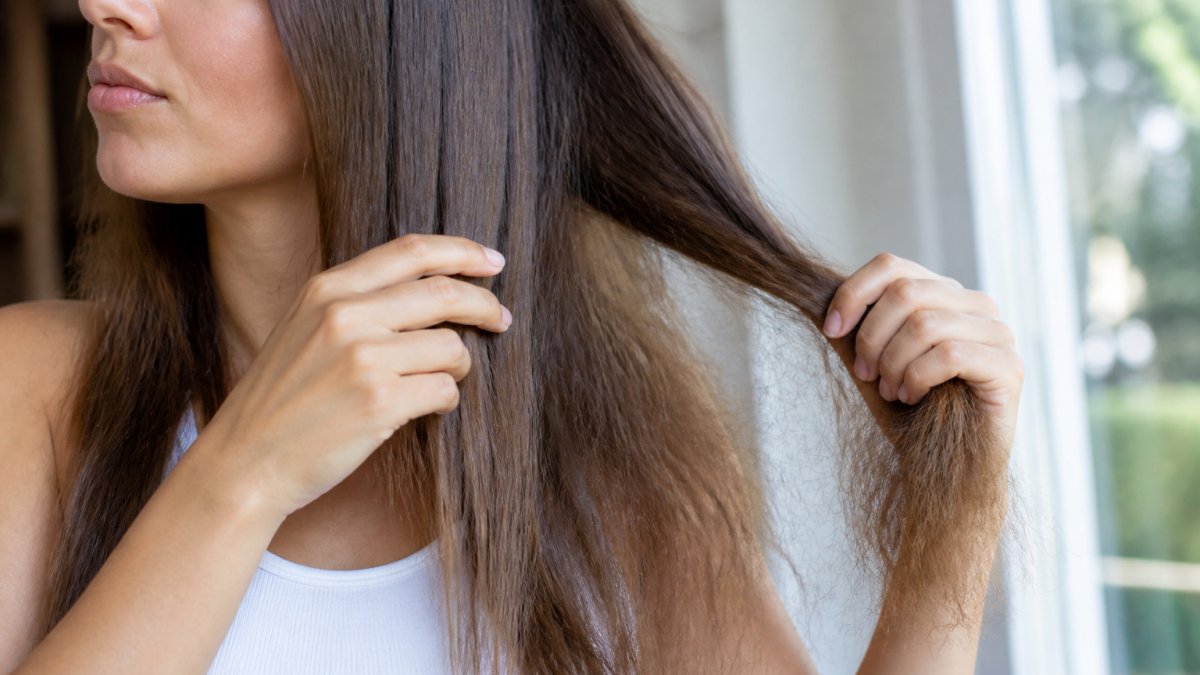
Texture changes are the sign most people can feel before they can see. Run your fingers down a strand. Treated hair feels slick and glassy because the cuticle lies flat and reflects light evenly. Fading hair feels slightly rough, almost like a squeaky clean that won't stay smooth, because the cuticle is lifting again and catching on itself.
Shine fades next. The light no longer bounces off the cuticle the same way, so the hair looks flatter and duller even after styling. Under a bright bathroom light, tilt a section toward and away from you: fresh treatment throws a sharp, continuous highlight, while fading hair scatters it into a duller, broken band.
Why texture changes before anything else
A smoothing treatment works by temporarily filling and sealing the cuticle layer. As that layer wears away, moisture can enter and leave the shaft unevenly, which is why the same strand can feel rough in one spot and smooth in another. That patchiness is the fingerprint of normal fading, not damage.
Normal fading vs. damage vs. a reaction: a triage checklist
Rough texture can mean normal fading, or it can mean damage or a reaction. They look similar but need opposite responses, so rule out the serious causes first. Work through this list in order:
- Normal fading: rough feel, frizz, and lost shine, but no snapping or splitting; the roughness is patchy and follows your growth pattern
- Damage: hair snaps when wet, splits at the ends, feels mushy or gummy in the shower, or stretches instead of bouncing back
- Reaction: scalp itching, redness, tenderness, or a burning sensation that wasn't there before, especially within days of a treatment
- Breakage: short broken hairs around the crown and hairline, or a noticeably thinner ponytail circumference
Two at-home tests that separate fading from damage
The wet-stretch test. Take a single shed strand, wet it, and gently pull from both ends. Healthy hair stretches slightly and returns. Damaged hair stretches far and snaps without springing back. Fading hair behaves normally; it just feels rougher dry.
The same-section comparison. Part your hair in the same place, in the same lighting, after the same wash routine, once a week. Photograph it. Comparing like with like removes the guesswork that makes texture changes feel subjective.
4. Styling Time and Effort Creep Back Up
Styling time creeping back up is the practical sign your keratin treatment is wearing off. The blow-dry that took 20 minutes starts taking 40. The flat iron needs a second pass instead of one.
Manageability is the real measure. Treated hair detangles fast and air-dries reasonably straight. Fading hair tangles at the ends, fights the brush, and needs more product to behave.
Track it honestly for a week. Note how long your routine takes and how many passes each section needs. That log tells you more than a mirror ever will.
| Stage | Blow-dry time | Flat iron passes | Frizz level |
|---|---|---|---|
| Fresh treatment | Shortest | One pass | Minimal |
| Early fading | Slightly longer | One to two passes | A few flyaways |
| Mid fading | Noticeably longer | Two passes | Visible halo |
| Late fading | Back to pre-treatment | Three or more passes | Full return |
How Long Does a Keratin Treatment Last?
A keratin treatment typically lasts about two to four months, depending on hair type, wash frequency, and aftercare. Fine or porous hair tends to fade faster. Coarse, healthy hair holds results longer.
Several things speed up the fade:
- Washing too often, especially with harsh or sulfate-heavy shampoo
- Hot water and high heat from daily flat ironing
- Color or chemical services done soon after the treatment
- Sun and chlorine exposure without protection
Your growth pattern matters too. New roots come in untreated, so the smooth section slowly moves down the strand as hair grows.
Why Is My Hair Frizzy After a Keratin Treatment?
Frizz after a keratin treatment usually means one of three things: the treatment is fading, aftercare products are stripping it, or the hair underneath was already damaged.
Start with your shampoo. Salt and sulfate-heavy formulas clean well but remove the nutrients that keep smoothed hair manageable. A salt and sulfate-free option protects the result far better.
Heat is the second culprit. Daily flat ironing at high settings wears down the coating faster than anything else in your routine.

Damage is the third. If hair was over-processed before the treatment, the smoothing effect never had a strong base to sit on, so it fades early and frizz returns quickly.
Keratin Treatment Aftercare: What to Do at Each Stage of Fading
Aftercare should change as the treatment fades. Matching your routine to the stage keeps hair healthy and buys you more time between salon visits. The stages below are approximate and shift with hair type, wash frequency, and heat use, so treat the week ranges as a guide rather than a schedule.
Stage 1: Early fading (roughly weeks 1-6)
What you'll notice: a few flyaways at the hairline, slightly longer blow-dry time, shine still mostly intact.
What to do: Protect what you have. Stretch washes to every two to three days, use warm rather than hot water, and add a weekly protein-and-moisture mask. Cut back on daily flat ironing, and when you do heat-style, keep the tool moving and use a heat protectant.

What to avoid: sulfate-heavy shampoos, clarifying treatments, and color or chemical services scheduled close to the treatment.
Stage 2: Mid fading (roughly weeks 6-10)
What you'll notice: visible halo in humidity, two flat-iron passes, tangling at the ends, mixed texture if you have natural curl.
What to do: Support the hair with balanced protein and moisture. Alternate a protein mask with a moisturizing conditioner so you don't overload the strand. Switch to a salt- and sulfate-free shampoo if you haven't already, and consider a leave-in to reduce friction and breakage during detangling.
What to avoid: piling on protein treatments back-to-back, which can make hair feel stiff and brittle rather than smooth.
Stage 3: Late fading (roughly weeks 10+)
What you'll notice: styling time back to pre-treatment, frizz across the whole head, natural texture fully returned.
What to do: Decide whether to reapply. Give hair a rest if it feels rough or brittle, and space treatments out to avoid cumulative chemical and heat exposure. If you rebook, ask your stylist to assess strand health first and to confirm which formula and aftercare system they use, since instructions differ by formula.
A simple decision path
- Frizz returning but hair feels healthy → adjust wash and heat habits, add a weekly mask, and ride out the fade.
- Frizz plus roughness but no snapping → likely normal fading; keep up aftercare and plan your next appointment.
- Frizz plus snapping, mushy wet texture, or scalp irritation → stop, rule out damage or reaction, and consult a professional before any reapplication.
Frequently Asked Questions
What are the first signs a keratin treatment is wearing off?
The earliest signs usually appear around week 8 to 12: frizz returns in humidity, your natural wave or curl pattern starts showing at the roots, and your hair feels rougher when you run your fingers through it. You may also notice styling takes longer and your blowout stops holding. These are normal signs of gradual fading, not damage. Check your hair on a wash day before styling to assess what is actually happening to your texture.
Why is my hair frizzy after a keratin treatment?
Frizz after a keratin treatment can come from three places: the treatment is fading, you are washing too often or using a harsh sulfate shampoo, or the treatment was applied to hair that was already damaged. If frizz returns evenly across your head weeks after your appointment, it is likely normal fading. Switch to a salt- and sulfate-free shampoo and add a weekly keratin mask to support the remaining treatment before booking another appointment.
Can washing your hair make a keratin treatment wear off faster?
Yes. Frequent washing with harsh or sulfate-heavy shampoo strips the treatment from the hair shaft faster, and hot water speeds that up. Most professionals recommend washing two to three times per week with a salt- and sulfate-free shampoo, using lukewarm water, and following with a keratin conditioner. Reducing heat styling and using UV protection also helps slow the fade so you get more weeks out of each salon visit.
Will my hair go back to normal after a keratin treatment?
Yes. A keratin treatment is a temporary smoothing process, not a permanent change to your hair's structure. As the treatment fades over roughly 12 to 16 weeks, your natural texture returns gradually, starting at the roots where new growth appears. If your hair feels dry or rough during the fade, use a keratin-infused shampoo, conditioner, and weekly mask to keep it manageable while the treatment works its way out.