
Table of Contents
- Why High Porosity Hair Loses Moisture So Quickly
- The Fill and Seal Method for High Porosity Hair
- Protein Treatments for High Porosity Hair: When and How Often
- How to Seal Hair Cuticles and Lock In Moisture
- Choosing Shampoos and Cleansers That Do Not Strip Hair
- Building a High Porosity Hair Routine That Sticks
- Frequently Asked Questions
Last Updated: October 2, 2026
Why High Porosity Hair Loses Moisture So Quickly
High porosity hair has gaps in its outer layer, so moisture escapes almost as fast as it enters. This guide from Kerarganic Cosmetics, LLC explains how to restore moisture to high porosity hair with a fill-and-seal routine.

The outer cuticle works like roof shingles: flat, it holds moisture in; lifted and open, water slips out. High porosity hair absorbs water fast and loses it just as fast, leaving dry, frizzy hair that breaks easily.
Signs Your Hair Has High Porosity
You can spot high porosity hair without a lab test. Watch for these signs:
- Hair dries very fast after washing
- Strands feel rough or bumpy
- Hair soaks up water in seconds
- Frizz appears in humid air
- Split ends and breakage show up often
- Color fades faster than expected
A simple porosity test helps confirm it. Drop a clean strand into a glass of water. If it sinks quickly, your cuticle is likely open.
Damage vs. Genetics: What Causes High Porosity
High porosity comes from genetics and damage, and most people deal with a mix of both. Common causes include:
- Bleach and hair color
- Relaxers and chemical straightening
- Frequent heat styling
- Rough brushing on wet hair
- Sun, chlorine, and hard water
The good news: damage-based porosity can improve as new hair grows in with a tighter cuticle. Stop adding damage and seal what you have.
The Fill and Seal Method for High Porosity Hair
The fill and seal method works in two steps: fill the hair with moisture, then seal it inside, the fastest way to restore moisture to high porosity hair.
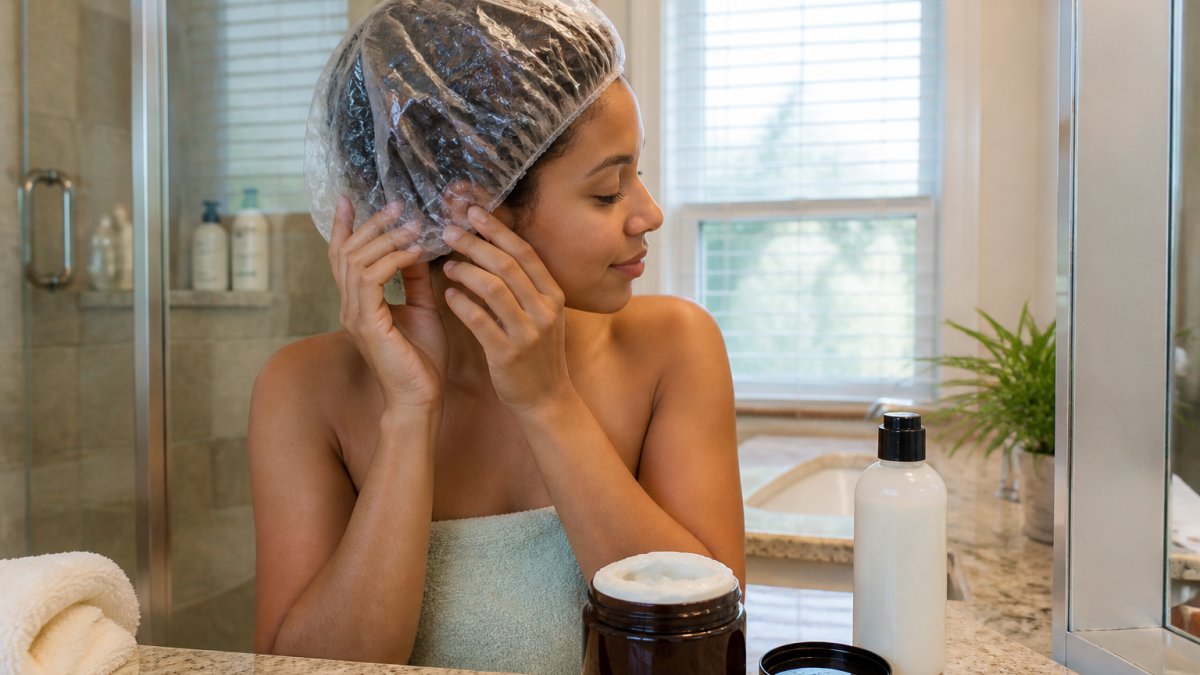
Fill means adding water and humectants, glycerin, aloe, honey, which pull moisture into the hair.
Seal means locking that moisture in. Oils and butters coat the cuticle and slow evaporation.
Here is the order that works:
- Wash or co-wash the hair
- Apply a deep conditioning mask to wet hair
- Cover with a shower cap and wait 15 to 30 minutes
- Rinse, then apply a leave-in conditioner
- Seal with a light oil or butter
A deep conditioning mask does the heavy lifting. Look for hydrolyzed keratin, plant ceramides, and panthenol, which fill cuticle gaps and smooth the surface.
Protein Treatments for High Porosity Hair: When and How Often
Protein treatments for high porosity hair rebuild the hair shaft, but timing and dosage matter more than the product. Most people need one every two to four weeks; some need one only every six weeks once the cuticle starts to close. Hair is roughly 90 percent protein by weight, mostly keratin, and high porosity hair has lost protein from its structure, which is why the cuticle lifts and stays open. Hydrolyzed protein slips under the cuticle to temporarily patch those gaps.
The Protein-Moisture Balance, Explained
Protein and moisture must stay in balance, and the two fail in opposite directions.
- Too much protein makes hair stiff, straw-like, and snap-prone. The shaft loses flexibility because protein has filled the gaps but nothing is holding water inside.
- Too little protein leaves hair weak and stretchy. Wet strands stretch far and then break instead of bouncing back.
You can test this at home without a lab. Take a clean, wet strand and stretch it gently between two fingers:
- Snaps immediately with no stretch, protein overload. Pause protein and focus on moisture.
- Stretches far and then breaks, needs protein. Add a treatment.
- Stretches slightly and returns to shape, balanced. Keep your current schedule.
This mirrors the wet-stretch and strand-snap tests used in cosmetology training, and beats guessing from how dry hair feels.
How to Sequence Protein and Moisture
The order matters as much as the frequency. A common pattern that works for high porosity hair:
- Cleanse with a sulfate-free shampoo.
- Protein treatment on clean, damp hair. Leave on per the label, usually 10 to 20 minutes.
- Rinse thoroughly. Do not leave hydrolyzed protein sitting on the shaft.
- Deep condition with a moisture-focused mask to restore the water you just displaced.
- Seal with a leave-in and a light oil or butter.
Some people alternate weeks, protein one wash day, deep moisture the next. Both work. What does not: stacking a protein treatment and a protein-heavy leave-in on the same wash day, the fastest route to brittle, breaking hair.
Reading the Label: Which Proteins Do What
Not all hydrolyzed proteins behave the same way, molecule size determines how deep they penetrate:
- Hydrolyzed keratin, closely matches hair's own structure and is widely used in repair-focused masks.
- Hydrolyzed silk protein, lighter film, good for fine high porosity hair that feels weighed down easily.
- Hydrolyzed wheat and soy protein, larger molecules that mostly coat the surface, useful for smoothing without stiffness.
- Amino acids, the smallest fraction, used more for surface conditioning than structural repair.
If you are new to protein, start with silk or wheat and move to keratin only if your strand test says you need it.
When to Skip Protein Entirely
Some high porosity hair does not need added protein at all. If your porosity comes purely from genetics rather than chemical or heat damage, your shaft may still have its full protein structure, and treatments can push you into overload quickly. Focus on moisture and sealing instead, and revisit protein only if your strand test changes.
How to Seal Hair Cuticles and Lock In Moisture
Knowing how to seal hair cuticles makes moisture last. But sealing is not just "oil on top of water", the ingredient class you choose determines whether moisture stays in or gets pulled out.
Humectants vs. Film-Forming Humectants
These categories behave very differently on high porosity hair, and mixing them up is a common reason sealing fails.
FIBERPLASTY REJUVENATING MASK →
Humectants attract and hold water, glycerin, honey, sorbitol, propylene glycol.
Film-forming humectants hold water and form a thin, flexible film over the cuticle that slows evaporation, aloe vera, flaxseed gel, marshmallow root, slippery elm.
If you live in a dry climate or run the heat all winter, lean toward film-forming humectants and keep glycerin lower in the ingredient list.
Oils and Butters: What They Actually Do
Oils and butters do not add moisture; they slow water loss by coating the cuticle.
- Argan oil, light, absorbs quickly, good for fine high porosity hair.
- Jojoba oil, technically a liquid wax, closest to the scalp's own sebum, less likely to feel greasy.
- Shea butter, heavy, rich in fatty acids, best on coarse or very dry strands and on the ends.
- Cocoa seed butter, similar to shea but firmer, often used in masks and creams for very damaged hair.
The trade-off is real: heavier butters seal better but build up faster and can block moisture on the next wash day; lighter oils seal less but layer easily. Match the weight to your strand thickness, not to what someone else uses.
The Order That Works
Apply water-based products first, then oil-based sealants on top, oil and water do not mix, so oil traps the water below.
- Apply leave-in conditioner to damp hair, not soaking wet, not towel-dry.
- Smooth a few drops of oil over the ends, working upward.
- Use a butter on very dry sections, usually the ends and any damaged patches.
- Avoid the roots if your scalp gets oily.
One common mistake is using too much oil. A little goes a long way, and heavy use causes buildup that blocks moisture from entering at all.
How Humidity and Climate Change the Strategy
High porosity hair responds to humidity differently than low porosity hair, and the same routine can fail in another climate.
- High humidity, the air is full of water vapor, so humectants pull moisture in. This is when glycerin shines. But too much can cause frizz as the cuticle swells.
- Low humidity, the air pulls water from wherever it can, including your hair. Skip or minimize glycerin, rely on film-forming humectants, and seal with a heavier butter to slow evaporation.
- Dry indoor heat, treat it like low humidity. A humidifier in the bedroom does more for your hair overnight than most leave-in products.
A Sealing Routine You Can Adjust
Start here and adjust based on how your hair feels by day three:
- Day 1, leave-in on damp hair, then a light oil like argan or jojoba.
- Day 3, if ends feel dry, add a small amount of butter to the ends only.
- Day 5, refresh with water and a film-forming humectant, then reseal lightly.
If your hair still feels dry by day two, the problem is usually not enough water going in, not too little oil on top. Add a deep conditioning step before more sealant.
Environmental factors matter too. Sun, chlorine, and dry indoor air all pull moisture from hair. A U.V. protectant and a weekly deep treatment offset most of that damage.
Choosing Shampoos and Cleansers That Do Not Strip Hair
Sulfate-free cleansers protect high porosity hair because they lift less moisture from the shaft, while harsh sulfates strip oils your hair already struggles to keep. Check the label: skip anything with sodium lauryl sulfate near the top, and look for gentle cleansers like decyl glucoside. Co-washing cleans without stripping between regular washes, but do not skip clarifying shampoo forever, product buildup blocks moisture, so clarify once or twice a month.
Water Temperature: The Step Most People Skip
Hot water opens the cuticle and speeds moisture loss. Use lukewarm water for washing and cool water for the final rinse, the cool rinse helps the cuticle lie flat, locking in the moisture you just added.
Building a High Porosity Hair Routine That Sticks
A high porosity hair routine only works if you can repeat it weekly, so keep it short and consistent.
Here is a sample weekly plan:
| Day | Step | Product Type | Frequency |
|---|---|---|---|
| Wash day | Cleanse | Sulfate-free shampoo | 1x per week |
| Wash day | Fill | Deep conditioning mask | 1x per week |
| Wash day | Seal | Leave-in plus oil | 1x per week |
| Mid-week | Refresh | Water and leave-in spray | 1-2x per week |
| Every 2-4 weeks | Rebuild | Protein treatment | As needed |
| Every 2-4 weeks | Reset | Clarifying shampoo | As needed |
A few habits protect your progress:
- Use a wide-tooth comb for detangling
- Never brush wet hair with a fine brush
- Sleep on a satin pillowcase
- Limit heat styling and always use a heat protectant
- Wear protective styling to cut down on manipulation
A deep conditioning mask sits at the center of this routine. Kerarganic Cosmetics, LLC makes several that fit high porosity hair. The Fiberplasty Rejuvenating Mask uses hyaluronic acid and plant-based ceramides to fill the cuticle and seal in moisture. For very damaged strands, the Kakawa Intensive Care Mask pairs cocoa seed butter with hydrolyzed soy protein to rebuild strength. Both are formaldehyde-free and free of harsh sulfates.

Frequently Asked Questions
How can I hydrate my high porosity hair?
Start with a deep conditioning mask applied to damp hair, cover with a shower cap, and let it sit for at least 15 minutes. Look for formulas with humectants like hyaluronic acid or aloe vera to draw water into the hair shaft. Follow with a leave-in conditioner and a light oil to seal the cuticle. Avoid heavy products that sit on top of the hair without penetrating.
Does high porosity hair need protein or moisture?
Most high porosity hair needs both, but protein comes first because gaps in the cuticle let moisture escape. Use a protein treatment every 4-6 weeks to fill those gaps, then follow with deep conditioning to restore moisture. If your hair feels stiff or straw-like after protein, you have used too much. If it feels mushy and stretchy, you need more protein.
How often should you deep condition high porosity hair?
Deep condition once a week for damaged high porosity hair, or every two weeks if your hair is only mildly porous. Use a mask with hydrolyzed protein and moisturizing ingredients like panthenol or argan oil. Apply to damp hair, cover with a cap, and leave it on for 15-30 minutes. Rinse with cool water to help close the cuticle.
What are signs of damaged high porosity hair?
Hair that dries quickly, feels rough when you run your fingers up a strand, tangles easily, and breaks without stretching are all signs of high porosity from damage. Split ends, frizz that will not smooth down, and color that fades fast also point to a raised cuticle. A simple porosity test: drop a clean strand in water and see if it sinks within a few minutes.
Dry, brittle high porosity hair does not fix itself overnight, and the wrong products can make it worse. Kerarganic Cosmetics, LLC builds keratin-infused, organic-based treatments that fill the cuticle, seal in moisture, and rebuild strength without harsh sulfates or formaldehyde. Start with the Fiberplasty Rejuvenating Mask for weekly deep conditioning, and add the Xtreme Repair Restorative Mask when your ends need extra support. Shop now and give your hair the moisture it has been missing.