

Quick Summary
Moisture overload is when curly hair absorbs more water and conditioning product than its structure can support. Signs include limp, mushy curls that lose definition and stop springing back, often within one or two wash days of a richer routine. Clarifying once and cutting back on moisture usually helps.
- Check for limp curls, mushy or gummy texture, and loss of curl definition on wash day.
- Stretch one curl: if it stays stretched, it likely needs less moisture; if it snaps, it needs more.
- Clarify once with a residue-removing shampoo before deciding what the problem is.
- Use a lighter conditioner and only a pea-sized amount of leave-in for two washes.
- Reassess curls on day one, three, and five after each wash to track progress.
Table of Contents
- Moisture Overload Hair Symptoms to Check For
- Moisture Overload vs. Protein Overload in Curly Hair
- Moisture Overload vs. Hygral Fatigue and Product Buildup
- How to Fix Over-Moisturized Curly Hair Step by Step
- How Often to Moisturize Curly Hair Without Overdoing It
- Building a Balanced Curl Routine You Can Track
- Frequently Asked Questions
What Moisture Overload Looks Like in Curly Hair
Moisture overload happens when curly hair takes in more water and conditioning product than it can handle. The strands swell, lose their structure, and stop holding curl shape. Many people mistake it for dryness and add even more product, which can make the problem worse.
If your curls feel soft, droopy, or heavy after a routine that used to work, check for these signs before you change anything else. This guide walks through how to tell the difference, how to fix it, and how to keep your routine balanced going forward.
Moisture overload is a state where hair has absorbed more moisture and conditioning than its structure can support. Curly hair is especially prone to it because its shape makes it harder for oils and natural sebum to travel down the strand.
Hair that has been treated with color, heat, or chemical processing can also become overly soft. Watch for a combination of symptoms rather than a single sign.
Here are the most common clues:
- Curls feel limp or weighed down
- Hair feels mushy, gummy, or overly soft to the touch
- Curls lose definition and stop springing back
- Frizz shows up even though the hair feels soft
- Strands take longer than usual to dry
Adding more protein alone is unlikely to fix a moisture problem. Balance the two rather than piling on more of either.
Moisture Overload Hair Symptoms to Check For
Symptoms of moisture overload tend to show up in three places: the weight of the curl, the feel of the strand, and the way the curl holds its shape. Check each one on wash day before you reach for another product.
Limp or Weighed-Down Curls
Limp curls look flat at the roots and hang without bounce. Hair can look stretched out or stringy, even right after styling.
A simple test: pull one curl straight and let go. If it drops back slowly and stays low, the strand may be holding too much moisture or product.
Mushy, Gummy, or Overly Soft Texture
Healthy curls feel springy and slightly firm. Overloaded hair can feel soft to the point of mushiness, almost like wet fabric.
Gummy texture is another sign. Strands may stick together when you finger-detangle, and they may not separate cleanly.
Loss of Curl Definition and Shape Retention
Curl definition is how clearly each curl pattern stands apart. When strands take on too much moisture, the curls blur into one another and lose their shape within a day or two.
Shape retention is the curl's ability to keep its form between wash days. If your curls relax faster than they used to, moisture overload is a likely suspect.
Moisture Overload vs. Protein Overload in Curly Hair
Moisture overload and protein overload can look similar, but they call for opposite fixes. Protein overload makes hair feel stiff, brittle, and prone to snapping. Moisture overload makes hair feel soft, limp, and stretchy.
Here is a quick way to tell them apart:
| Sign | Moisture Overload | Protein Overload |
|---|---|---|
| Texture | Soft, mushy, gummy | Stiff, crunchy, brittle |
| Strand behavior | Stretches and stays stretched | Snaps or resists stretching |
| Curl shape | Limp and loses bounce | Straight or fragile |
| Likely fix | Use a clarifying wash, cut back on moisture | Use a moisturizing deep conditioner |
If your hair stretches and then stays stretched, it likely needs less moisture. If it snaps when you stretch it, it likely needs more moisture and less protein.
Moisture Overload vs. Hygral Fatigue and Product Buildup
Moisture overload, hygral fatigue, and product buildup can all leave curls limp, heavy, and slow to dry, but they have different causes and need different first steps. Treating the wrong one is the most common reason a "fix" makes curls worse.
Moisture overload is a state in which the hair has absorbed more water and conditioning agents than its structure can support. The cortex swells, the cuticle layers loosen slightly, and the strand loses the internal stiffness that holds a curl.
Hygral fatigue is cumulative damage from repeated swelling and drying of the hair shaft. Every wash cycle makes the cuticle lift and the cortex expand, then contract as the hair dries. Over many cycles, especially with long water exposure, frequent co-washing, or overnight wet styling, the cuticle can become worn and the strand weaker.
Product buildup is a coating of styling products, oils, butters, and conditioner residue that sits on the surface of the hair and scalp.
Here is a side-by-side comparison of the clues that separate them:
| Clue | Moisture Overload | Hygral Fatigue | Product Buildup |
|---|---|---|---|
| When it appears | Within 1-2 wash days of a rich routine | Gradually over weeks or months | Gradually over several wash days without clarifying |
| Feel of the strand | Mushy, gummy, overly soft | Soft but weak, prone to stretching and breaking | Coated, waxy, or dull |
| Curl behavior | Limp, loses shape quickly | Limp and fragile, breaks when handled wet | Heavy and stringy, but may still hold some shape |
| Scalp | Usually unchanged | Usually unchanged | Can feel itchy, flaky, or coated |
| First step | Reduce moisture, clarify once, add light protein | Reduce water exposure time, space out washes, add protein | Clarify with a residue-removing shampoo |
A practical way to tell them apart is to change one variable at a time. Clarify once with a residue-removing shampoo and skip heavy conditioners for one wash. If curls spring back within a wash or two, buildup or mild moisture overload was the likely cause.

Watch out: clarifying more than once a week during this test can dry out the scalp and strip the hair, which makes it harder to tell what is actually wrong.
American Academy of Dermatology hair care guidance
How to Fix Over-Moisturized Curly Hair Step by Step
Fixing moisture overload is a process of subtraction, not addition. Follow the steps in order, and resist the urge to add more products when you do not see an immediate result.
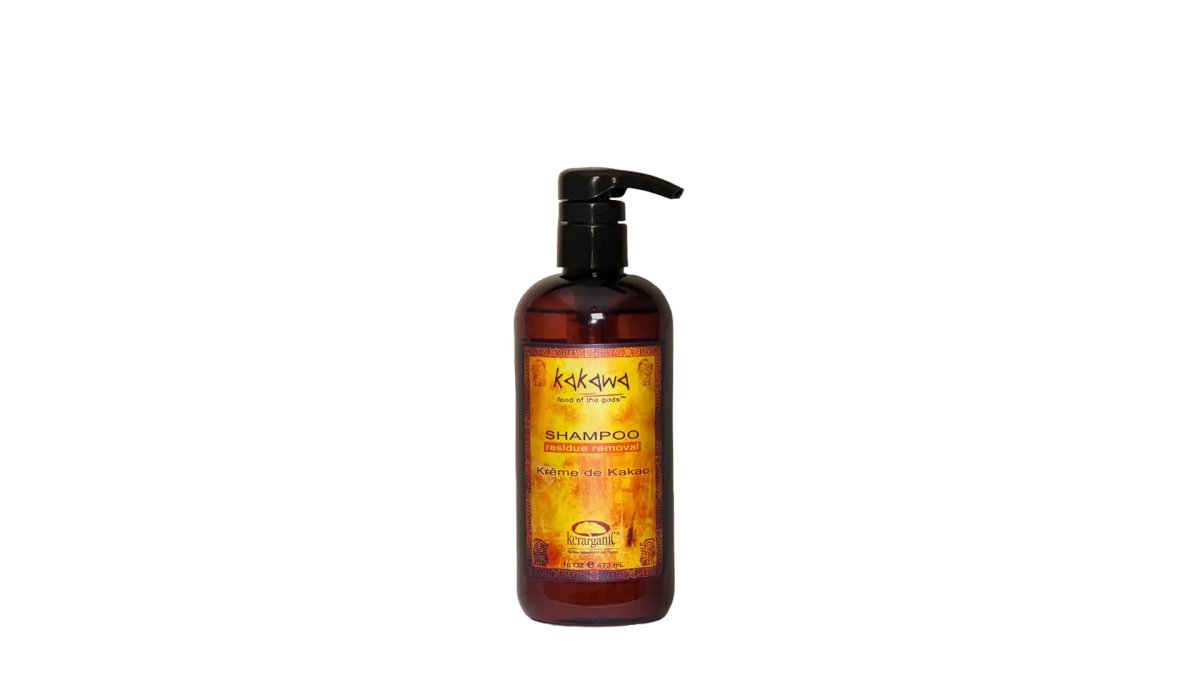
- Clarify once to remove surface residue. Use a residue-removing shampoo on wet hair, massage it into the scalp and down the strands, and rinse thoroughly. The KAKAWA RESIDUE REMOVAL SHAMPOO ($19.20) is formulated to remove accumulated residues from the scalp and hair strands before a Kakawa treatment. Clarifying removes the coating that can mask whether the problem is buildup or true moisture overload.
- Swap to a lighter conditioner for the next two washes. Choose a conditioner with fewer heavy oils and butters, and rinse it out completely. If your regular conditioner leaves a slippery film, it is probably too rich for this phase.
- Cut leave-in to a minimum. Use a small amount, about the size of a pea for fine hair or a dime for coarse hair, and apply only to the mid-lengths and ends. Skip heavy creams and butters entirely for two weeks.
- Add a light protein step if curls still feel mushy after two washes. A protein-containing leave-in or treatment can help restore the firmness that over-moisturized curls lack. Use it once, then reassess after the next wash rather than layering it daily.
- Reassess on a fixed schedule. Check your curls on day one, day three, and day five after each wash. Note spring-back, dryness, and how quickly curls lose shape. If curls feel springy by day three, you are on track. If they still feel limp after three washes, clarify once more and extend the lighter routine by another week.
- Rebuild your routine gradually. Once curls hold shape again, add back one product at a time, starting with the lightest. Wait two wash cycles before adding the next product so you can tell what is helping and what is tipping you back into overload.
If nothing changes after four weeks of a lighter routine, the problem may be buildup, hygral fatigue, or protein imbalance rather than moisture overload, and it is worth revisiting the comparison section above.

Watch out: clarifying too often during recovery can dry out the scalp and make curls feel brittle, so limit clarifying washes to once every one to two weeks unless a stylist advises otherwise.
How Often to Moisturize Curly Hair Without Overdoing It
There is no single schedule that works for everyone. A safe starting point is to moisturize with a deep conditioner once a week, and use a lighter leave-in between washes.
Adjust based on how your hair feels. If curls look limp by day two, you may be moisturizing too often or with too much product. If curls feel dry, stiff, or frizzy, you may need a little more moisture.
Track your routine for two to three weeks. Note the products, the amounts, and how your curls look on days one, three, and five. Patterns will show up quickly.
Building a Balanced Curl Routine You Can Track
A balanced routine uses moisture and protein in the right proportion for your hair. Start simple, change one thing at a time, and keep notes so you can see what works.
Here is a sample weekly plan many curly-haired people use as a starting point:
- Weekly: Clarify once with a residue-removing shampoo
- Weekly: Deep condition with a moisturizing treatment
- Between washes: Use a lighter leave-in with protein
- Daily: Refresh curls with water and a small amount of product
With consistent tracking, most people can identify their personal limit within a few weeks. Once you know it, you can keep your curls soft, springy, and defined.
Frequently Asked Questions
How do I tell if my hair has too much moisture?
Look for hair that feels soft or mushy when wet, curls that look stretched or limp, and frizz that appears even though the hair feels soft. Hair that stays damp for a long time after washing can also signal too much moisture. Try a simple test: after washing, gently stretch one wet strand. If it stretches far without snapping back, or feels gummy, your hair may be over-moisturized. Compare how your curls look after a protein-based treatment versus a deep moisture mask to see which direction your hair responds to. Track these changes over two or three wash days to confirm the pattern before adjusting your routine.
How do you fix overhydrated curly hair?
Start with a clarifying step to remove product buildup and excess conditioner. The Kerarganic Kakawa Residue Removal Shampoo ($19.20) is designed to remove accumulated residues before a treatment. Use it once, then skip heavy masks and deep conditioners for one to two weeks. Focus on a lightweight leave-in and let your hair air dry fully. Recovery timelines vary with hair porosity and how often you were over-conditioning, so expect gradual improvement over several wash days rather than an immediate change. If curls still feel limp after a few weeks of lighter care, consider a professional assessment.
How can you tell moisture overload from protein overload?
Moisture overload usually makes curls feel soft, mushy, and stretchy, with poor shape retention. Protein overload tends to make hair feel stiff, brittle, dry, or prone to snapping when stretched. Because the two can look alike, try adjusting one variable at a time. If your hair feels better after a light moisture product and worse after a protein treatment, protein is less likely the culprit. Keep a simple log of which products you used and how your curls responded for several weeks to spot the pattern.
Can moisture overload make curls limp or lose their shape?
Yes. When curly hair takes in more water and conditioning ingredients than it can hold, strands can lose structure and hang limp. Curls may look stretched, lose bounce, or fail to clump into defined shapes. Frizz can also appear even though the hair feels soft. Reducing the frequency of heavy conditioners and allowing hair to dry more fully between washes often helps restore definition. Limp curls can also come from product buildup or other causes, so check your routine before assuming moisture is the only factor.
