
Table of Contents
- What Is a Keratin Treatment and How It Works on Curly Hair
- How Keratin Treatments Affect Your Curl Pattern
- Benefits of Keratin for Curly and Textured Hair
- Formaldehyde-Free Keratin Treatment Options for Safety
- How Long Does a Keratin Treatment Last on Curly Hair
- Keratin Treatment Aftercare for Curly Hair: Maintenance Steps
- Potential Risks and Side Effects to Know
- Transitioning Back to Natural Curls
Last Updated: August 30, 2026
What Is a Keratin Treatment and How It Works on Curly Hair
A keratin treatment is a semi-permanent smoothing process that infuses protein-based formulas into the hair shaft to reduce frizz, enhance shine, and improve manageability. Unlike permanent straightening, keratin treatments seal the hair cuticle and deposit protective proteins that restore strength to damaged strands. At Kerarganic Cosmetics, LLC, we've developed formaldehyde-free formulas specifically designed to work with curly hair textures rather than against them.
When applied to damp hair and sealed with a flat iron at high temperatures, keratin molecules bond to the hair cortex, creating a protective layer that smooths the cuticle and locks in moisture. This temporary enhancement gradually fades as your hair grows and sheds naturally, without permanently altering your hair structure the way chemical relaxers do.
The Difference Between Smoothing and Straightening
Smoothing treatments reduce frizz and add shine while preserving your natural curl pattern and texture, working best on wavy to moderately curly hair. Straightening treatments use stronger formulas or longer processing times to relax curl patterns significantly, sometimes creating near-permanent straight results.
For curly hair, a smoothing treatment is almost always the better choice. Straightening treatments can leave curls looking limp, damaged, or uneven. The goal should be enhancing what you have, not fighting against it. Keratin smoothing treatments reduce frizz and add shine while maintaining curl integrity and definition.
How Keratin Treatments Affect Your Curl Pattern
A properly formulated keratin treatment for curly hair should enhance curl definition, not eliminate it. The treatment fills gaps in the hair cuticle where frizz originates, making curls appear more defined and bouncy. However, using a formula designed for straight hair or leaving treatment on too long risks temporarily relaxing your curls more than intended. The effect is reversible, your natural curl pattern returns as the treatment fades.
Hair porosity plays a significant role. High-porosity curly hair absorbs keratin quickly, requiring shorter processing times. Low-porosity curly hair resists absorption, so you may need slightly longer application or heat activation. Understanding your hair's porosity prevents over-processing and helps predict how dramatic the smoothing effect will be.
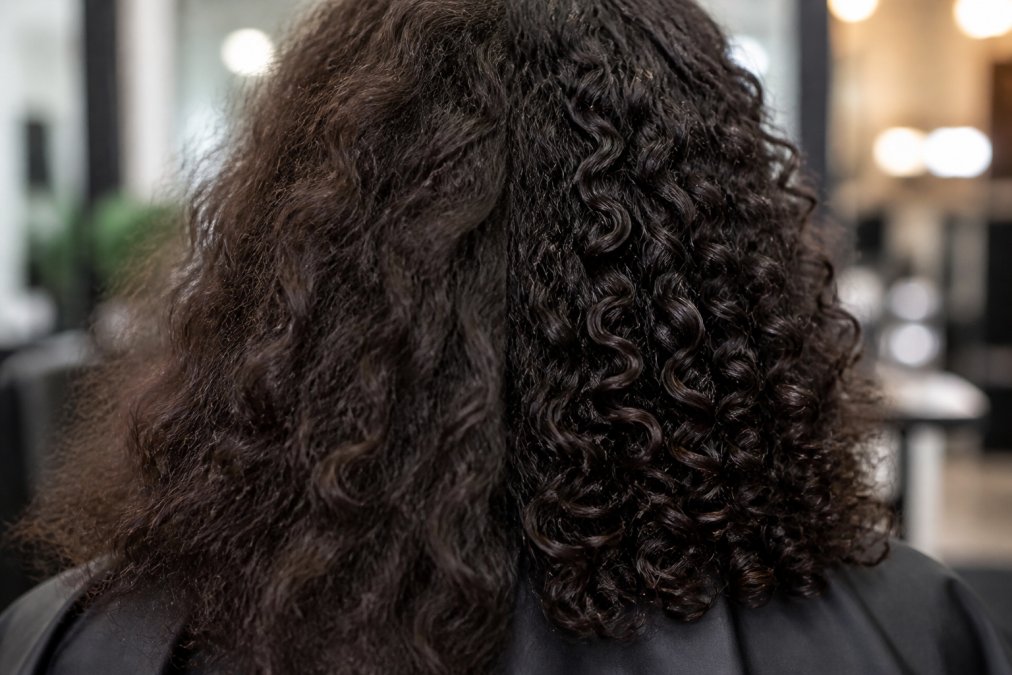
Many people find their curls actually look better after treatment, tighter, shinier, and more controllable, rather than looser or straightened.
Benefits of Keratin for Curly and Textured Hair
Frizz control is the most obvious benefit. By sealing the cuticle and reducing moisture absorption from humidity, keratin dramatically cuts flyaways and undefined texture. Many people report styling time drops by 30-50 minutes per week after treatment.
Curl definition improves noticeably. Keratin fills micro-gaps in the hair shaft that cause frizz, making individual curls more visible and structured. Your curl pattern becomes more cohesive rather than a chaotic tangle of undefined waves.
Shine and vibrancy return to over-processed curly hair. Keratin replenishes protein structure, restoring reflectivity and a healthy appearance. This benefit compounds over multiple treatments.
Manageability and elasticity improve dramatically. Treated curls hold moisture better, resist breakage more effectively, and style more easily. You can wear your curls down without fighting frizz or spending hours with styling tools.
Formaldehyde-Free Keratin Treatment Options for Safety
Traditional Brazilian keratin treatments released formaldehyde gas during application, exposing stylists and clients to a known respiratory irritant and potential carcinogen (the CDC). This has driven demand for safer alternatives.
Why Formaldehyde-Free Matters
Formaldehyde-free keratin treatments use alternative crosslinking agents, typically glyoxylic acid, to achieve the same cuticle-sealing effect without toxic emissions. These formulas are safer to apply in salons and at home, protecting your respiratory system and the environment. They're also gentler on hair itself, reducing protein loss and damage during processing.
Formaldehyde-free treatments don't create harsh fumes that linger in your hair or clothes. You can apply treatment at home without ventilation concerns, and your hair doesn't smell chemical afterward.
Kerarganic Cosmetics, LLC specializes in formaldehyde-free keratin treatments that deliver professional results without compromise. Our organic-based keratin formulas combine keratin protein with argan oil and certified organic extracts. The ORGANIC KERATIN SYSTEM with 24kt gold nanoparticles intensifies brilliance while the glyoxylic acid base provides safe, effective smoothing without respiratory risks.

How Long Does a Keratin Treatment Last on Curly Hair
Keratin treatment longevity on curly hair typically ranges from 8 to 16 weeks, depending on hair growth cycle, porosity level, and aftercare (peer-reviewed research). High-porosity curly hair may see results fade faster (8-12 weeks) because it absorbs and sheds the treatment more quickly. Low-porosity curly hair often maintains results longer (12-16 weeks).
The first two weeks represent peak results. Frizz control is maximum, shine is brightest, and curl definition is most pronounced. After that, the treatment gradually fades as your hair grows and encounters environmental stress. By week 8-10, most people notice frizz returning and styling time increasing.
Maintenance significantly extends longevity. Using sulfate-free shampoo, deep conditioning masks, and heat protectant serums can stretch results by 2-4 weeks. Sulfates are detergents designed to remove oils and buildup, they also remove the protective keratin layer you paid for.
Keratin Treatment Aftercare for Curly Hair: Maintenance Steps
Aftercare determines whether you get two months of mediocre results or four months of excellent ones. The first 48 hours are critical.
The First 48 Hours: Critical Care Period
Keratin molecules are still bonding to your hair during the first two days after treatment. Do not wash your hair for 48 hours after treatment (the American Academy of Dermatology). Avoid sweating, humid environments, swimming, and heavy rain if possible. Sleep on a silk or satin pillowcase to reduce friction and moisture absorption. Don't style your hair with heat tools during this window.
Long-Term Maintenance Routine
Switch to sulfate-free shampoo and conditioner immediately. Kerarganic Cosmetics, LLC's sulfate-free formulas are specifically designed for treated hair, providing gentle cleansing without compromising the keratin layer.
Deep condition your curls weekly. Keratin treatments can temporarily reduce moisture retention. Weekly deep conditioning masks restore moisture balance and prevent straw-like texture. Apply the mask to mid-lengths and ends, leave it on for 10-15 minutes, and rinse thoroughly.
Use a heat protectant spray before blow-drying or flat-ironing. Heat accelerates keratin breakdown, so protecting your hair extends treatment longevity.
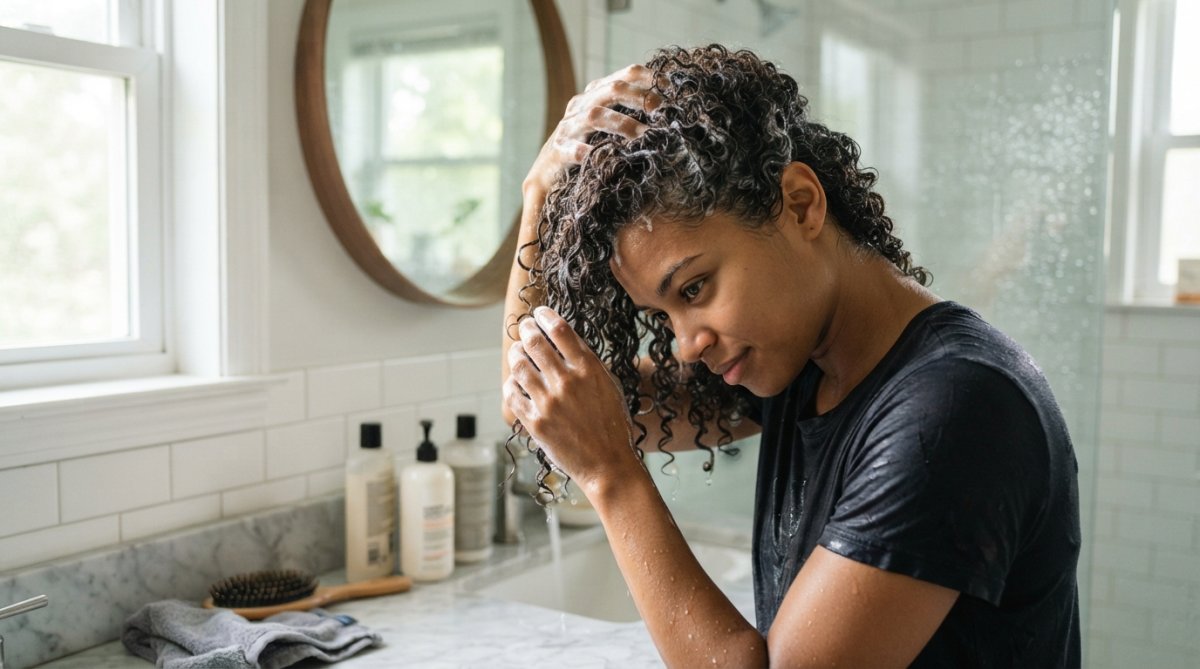
Avoid chlorine and saltwater. If you swim, wet your hair with fresh water and apply conditioner before entering the pool to create a barrier that reduces chlorine absorption.
Limit washing frequency to 2-3 times per week if possible. Dry shampoo extends time between washes without compromising your curls.
Potential Risks and Side Effects to Know
Keratin treatments are generally safe when applied correctly, but understanding potential risks helps you make an informed decision.
Over-processing is the most common issue with curly hair. If the treatment sits too long or uses a formula too strong for your hair type, you can end up with permanently straightened curls instead of smoothed ones. Choose a formula designed for curly hair and follow timing instructions precisely. Kerarganic Cosmetics, LLC's ORGANIC KERATIN SYSTEM is formulated specifically to smooth without over-relaxing curls.

Protein overload can occur if you use too many protein treatments simultaneously. Your curls may become stiff, brittle, and prone to breakage. Alternate protein treatments with moisture-focused deep conditioning to prevent this.
Hair breakage can result from poor aftercare or pre-existing damage. Sulfate-free products and weekly deep conditioning prevent this issue.
Allergic reactions are rare but possible. Test any new treatment on a small section behind your ear first. Formaldehyde-free treatments significantly reduce this risk compared to traditional formulas.
Scalp irritation sometimes occurs if the treatment contacts your scalp during application. Apply treatment to hair only, not roots.
Transitioning Back to Natural Curls
The keratin treatment will gradually fade over 16-24 weeks as your hair grows and sheds. Your curls may look inconsistent during this period, with treated portions smoother and more defined while new growth is frizzy and undefined. This awkward phase typically lasts 2-3 months.
Consider transitioning strategically by using protein-free, moisture-focused conditioners to help your curls recover their natural texture. A trim helps significantly, cutting off keratin-treated ends lets you see your true curl pattern sooner. Get a trim every 6-8 weeks during transition.
Expect to relearn your curl routine. Your natural curls may respond differently to products than they did before treatment. Many people find their curls are actually healthier after transition because they've been protected from heat and friction during the treatment period.
Transitioning back to natural curls or maintaining treated curls long-term requires the right products. Kerarganic Cosmetics, LLC's formaldehyde-free keratin treatments and sulfate-free maintenance products ensure your curls stay healthy, defined, and frizz-free. Our ORGANIC KERATIN DIY TREATMENT SETS make professional results accessible at home, with pre-treat shampoo, keratin treatment, and argan oil mask included. Start with our beginner-friendly DIY treatment set to experience how formaldehyde-free keratin can transform curly hair without compromise. SHOP NOW and discover why stylists and curl-conscious customers trust Kerarganic for safer, more effective keratin treatments.
Frequently Asked Questions
Q: Can I get a keratin treatment if I have curly hair?
A: Yes, keratin treatments work well on curly hair. The key is choosing a formula designed to enhance rather than eliminate your curl pattern. Formaldehyde-free keratin treatments like those from Kerarganic are specifically formulated to reduce frizz, improve curl definition, and add shine while maintaining your natural texture. Many people with curly hair use keratin treatments to tame frizz and improve manageability without losing their curl pattern entirely.
Q: How long does a keratin treatment last on curly hair?
A: Keratin treatment results typically last 2 to 4 months on curly hair, depending on your hair porosity, texture, and how well you follow the aftercare routine. Coarser, denser curls may retain results longer than finer curls. Using sulfate-free shampoos and following a proper maintenance routine with deep conditioning treatments can extend the lifespan of your keratin treatment significantly.
Q: Will a keratin treatment permanently change my curl pattern?
A: No, keratin treatments are semi-permanent and do not permanently alter your curl pattern. As the treatment gradually fades over 2 to 4 months, your natural curl pattern will return. The keratin coats and seals your hair cuticles, smoothing and defining curls rather than chemically restructuring them. This makes keratin treatments a reversible option for managing frizz and improving curl definition without permanent damage.
Q: Are formaldehyde-free keratin treatments actually safe?
A: Yes, formaldehyde-free keratin treatments are safe when used as directed. Products like Kerarganic's Organic Keratin System use glyoxylic acid and natural ingredients instead of formaldehyde, eliminating health risks associated with formaldehyde exposure. Look for products that are clearly labeled formaldehyde-free. Always follow application instructions and ensure proper ventilation during application.
This article was written using GrandRanker