
Table of Contents
- What Keratin Does to Frizzy Hair
- How Keratin Seals the Hair Cuticle for Lasting Frizz Control
- Real Benefits: Styling Time, Shine, and Manageability
- How Long Does a Keratin Treatment Last
- Formaldehyde-Free Keratin Treatment Safety
- Keratin Aftercare Tips to Extend Results
- Professional Salon Treatments vs. At-Home Keratin Products
- Frequently Asked Questions
Last Updated: September 27, 2026
What Keratin Does to Frizzy Hair
Keratin is a structural protein naturally present in hair that strengthens the hair shaft and seals the cuticle layer. When hair becomes frizzy, it's typically because the cuticle has lifted, allowing moisture to penetrate unevenly and causing strands to swell and separate. Keratin treatments work by depositing this protein back into damaged or over-processed hair, restoring the cuticle's smooth surface and creating a protective barrier against humidity.
Keratin frizz control transforms hair compromised by heat styling, chemical treatments, or environmental exposure by filling gaps in the hair shaft and re-bonding broken protein chains. This is why keratin treatments are particularly effective for curly, textured, and over-processed hair, these naturally porous structures benefit significantly from protein reinforcement.

Unlike conditioners that coat the surface temporarily, keratin treatments penetrate the hair structure itself, creating lasting changes. Results last weeks or months rather than days.
How Keratin Seals the Hair Cuticle for Lasting Frizz Control
The hair cuticle is composed of overlapping protein scales that lie flat when healthy and aligned. When these scales lift or become damaged, light scatters rather than reflects, creating the dull, frizzy appearance most people recognize. Keratin treatments work by smoothing and sealing these cuticle scales back into place, which simultaneously reduces frizz and dramatically increases shine.
Keratin bonds to damaged protein and creates a protective layer that seals the cuticle, making keratin frizz control highly effective in humid environments. The protein fills microscopic gaps, smoothing the surface and preventing the swelling that causes frizz.
This process explains why professional salon treatments often include a sealing step. Products like the MASTER TOUCH KERATIN SEALING SPRAY are specifically designed to reinforce cuticle sealing after a keratin treatment, maximizing the durability of results. The spray contains hydrolyzed keratin and silk protein that work together to maintain cuticle alignment and prevent moisture loss between treatments.

Longevity depends on maintenance. Sulfate-free shampoos are essential because sulfates strip the keratin coating away, and heat styling without protection compromises the seal.
Real Benefits: Styling Time, Shine, and Manageability
The most immediate benefit of keratin frizz control is reduced styling time. Treated hair blow-dries faster and requires less effort to straighten, cutting daily styling routines in half.
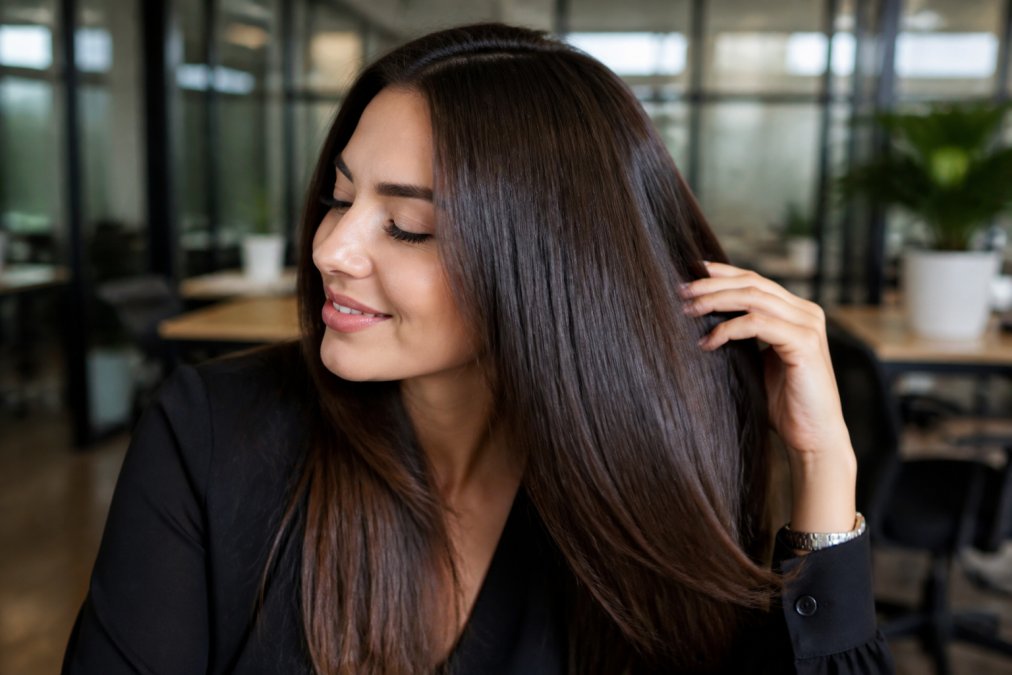
Shine enhancement is dramatic because flat, smooth cuticles reflect light evenly, creating a glossy, salon-finished appearance from restored hair structure rather than surface coating.
Manageability improves significantly as hair becomes more elastic and less prone to breakage. Previously fragile, tangled hair becomes cooperative and smooth, avoiding cumulative damage from styling.
Keratin treatments smooth the hair shaft itself, not just the surface. Curly or textured hair becomes smoother and more defined while retaining its curl pattern, which is why treatments work across all hair types.
How Long Does a Keratin Treatment Last
Keratin treatments typically last weeks or months, with variation based on hair type, porosity, and maintenance habits.
Fine and Straight Hair holds keratin treatments longer, often 10 to 12 weeks, due to smoother cuticle structure and lower porosity. However, fine hair can look weighed down, so lighter formulations are recommended, though they may fade closer to 8 weeks.
Coarse and Curly Hair sees results fade faster, often 6 to 10 weeks, due to higher porosity. Protein-enriched maintenance products between treatments help sustain results.
Medium Density Hair usually falls in the standard 8 to 12-week range. This hair type holds keratin treatments reliably if proper aftercare is followed, making it the most predictable category for treatment longevity.
Washing frequency is the largest factor affecting longevity. Daily washing fades keratin 2 to 4 weeks faster than twice-weekly washing, reducing results to 6 to 8 weeks. Twice-weekly or less washing reaches the full 10 to 12-week window.
Heat styling frequency impacts durability. Frequent flat iron or blow dryer use accelerates protein breakdown. Heat-protection serums and minimal styling extend results by 2 to 3 weeks.
Water quality affects results. Hard water causes faster fading or buildup; shower filters or monthly chelating shampoo extends results by 1 to 2 weeks.
At-home products like the RESTORATIVE XTREME HAIR REPAIR PRODUCTS FRIZZ CONTROL COLLECTION BUNDLE from Kerarganic Cosmetics, LLC rebuild keratin levels with each use. With consistent use, they can help extend professional treatment results or provide noticeable frizz reduction.
Treatment type affects duration: Formaldehyde-based last 10 to 14 weeks, glyoxylic acid (professional standard) last 8 to 10 weeks, and methylene glycol last 6 to 8 weeks but suit sensitive scalps. Choose based on hair type and lifestyle.
FIBERPLASTY BIOLAMINATING ANTI-FRIZZ →
To extend results: wash with sulfate-free, salt-free products; use heat protection; and apply deep conditioning regularly. This can help prevent dramatic frizz rebound.
Formaldehyde-Free Keratin Treatment Safety
Formaldehyde has been an ingredient in some keratin treatments. However, formaldehyde exposure during application can pose respiratory and health risks, particularly for salon professionals who work with these products regularly. The Occupational Safety and Health Administration (OSHA) classifies formaldehyde as a known carcinogen, and prolonged inhalation in salon settings can lead to respiratory irritation, asthma-like symptoms, and long-term health concerns.
Formaldehyde-free keratin treatments achieve similar bonding results by using alternative chemical agents. The most common alternatives are glyoxylic acid, glutaraldehyde, and methylene glycol. Each has different safety and performance profiles:
Glyoxylic Acid is the most widely adopted formaldehyde replacement. It bonds to the hair protein structure similarly to formaldehyde but releases significantly fewer volatile organic compounds (VOCs) during application. Glyoxylic acid treatments typically last 8 to 10 weeks and are considered safer for both stylists and clients. The trade-off is that results may fade slightly faster than traditional formaldehyde treatments, and the product has a shorter shelf life once mixed.
Glutaraldehyde is another alternative that provides strong protein bonding and durability comparable to formaldehyde. However, glutaraldehyde can still cause respiratory irritation and allergic contact dermatitis in sensitive individuals, so it's not a complete safety upgrade, just a different chemical profile. Some formulations use glutaraldehyde in very low concentrations to minimize these risks.
Methylene Glycol is a newer alternative that releases minimal fumes and provides gentler protein bonding. Treatments using methylene glycol typically last 6 to 8 weeks but are excellent for clients with sensitive skin or respiratory concerns. This option is gaining popularity in professional salons that prioritize safety.
When evaluating a keratin treatment's safety, look beyond the "formaldehyde-free" label. Request the full ingredient list and identify the specific bonding agent used. Trustworthy brands offering formaldehyde-free options will clearly state whether they use glyoxylic acid, glutaraldehyde, methylene glycol, or another alternative. Third-party testing and Safety Data Sheets (SDS) are important considerations.
For salon professionals, ventilation is critical regardless of which formulation is used. Even formaldehyde-free treatments should be applied in well-ventilated spaces with proper extraction systems. If you're a stylist or frequent salon visitor, ask about the salon's ventilation setup and the specific product being used. This transparency protects both your short-term comfort and long-term health.
At-home keratin products typically use gentler formulations. The trade-off may be lower efficacy and shorter-lasting results, but the safety profile can be better for self-application without professional ventilation.
Keratin Aftercare Tips to Extend Results
Proper aftercare is what separates people who get 8 weeks of results from those who get 12 weeks. The first 48 to 72 hours after a professional keratin treatment are critical, during this window, the protein is still bonding to the hair shaft. Avoid washing your hair during this period and minimize heat styling if possible.
After the initial bonding period, switch to sulfate-free and salt-free shampoos and conditioners exclusively. Sulfates are detergent-based cleansers that strip the keratin coating away rapidly. Salt-free products are important because salt can cause the keratin to degrade prematurely. This single change, using the right shampoo, can extend results by several weeks.
Use heat protection products before blow-drying or heat styling. The FIBERPLASTY BIOLAMINATING ANTI-FRIZZ SERUM from Kerarganic Cosmetics, LLC contains UV and heat protection ingredients that shield the hair shaft from damage while maintaining the keratin treatment's integrity. Apply the serum to damp hair before blow-drying for maximum protection and shine enhancement.

Deep conditioning treatments and protein-enriched masks should become part of your routine. These products reinforce the keratin levels in your hair and help prevent the gradual fading that occurs with time. Use a deep conditioning treatment once weekly or bi-weekly, depending on your hair's porosity and condition. This maintenance approach keeps your hair healthier overall and extends the visible benefits of your keratin treatment.
Minimize excessive heat styling and chemical treatments during the treatment period. Every time you use a flat iron or blow dryer, you're applying stress to the keratin structure. Similarly, coloring, perming, or relaxing your hair while a keratin treatment is active can compromise the results. If you must color your hair, wait at least two weeks after the keratin treatment to allow full bonding.
Professional Salon Treatments vs. At-Home Keratin Products
Professional salon keratin treatments can deliver dramatic and longer-lasting results. A stylist can apply the treatment evenly throughout your hair, ensure proper heat activation, and perform the sealing step that maximizes durability. The results are typically noticeable immediately after the treatment.
At-home keratin products take a different approach. They're formulated for self-application and typically contain lower concentrations of active ingredients.
Frequently Asked Questions
Does keratin work for frizzy hair?
Yes. Keratin treatments work by sealing the hair cuticle and filling gaps in the hair shaft, which reduces frizz and flyaways. The protein bonds to damaged areas, restoring smoothness and elasticity. Results vary by hair type and treatment quality, but most people see noticeable frizz reduction within the first week. At-home keratin serums like the Fiberplasty Biolaminating Anti-Frizz Serum provide ongoing frizz control by laminating the hair fiber and keeping cuticles aligned.
How long do the anti-frizz effects of a keratin treatment last?
Professional keratin treatments can last for months, depending on hair porosity, water exposure, and product quality. At-home keratin products and serums require regular reapplication to maintain frizz control. Using sulfate-free shampoos and heat protectants can extend results significantly.
What is the difference between formaldehyde-free keratin treatment and traditional salon treatments?
Formaldehyde-free keratin treatments use alternative bonding systems and natural ingredients, making them suitable for frequent use. They may require slightly more maintenance but are gentler on the hair shaft and scalp.
What keratin aftercare tips will help my results last longer?
Wait 48 to 72 hours after treatment before washing to allow the keratin to fully bond. Use sulfate-free shampoo and conditioner, as sulfates strip the protein coating. Apply heat protectant spray before blow-drying or using hot tools. Limit heat styling frequency and use a sealing spray like Master Touch Keratin Sealing Spray to reinforce cuticle protection. Avoid chlorinated water, saltwater, and excessive humidity when possible. Deep conditioning treatments and keratin serums applied weekly extend smoothness and frizz control.