
Table of Contents
- What Professional Hair Care Products Actually Deliver
- Building a Professional Hair Care Regimen for Every Client
- Ingredient Science for Stylists: What to Look For on the Label
- Professional Hair Product Brands List: How to Evaluate a Line
- How to Retail Hair Products in the Salon to Increase Revenue
- Wholesale Salon Products for Stylists: Sourcing Smart
- Conclusion
Last Updated: August 14, 2026
What Professional Hair Care Products Actually Deliver
Professional hair care for stylists differs fundamentally from retail products. At Kerarganic Cosmetics, LLC, we work directly with salon professionals who need formulations that perform under real service conditions. Professional formulas are engineered to solve specific structural problems: porosity imbalance, cuticle damage, protein deficiency, moisture loss. Retail products prioritize sensory experience over structural results.
Salon-Grade vs. Retail Formulas: The Real Differences
Salon-grade products use higher active-ingredient concentrations, work in controlled application environments, and prioritize professional results over consumer sensory experience.
Key differences include:
- Concentration: Professional shampoos and conditioners carry higher concentrations of active agents, bond builders, proteins, and humectants for controlled application.
- pH engineering: Professional formulas are calibrated for specific service outcomes, not just consumer comfort.
- Ingredient transparency: Salon lines disclose full INCI listings and provide technical data sheets for ingredient sensitivity assessment.
- Dilution ratios: Many professional shampoos are designed to be diluted, changing wholesale economics significantly.
The biggest mistake stylists make is evaluating professional products by consumer criteria: fragrance, lather, and immediate feel. These signals are nearly irrelevant to actual performance.
pH Balance, Cuticle Health, and Hair Porosity Explained
Hair porosity measures how readily the hair cuticle absorbs and retains moisture. High-porosity hair, common in color-treated clients, absorbs product quickly but loses it fast. Low-porosity hair resists absorption, making buildup a persistent issue.
pH balance controls cuticle behavior. Hair's natural pH sits between 4.5 and 5.5. Alkaline services open the cuticle temporarily. Products formulated at the correct pH help the cuticle close and lie flat, improving shine, frizz control, and moisture retention.
Understanding porosity and pH is the foundation of every product recommendation. A client with high-porosity, color-treated hair needs a different regimen than one with low-porosity natural hair, even if they describe the same problem.
As documented in the American Chemical Society's overview of hair fiber chemistry, the cuticle's response to pH changes is predictable and measurable, which is why professional formulas engineered within the correct pH range consistently outperform those that aren't.
Building a Professional Hair Care Regimen for Every Client
The most effective professional hair care regimen is a diagnostic framework. Before recommending anything, assess hair texture, density, porosity, scalp health, and service history. That assessment drives every product decision downstream.
Sulfate-Free Shampoos and Conditioners for Color-Treated Hair
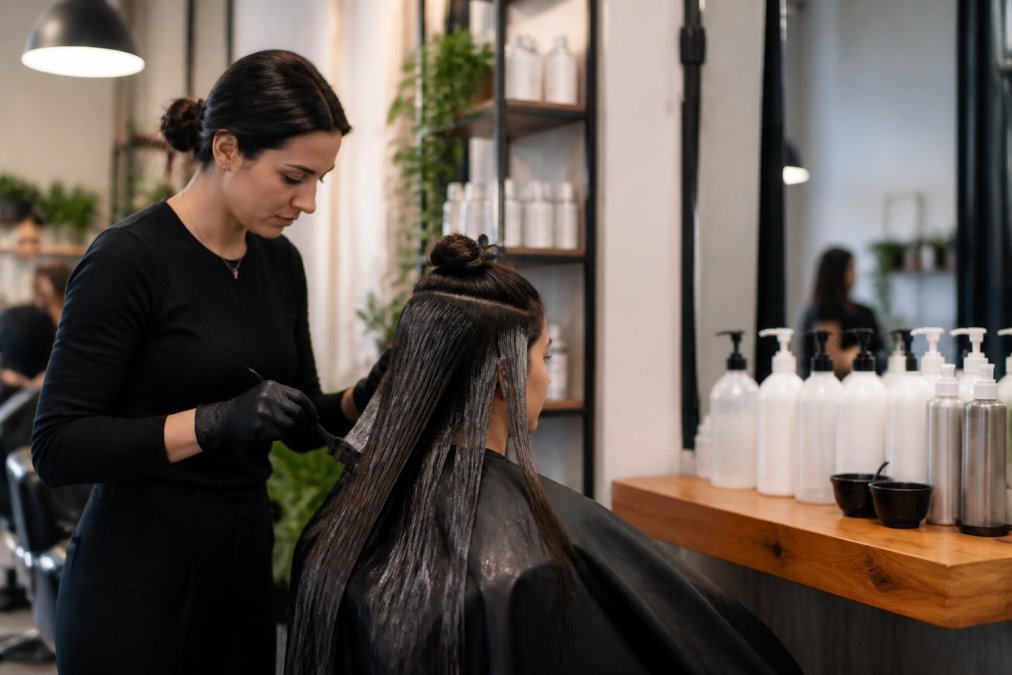
Sulfate-free shampoos are non-negotiable for color-treated hair. Sulfates strip color molecules along with dirt and oil. For clients maintaining keratin treatments or chemical services, sulfate-free formulas protect the investment.
"Sulfate-free" is not monolithic. The replacement surfactant matters enormously. Cocamidopropyl betaine, sodium cocoyl isethionate, and decyl glucoside behave differently in lather, moisture retention, and scalp health.
For color-treated hair, follow this regimen structure:
| Step | Product Type | Frequency | Key Function |
|---|---|---|---|
| 1 | Sulfate-free clarifying shampoo | Weekly or bi-weekly | Removes buildup without stripping color |
| 2 | Sulfate-free moisturizing shampoo | 2-3x per week | Gentle daily cleanse |
| 3 | Moisturizing conditioner | Every wash | Cuticle smoothing, moisture retention |
| 4 | Deep conditioning mask | Weekly | Protein and moisture replenishment |
| 5 | Leave-in treatment or smoothing balm | Daily | Frizz control, heat damage prevention |
Thermal Protection, Styling Products, and Product Layering Techniques
Heat damage prevention is where stylists build or lose client trust. A client who leaves with beautiful results but returns three months later with heat-damaged ends will blame the stylist, not their blow-dryer.
Thermal protection products coat the hair shaft with film-forming agents that distribute heat evenly and reduce peak temperature exposure. The critical variable is temperature rating. A product rated to 450°F suits flat irons; lightweight heat protectant spray does not.
Product layering separates good stylists from great ones. Work from lightest to heaviest, water-soluble to oil-based. For frizz-prone, color-treated hair:
- Leave-in conditioner (applied to damp hair)
- Smoothing balm or serum (seals the leave-in)
- Heat protectant (applied just before thermal styling)
- Shine glaze or finishing spray (applied after styling)
The most common mistake is applying heavy oil before heat protectant. Oil conducts heat; it doesn't block it. This accelerates heat damage rather than preventing it.
Hair Treatments, Masks, and Bond-Building Formulas
Bond-building treatments reconnect disulfide bonds broken during chemical services. For over-processed or fragile hair, a bond-building protocol before and after color or chemical services measurably improves elasticity and reduces breakage.
Protein treatments rebuild structural integrity for hair with low elasticity, excessive porosity, or visible damage. Deep conditioning masks restore moisture balance and improve manageability. Over-applying protein causes brittleness. Diagnostic assessment is essential.
According to the FDA's cosmetic ingredient guidance for professional hair products, the classification of a product as "treatment" versus "conditioner" has regulatory implications for marketing.
Ingredient Science for Stylists: What to Look For on the Label
Most stylists read client hair well. Fewer read INCI ingredient lists. That gap is a competitive disadvantage, because the label reveals exactly what a product will and won't do.
Key ingredients to know:
- Hydrolyzed keratin: Protein fragments small enough to penetrate the cuticle and reinforce the cortex. Effective for hair repair and elasticity.
- Panthenol (Pro-Vitamin B5): A humectant that attracts moisture and improves elasticity in rinse-out and leave-in formats.
- Cetrimonium chloride: A conditioning agent that smooths the cuticle and reduces static.
- Behentrimonium methosulfate (BTMS): A gentler conditioning agent in sulfate-free formulas, excellent for moisture retention without heaviness.
- Dimethicone vs. cyclomethicone: Both silicones with different behaviors. Dimethicone provides lasting smoothness; cyclomethicone evaporates, leaving less residue.
Ingredient order matters. Ingredients are listed in descending order of concentration. If a "keratin treatment" lists hydrolyzed keratin eighth on the label, actual keratin content is minimal. Position signals quality.
Professional Hair Product Brands List: How to Evaluate a Line
Evaluating a professional hair product line is a business decision affecting client outcomes, retail revenue, and professional credibility.
Use this evaluation framework:
- Ingredient transparency: Does the brand provide full INCI listings and technical data sheets?
- Formaldehyde-free verification: For keratin or smoothing lines, demand documentation, not marketing claims.
- pH range disclosure: Professional lines should disclose pH of shampoos, conditioners, and treatments.
- Performance breadth: Does the line address multiple hair types and textures?
- Education support: Does the brand offer training, application guides, and consultation resources?
- Wholesale structure: What are minimum order quantities, margin structures, and retail support options?
Kerarganic Cosmetics, LLC offers formaldehyde-free keratin treatments, organic-based collections with disclosed ingredients, and formulas for all hair types, including naturally curly and textured hair.
Sustainability and Clean Beauty Standards to Prioritize
Clean beauty is not a trend. Clients increasingly read labels, research brands, and ask direct questions about product safety.
Key standards to prioritize:
- Sulfate-free and paraben-free formulations: Baseline expectations for professional clients.
- Biodegradable packaging: Increasingly important for environmentally conscious clientele.
- Cruelty-free certification: Verifiable through organizations like Leaping Bunny.
- Organic-based ingredient sourcing: Brands that trace ingredient origins.
- No formaldehyde or formaldehyde-releasing agents: Non-negotiable for client safety and regulatory compliance.
As outlined in the Environmental Working Group's cosmetics safety database, many common hair care ingredients carry varying levels of concern.
How to Retail Hair Products in the Salon to Increase Revenue
Retail is the most underperformed revenue stream in independent salons. Many stylists avoid selling, leaving significant revenue on the table.
The reframe that works: retail is prescribing. When you recommend a sulfate-free shampoo to protect a keratin treatment, you're extending the service the client paid for. That's professional advice, not a sales pitch.
Client Consultation Guides That Drive Product Sales
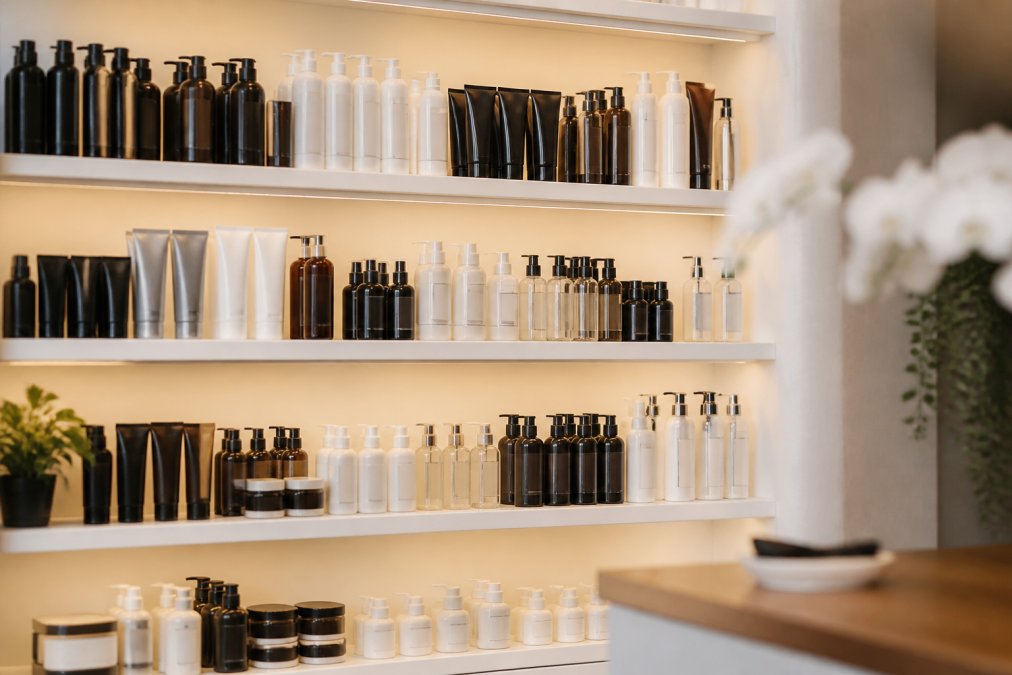
A structured client consultation is the single most effective retail tool. It surfaces information that makes product recommendations feel obvious rather than pushy.
Pre-Service Questions:
- What does your at-home hair care routine currently look like?
- What products are you using on your hair right now?
- Are you experiencing any scalp concerns, dryness, oiliness, sensitivity?
- How much time do you spend styling each morning?
- Have you had any chemical services in the last six months?
Observation Checklist:
- Assess porosity (wet strand test or float test)
- Evaluate elasticity (stretch test on a shed strand)
- Note hair density and texture
- Identify existing damage zones
Post-Service Recommendation Framework:
- Name the specific problem observed
- Explain why the recommended product addresses it
- Demonstrate application technique if possible
- State the expected result and timeline
The most effective recommendation connects directly to something the client said. "You mentioned you spend an hour on your hair every morning, this smoothing treatment will cut that down significantly." That's listening, not selling.
Wholesale Salon Products for Stylists: Sourcing Smart
Wholesale purchasing affects both cost of goods and retail pricing flexibility.
Smart wholesale sourcing fundamentals:
Know your volume before committing. Minimum order quantities vary widely. Committing to large quantities of untested products is expensive.
Evaluate full cost, not just unit price. Shipping, storage, and shelf life affect true cost. A product with 12-month shelf life turned over every three months is more economical than a cheaper product that expires on the shelf.
Understand margin structure. Professional hair care wholesale programs offer tiered pricing based on volume. Know your tier and the threshold for the next level.
Prioritize brands with retail support. The best relationships include education, marketing materials, and client-facing resources that help you sell through inventory.
Verify authenticity and authorized distribution. Buy through authorized channels only. Unauthorized distributors may sell counterfeit, expired, or improperly stored products.
For stylists evaluating wholesale options for keratin and smoothing treatments, formaldehyde-free verification, ingredient transparency, and education support become even more critical. You're putting your professional reputation behind the brand.
According to the Professional Beauty Association's industry resources for salon owners, retail product sales represent one of the highest-margin revenue opportunities available to independent stylists, and one of the most consistently underutilized.
Professional hair care for stylists is ultimately about building systems: diagnostic systems for client assessment, formulation knowledge for product selection, and business systems for retail and wholesale sourcing. The stylists who master all three build practices that retain clients, generate consistent retail revenue, and stay ahead of industry shifts.
Maintaining professional results between salon visits is a challenge every client faces, and it's one that Kerarganic Cosmetics, LLC is built to solve. The Kerarganic line offers formaldehyde-free keratin treatments and organic-based professional hair care formulas that nourish without harsh sulfates or salts, rebuild strength in over-processed hair, and extend the results of salon services. Visit Kerarganic Cosmetics, LLC and shop now to find the right professional-grade solution for your clients and your practice.
Frequently Asked Questions
What is the difference between professional and retail hair products?
Professional hair products are formulated at higher active-ingredient concentrations than mass-market versions. They address specific technical concerns like hair porosity, elasticity, and scalp health rather than offering one-size-fits-all results. Salon-grade lines are also more likely to be sulfate-free, pH balanced, and tested for use alongside chemical services such as keratin treatments or color. Retail products sold in drugstores are diluted for broad consumer safety tolerances, which typically means slower, less targeted results.
What are the essential hair care products every stylist needs in their kit?
A complete professional kit covers five categories: a clarifying shampoo and a sulfate-free daily shampoo, a moisturizing conditioner, at least one protein treatment or bond-building mask, a thermal protection spray rated for the heat tools you use, and a finishing product such as a smoothing balm or shine glaze. Stylists working with color-treated hair should also stock a color-safe deep conditioning formula and a setting lotion for frizz control and moisture retention between appointments.
How do I choose the right professional hair care line for my salon?
Start by matching the line to your most common client concerns: frizz, color longevity, heat damage prevention, or hair repair for over-processed hair. Evaluate the ingredient list for quality markers like keratin, amino acids, and plant-based oils, and confirm the formulas are free of formaldehyde and harsh sulfates. Check whether the brand offers wholesale pricing and educator support. Request samples before committing, and run a two-week trial on a range of hair textures and densities before stocking the full line.
Are formaldehyde-free keratin treatments as effective as traditional ones?
Yes. Formaldehyde is a fixative, not an active smoothing agent. Modern formaldehyde-free keratin treatments use alternative bonding agents and amino acid complexes to smooth the cuticle, reduce frizz, and improve moisture retention without the health risks associated with formaldehyde exposure. The FDA and OSHA have both flagged formaldehyde in salon products as a workplace hazard, making formaldehyde-free professional hair care the safer and increasingly preferred standard for salon professionals.
How can stylists increase revenue through professional product recommendations?
Retailing professional hair care products at the chair is the fastest way to grow revenue without adding appointment slots. Stylists who explain the specific benefit of each product during the service, and connect it to a client's diagnosed hair concern, convert at much higher rates than those who simply point to a shelf. Aim to recommend two to three products per visit, tie each one to the service just performed, and offer a take-home regimen card. Most salons that build a consistent retail habit see retail account for 15-20% of total revenue.
What should I look for when sourcing wholesale salon products?
Prioritize suppliers who offer verified professional pricing tiers, clear minimum order quantities, and documented product certifications. Confirm that wholesale accounts include access to professional education, ingredient transparency, and marketing materials. Avoid distributors who sell the same SKUs to general consumers at similar prices, since that undercuts your retail value at the chair. Organic-based and clean beauty lines with third-party testing documentation are increasingly important to clients who ask about ingredient safety before purchasing.
This article was written using GrandRanker