
Table of Contents
- Start With Your Strand Thickness, Not Just "Dry"
- Moisturizing Hair Mask Ingredients That Actually Help Dry Waves
- When You Need a Protein Treatment for Wavy Hair (and When You Don't)
- How Often to Use a Hair Mask on Dry, Wavy Hair
- How to Apply a Hair Mask to Wavy Hair Without Flattening Waves
- Matching a Mask to Your Routine, Budget, and Hair History
- Frequently Asked Questions
Last Updated: October 21, 2026
Start With Your Strand Thickness, Not Just "Dry"
Dryness tells you what your hair needs. Strand thickness tells you what it can handle.
So before you read a single ingredient label, figure out your strand size. Roll one shed strand between your fingers. If you can barely feel it, you have fine hair.
That one test decides more about how to choose the right hair mask for dry wavy hair than any marketing claim on the jar.
Fine Wavy Hair: Lightweight Formulas Only
Fine wavy hair needs hydration without weight. Heavy butters and thick creams sit on top of fine strands and pull the wave down within hours.
Look for water-based masks, milky textures, and light oils. Apply only from mid-shaft to ends.
Ingredient trade-offs for fine waves:
- Use: aloe vera, glycerin, panthenol, and light oils like argan or sunflower seed oil. These hydrate and smooth without a heavy film.
- Limit: shea butter, cocoa butter, coconut oil, and castor oil. A little at the ends is fine; a full butter-based mask will flatten fine waves.
- Avoid: single-ingredient oil masks applied to the whole head. They coat the surface, add shine, and do little for lasting moisture.
Our Fiberplasty Liquid Miracle Mask fits this category well. It starts as a liquid and turns to cream when it meets water, so it seals the cuticle without burying fine waves in product.
Medium Wavy Hair: The Balanced Middle
Medium strands are the most common texture and the easiest to over- or under-condition. They can handle more richness than fine hair but still go limp under a full butter mask.
If your waves air-dry in two to four hours, you're likely medium. A balanced mask with argan oil, panthenol, and a plant protein suits this profile. Use it once a week, and drop to every 10 to 14 days if your hair starts feeling coated.
Thick Wavy Hair: Richer Textures Can Work
Medium and thick wavy hair can take real richness. These strands have more surface area and hold moisture differently, so they tolerate butters, oils, and heavier creams.
For this group, look at masks built on shea or cocoa butter, argan oil, and plant proteins. Our Kakawa Intensive Care Mask is built for this profile, with cocoa seed butter and argan oil for deep nourishment.

The Quick Decision Framework
Run through these four questions in order before you buy:
- Strand size: fine, medium, or thick? This sets the weight class of the formula.
- Dryness level: slightly dry, very dry, or brittle? This sets how often you mask.
- Damage history: heat, color, or chemical treatment? This decides whether you need protein or bond support alongside moisture.
- Wave pattern: loose 2A-2B waves need lighter formulas than tighter 2C waves, which behave more like curls and can handle richer textures.
Get the order right and the ingredient list sorts itself out. Most shoppers reverse it, starting with the product claim and working backward, which is why so many wavy-hair routines end up too heavy or too weak.
Moisturizing Hair Mask Ingredients That Actually Help Dry Waves
A moisturizing hair mask works by pulling water into the hair fiber and sealing it there.
Here's how the common ones break down:
- Humectants: aloe vera, glycerin, panthenol (vitamin B5), Manuka honey. These draw water toward the hair.
- Emollients: argan oil, coconut oil, shea butter, sunflower seed oil. These soften strands and tame frizz.
- Proteins and amino acids: hydrolyzed soy protein, hydrolyzed keratin. These fill gaps in damaged fibers.
- Antioxidants: green tea extract, vitamin E, cocoa extract. These protect against environmental stress.
For wavy hair, the best masks combine all four groups. Pure oil masks, the kind sold as single-ingredient bottles, mostly coat the surface. They add shine but little lasting moisture.
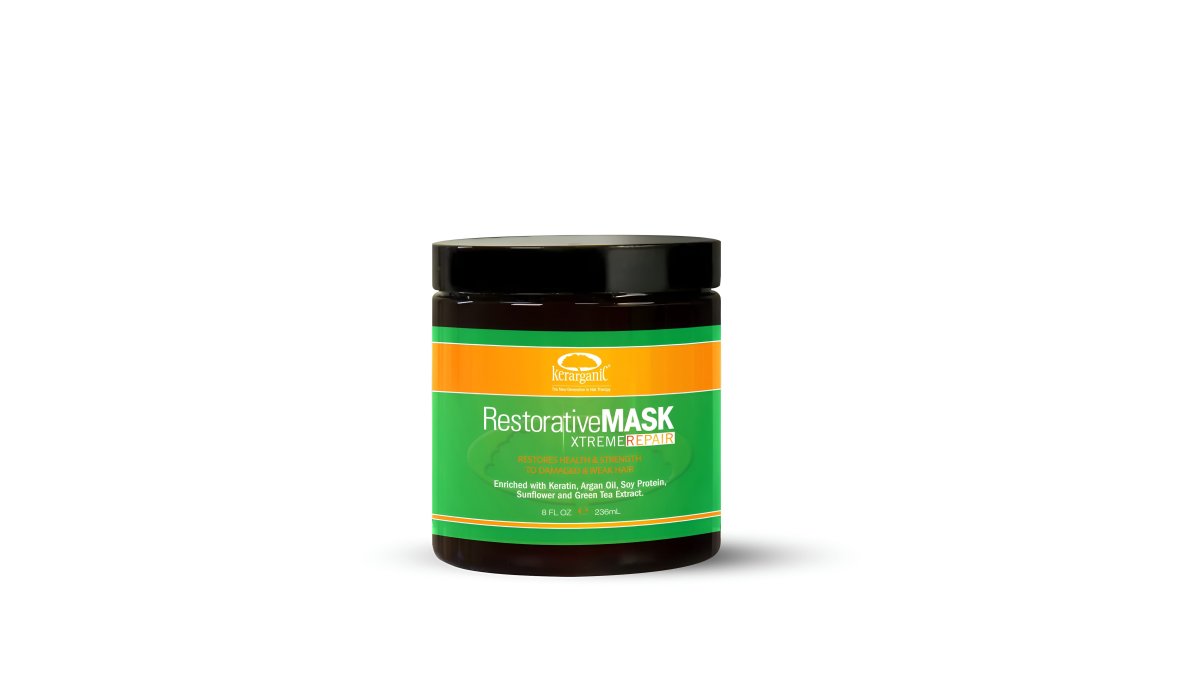
A balanced formula does more. Take our Xtreme Repair Restorative Mask: it pairs hydrolyzed keratin and soy protein with argan oil and green tea extract, so it conditions and reinforces at the same time.

When You Need a Protein Treatment for Wavy Hair (and When You Don't)
A protein treatment for wavy hair helps when strands feel mushy, stretchy, or too soft when wet. Those are signs of damage, usually from heat styling, coloring, or chemical treatments. Protein fills the gaps in the hair fiber and restores bounce.
It's the wrong move when hair feels stiff, straw-like, or snaps without stretching. That's a sign of protein overload, and adding more will make it worse.
Here's the quick test. Wet one strand and pull gently:
- Stretches far and doesn't spring back: needs protein.
- Snaps right away: needs moisture.
- Stretches, then returns to shape: balanced, keep doing what you're doing.
The Three-Way Diagnostic: Moisture, Protein, or Bond Repair
Most guides stop at moisture versus protein. Wavy hair often needs a third category: bond repair. Here's how to tell them apart by symptom:
- Moisture deficit: hair feels dry, rough, and frizzy, tangles easily, and looks dull. It may feel brittle but still stretches a little before breaking. Reach for humectants and emollients.
- Protein deficit: hair feels mushy, limp, or gummy when wet, stretches too far, and lacks bounce. Reach for hydrolyzed keratin, soy protein, or amino acids.
- Bond damage: hair breaks mid-shaft, has split ends that travel upward, or feels weak after coloring or heat styling even when it's conditioned. Reach for bond-repair ingredients and a reparative mask.
A common pattern is that hair needs more than one category at once, especially after chemical treatment. In that case, alternate rather than stack: use a moisture mask one week and a protein or repair mask the next.
How to Alternate Without Overloading
Wavy hair usually needs both moisture and protein, just not at the same time. Alternate a protein-rich mask with a moisture-focused one, and watch how your hair responds over a few weeks.
A practical schedule for most wavy hair:
- Week 1: moisture mask.
- Week 2: protein or repair mask.
- Week 3: moisture mask.
- Week 4: assess. If hair feels strong and soft, keep the rotation. If it feels stiff, skip the protein mask for a cycle.
Signs You've Gone Too Far
Watch for these signals that a protein or repair mask is too much for your hair right now:
- Hair feels stiff or straw-like even when wet.
- Strands snap without stretching.
- Waves look stringy rather than defined.
- The hair feels coated and won't absorb water.
If you see these signs, pause protein and repair masks for two to three weeks and use a lightweight moisture mask instead. Most practitioners find hair rebalances within a few washes once the excess protein is removed.
Matching the Mask to the Diagnosis
Once you know which category you're in, the formula choice gets simple. A moisture-focused mask built on humectants and light oils suits a moisture deficit. A protein-rich mask with hydrolyzed keratin and soy protein suits a protein deficit.
Our Xtreme Repair Restorative Mask pairs hydrolyzed keratin and soy protein with argan oil and green tea extract, so it conditions and reinforces at the same time, which makes it a good fit for the alternate-week slot in a rotation.
How Often to Use a Hair Mask on Dry, Wavy Hair
Use a hair mask once a week for dry, wavy hair. That's the sweet spot for most people. Very dry or heat-damaged hair can handle twice weekly, while fine or easily weighed-down waves do better every 10 to 14 days.
More isn't better. Over-masking leaves residue that builds up on the scalp and drags waves flat. If your hair starts feeling coated or heavy, you're using too much, too often.
| Hair Condition | Frequency | Mask Type |
|---|---|---|
| Fine, dry waves | Every 10-14 days | Lightweight, water-based |
| Medium, dry waves | Once a week | Balanced moisture and protein |
| Thick, dry waves | Once or twice a week | Rich, butter-based |
| Heat or color damage | Twice a week | Protein and moisture blend |
How to Apply a Hair Mask to Wavy Hair Without Flattening Waves
Knowing how to apply a hair mask to wavy hair matters as much as the formula you pick. The goal is to feed the ends without smothering the roots or disturbing your wave pattern.
Follow these steps:
- Start with damp, not soaking, hair. Squeeze out excess water after washing. Waterlogged hair can't absorb much.
- Section your hair. Clip it into four parts so you can reach every strand.
- Apply from mid-shaft to ends. Keep the mask off your roots unless your scalp is very dry.
- Comb through with a wide-tooth comb. This spreads the product evenly and detangles without breaking waves.
- Cover and wait 15 minutes. A shower cap traps heat and helps the mask penetrate. A thermal cap speeds this up.
- Rinse with cool or lukewarm water. Hot water strips moisture and roughs up the cuticle.
- Scrunch, don't towel-rub. Press a soft towel or t-shirt against your hair to remove water and protect the wave.
Matching a Mask to Your Routine, Budget, and Hair History
The best mask is the one you'll actually use consistently, and that fits what your hair has been through.
Ask yourself three questions:
- What's my styling routine? Daily heat styling calls for more repair. Air-drying and gentle routines need less.
- What's my hair history? Colored, relaxed, or chemically treated hair needs more protein and bond support.
- What's my budget? A mask you use weekly should fit comfortably into your regular spend.
For [hair with a heavy treatment history, a reparative formula like our Fiberplasty Rejuvenating Mask pairs hyaluronic acid and plant ceramides with keratin](/products/fiberplasty-rejuvenating-mask) and collagen.

If you've had a salon smoothing treatment, choose sulfate-free masks to protect your results.
Kerarganic Cosmetics, LLC makes that choice easier with professional-grade, keratin-infused masks built for every texture.
Get started with Kerarganic Cosmetics, LLC and give your waves the moisture and strength they've been missing.
Frequently Asked Questions
Should hair be wet or dry when applying a hair mask?
Apply a hair mask to wet hair. Water helps the formula spread evenly through the strands instead of sitting on the surface, and it lets ingredients like hydrolyzed keratin and panthenol reach the cuticle more effectively. After shampooing, squeeze out excess water so the hair is damp rather than dripping, then comb the mask through from mid-lengths to ends. If you apply to dry hair, you tend to use more product and get patchy coverage, which is why every Kerarganic mask instructs you to start on wet hair.
How can you tell whether your wavy hair needs moisture or protein?
Do the stretch test. Take a single shed strand, wet it, and pull gently from both ends. If it stretches far and snaps without springing back, your hair is likely moisture-deficient and needs hydrating ingredients like aloe vera, shea butter, or cocoa seed butter. If it snaps almost immediately with little stretch, it is brittle and probably needs protein, such as hydrolyzed soy protein or keratin. Hair that feels gummy when wet usually signals too much protein, so alternate with a moisturizing mask instead.
Can a hair mask weigh down fine wavy hair?
Yes, and it happens often. Fine wavy hair has fewer cuticle layers per strand, so heavy butters, oils, and silicone-rich formulas can sit on top and pull the wave flat. Look for lightweight formulas with aloe vera, panthenol, or hydrolyzed proteins rather than thick shea or coconut oil bases. Apply only from mid-lengths down, keep the mask off your roots, and rinse thoroughly. A 5 to 15 minute treatment is enough for fine hair; leaving a rich mask on for an hour usually causes product buildup and limp waves.
How often should you use a hair mask on dry, wavy hair?
Once a week suits most dry, wavy hair. If your hair is heavily heat-styled, color-treated, or over-processed, twice a week is reasonable until it recovers, then drop back to weekly maintenance. Fine wavy hair should stay at once a week or every other week to avoid weighed-down hair. Alternate a moisturizing mask with a protein treatment every second or third wash, and pay attention to how your waves spring back after each use. If they look limp, you are masking too often.