
Table of Contents
- Can I Use Dry Shampoo After a Keratin Treatment?
- What Dry Shampoo Does to Freshly Treated Hair
- How Long to Wait to Wash Hair After a Keratin Treatment
- Dry Shampoo for Keratin-Treated Hair: When It Is Safe to Start
- Shampoo Ingredients to Avoid After a Keratin Treatment
- How to Apply and Remove Dry Shampoo Without Damaging Your Treatment
- How Dry Shampoo Affects Treatment Longevity and Hair Texture
- Choosing the Right Products to Extend Your Results
- Frequently Asked Questions
Last Updated: October 9, 2026
Can I Use Dry Shampoo After a Keratin Treatment?
Yes, you can use dry shampoo keratin treatments and all, but not right away.
Kerarganic Cosmetics, LLC has helped thousands of clients maintain salon results at home, and this question comes up constantly. The short answer is timing, not avoidance.
The waiting period exists for a reason. Keratin treatments seal protein into the hair cuticle through heat, and during the first few days that seal is still setting.
What Dry Shampoo Does to Freshly Treated Hair
Dry shampoo absorbs oil at the roots using starch or powder-based ingredients. On untreated hair, that's harmless. On freshly treated hair, it can be a problem.
The issue is residue.
There's also the alcohol question. Many drugstore dry shampoos list alcohol as a main ingredient because it helps the spray dry fast. Alcohol strips moisture, and treated hair needs moisture to stay flexible.
How Long to Wait to Wash Hair After a Keratin Treatment
Most keratin treatments require a 72-hour wait before the first wash, though some formulas ask for 48 hours.
Why so long? Heat-activated keratin needs time to cool and bond.
Follow your stylist's instructions above all else. Every formula differs, and the protocol you were given is the one that matters.
Here's a simple rule to remember:
- 48 hours: minimum for most modern treatments
- 72 hours: standard for professional salon systems
- 96 hours: sometimes advised for very coarse or resistant hair
If you're not sure which applies to you, wait the full 72 hours. It costs you nothing and protects your investment.
Dry Shampoo for Keratin-Treated Hair: When It Is Safe to Start
Dry shampoo keratin care is safe to start once the initial setting period ends, usually after 72 hours. At that point, the treatment has bonded and the surface is stable. You can spray, wait, and brush it through without lifting the keratin.
Start small. Spray at the roots only, not the mid-lengths or ends. Those areas don't get oily the way your scalp does, and they need moisture, not powder.
Why the First 72 Hours Matter
The first 72 hours decide how long your treatment lasts. This is when the keratin is still settling into the cuticle, and anything that adds moisture, friction, or buildup can weaken the bond.
That means no washing, no swimming, no heavy sweating, and no dry shampoo. You should also avoid:
- Tucking hair behind your ears
- Using clips or tight ties
- Sleeping on damp hair
Small habits make a big difference. A client who follows the 72-hour rule often gets weeks more wear out of the same treatment.
Shampoo Ingredients to Avoid After a Keratin Treatment
Sulfates and sodium chloride are the two ingredients to avoid after a keratin treatment.
Sulfates are harsh cleansers. They create that rich lather people associate with "clean," but they also strip the protein layer you just paid for.
Sodium chloride, or salt, is trickier. It hides in many shampoos and conditioners as a thickener, pulls moisture out of hair, and loosens the keratin seal.
Dry Shampoo Ingredients That Matter Most
Not all dry shampoos are equivalent for treated hair. Read the label for these:
- Alcohol denat (denatured alcohol): The most common problem ingredient in aerosol dry shampoos. It makes the spray dry fast, but it strips moisture from treated strands. A dry, stripped strand creases more easily and loses its straight finish faster. If alcohol denat is one of the first three ingredients, treat it as a skip.
- Sodium chloride: Same concern as in shampoo. Check the inactive ingredients list, not just the front of the can.
- Heavy silicones (dimethicone, cyclopentasiloxane): They coat the hair and dull shine. A light silicone is tolerable, but a silicone-heavy formula used daily builds up near the roots.
- Propane, butane, isobutane: These aerosol propellants are not a dealbreaker on their own, but they signal a propellant-heavy formula that often pairs with alcohol denat.
Ingredients That Are Actually Fine
The powder base is what absorbs oil, and the gentlest options are starches:
- Rice starch, lightweight, absorbs well, brushes out cleanly.
- Tapioca starch, similar performance, often marketed as a natural option.
- Cornstarch, effective but can leave a heavier white cast on dark hair.
- Oat flour, gentle, but the texture is coarser and can feel gritty at the roots.
A formula built on rice or tapioca starch with no alcohol denat in the top three ingredients is the safest bet for treated hair. For a moisture buffer, look for argan oil, aloe vera, or hydrolyzed keratin further down the list, they soften the feel without undoing the powder's oil absorption.
Kerarganic Cosmetics, LLC builds its maintenance line around this exact problem. The KERATIN SHAMPOO MAINTENANCE is salt- and sulfate-free, so it cleans without stripping, and uses hydrolyzed keratin to mend damaged fibers, argan oil to keep hair soft, and a UV filter to protect color and treatment from sun damage.

For those with straightened hair, the KERATIN SHAMPOO MAINTENANCE PREMIUM adds heat protection on top of the same gentle cleanse.

How to Apply and Remove Dry Shampoo Without Damaging Your Treatment
Application technique matters as much as the product. Done right, dry shampoo refreshes your roots without touching the treatment. Done wrong, it leaves buildup that dulls your shine.
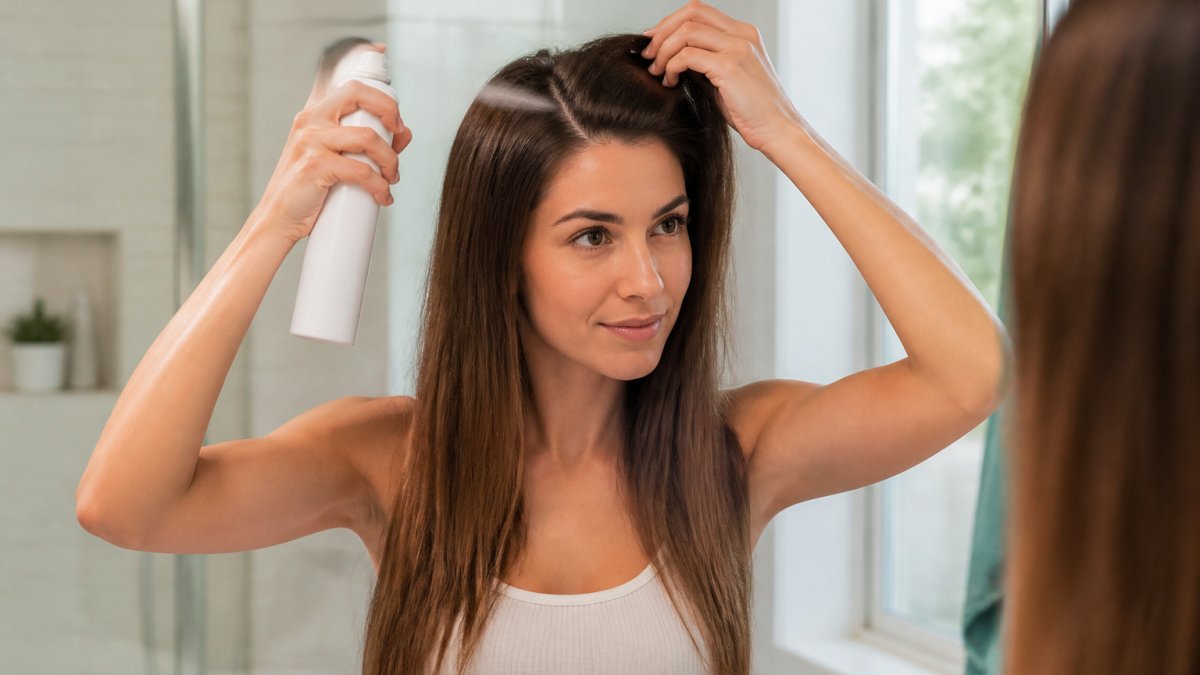
Follow these steps:
- Shake the can well. Powder settles at the bottom.
- Hold it 6 to 8 inches from your scalp. Closer means clumps.
- Spray in short bursts at the roots only. Section your hair first.
- Wait 2 to 3 minutes. Let the powder absorb oil.
- Massage gently with fingertips. Don't scrub hard.
- Brush through with a soft boar-bristle brush. This lifts residue.
- Check for white cast. If you see powder, brush again.
At night, dry shampoo does double duty. Spray it before bed and let it work while you sleep. You'll wake up with fresher roots and less need to wash.
How Dry Shampoo Affects Treatment Longevity and Hair Texture
Used correctly, dry shampoo can actually extend your treatment. Fewer washes means less exposure to water and friction, the two biggest threats to a keratin finish.
Washing daily is the fastest way to wash out the keratin. Every wash swells the cuticle and slowly releases the protein.
Texture changes with overuse, though. Spray too much, too often, and you'll notice:
- A dull, coated look
- Product buildup near the scalp
- Hair that feels stiff instead of smooth
- More creases and less natural movement
The fix is balance: use dry shampoo to stretch washes, not replace them.
Choosing the Right Products to Extend Your Results
The right routine protects your treatment. The wrong one undoes it. Here's what to look for in a dry shampoo and the products you use around it.
| What to Check | Safe Choice | Avoid |
|---|---|---|
| Cleansers | Sulfate-free, salt-free | Sulfates, sodium chloride |
| Dry shampoo base | Rice or tapioca starch | Alcohol-heavy aerosols |
| Moisture | Argan oil, aloe vera | Drying alcohols |
| Protein | Hydrolyzed keratin | None needed |
| Sun care | UV filter | No protection |
How to Pick a Dry Shampoo for Treated Hair
Most dry shampoos are sold on scent and volume, not on how they behave on a keratin finish. Use this order of checks:
- Read the first five ingredients. Rice starch or tapioca starch should lead. If alcohol denat or sodium chloride is in the top five, skip it.
- Choose powder or aerosol over tinted mousse. Tinted mousses add moisture, which can lift the keratin near the roots. Powder and aerosol formulas are dry by design.
- Match the tint to your hair. A white-cast powder on dark hair looks like dandruff. Tinted powders in brunette, auburn, and blonde shades brush out more cleanly.
- Skip volumizing formulas. They rely on heavier polymers that build up at the roots and can make treated hair feel stiff.
- Buy a small size first. A travel can lets you test whether the formula leaves residue on your specific treatment before committing to a full-size bottle.
How Often Is Too Often
Dry shampoo is a bridge, not a replacement. A reasonable pattern for treated hair:
- One to two washes per week with a sulfate-free, salt-free shampoo.
- One to two dry shampoo uses per week between washes, applied at the roots only.
- A clarifying wash every four to six weeks if you notice buildup, use a gentle sulfate-free clarifier, not a harsh one.
If your roots feel gritty or your hair stops moving naturally, you've crossed from stretching washes into replacing them. Pull back on the dry shampoo and add a wash.
What to Do If Something Goes Wrong
Even careful users hit problems. Here's how to handle the common ones:
- White cast that won't brush out: You sprayed too close or used too much. Brush with a clean boar-bristle brush, then blot with a dry microfiber towel. If it still shows, wash with a sulfate-free shampoo, the treatment is past its setting window by now, so a wash is safe.
- Hair feels stiff or coated: Buildup. Do a gentle clarifying wash and skip dry shampoo for a few days.
- Scalp itching or flaking after use: Some formulas irritate sensitive scalps. Stop using that product and switch to a fragrance-free starch-based option. If irritation persists, see a dermatologist.
- You sprayed dry shampoo during the setting window: Don't panic. Brush out what you can and do not wash early unless your stylist says it's fine. Call your stylist and follow their guidance, they know which formula was used.
For a full at-home routine, the ORGANIC PREMIUM HOME CARE BUNDLE pairs a salt-free shampoo, conditioner, weekly mask, leave-in spray, and argan oil to keep hair smooth and extend your straightening for months.
Pair any of these with the KERATIN CONDITIONER POST-TREATMENT after each wash. It adds back the moisture dry shampoo can slowly pull out.

Frequently Asked Questions
Can I use dry shampoo after a keratin treatment?
Yes, but timing matters. Most stylists recommend waiting at least 72 hours after your treatment before applying dry shampoo, since the keratin needs time to fully set into the hair. Using it too soon can interfere with the formula and reduce how long your results last. Once the setting period is over, a dry shampoo free of sulfates and sodium chloride is generally safe for touch-ups between washes.
How long should I wait to use dry shampoo after a keratin treatment?
Wait a minimum of 72 hours, and follow whatever your stylist specifies, because some formulas require up to four days. During that window, avoid washing, wetting, or spraying anything onto the hair, including dry shampoo. The treatment is still bonding to the hair shaft, and early product use can loosen that bond. After the waiting period, dry shampoo becomes a practical way to stretch time between regular washes.
Which dry shampoo is safe for keratin-treated hair?
Look for a dry shampoo labeled sulfate-free and sodium chloride-free, since both ingredients can strip keratin from the hair. Check the label for alcohol as a primary ingredient, as it can dry out treated hair. Rice starch and tapioca starch are common absorbent bases that lift oil without leaving heavy residue. If you are unsure about a specific brand, ask your stylist or test it on a small section first.
Can dry shampoo affect the results of a keratin treatment?
It can if you use it during the initial setting period or choose a formula with harsh ingredients. Applied correctly after the waiting period, dry shampoo helps you avoid overwashing, which is one of the biggest threats to treatment longevity. Overwashing with the wrong shampoo strips keratin faster than dry shampoo use does. The bigger risk comes from product buildup, so brush or rinse out residue regularly to keep hair texture smooth.