
Table of Contents
- Why Keratin Treatments Fail: The Mistakes That Shorten Your Results
- How Soon to Wash Hair After a Keratin Treatment
- Using the Wrong Shampoo: Why Sulfates and Salt Undo Your Treatment
- Heat Styling Mistakes That Break Down Keratin
- Swimming, Chlorine, and Salt Water: Protecting Your Treatment
- Tying, Pinning, and Tucking Hair Too Soon
- How Long Does a Keratin Treatment Last (and What Shortens It)
- Keratin Treatment Not Working? How to Tell Fading From Damage
- Frequently Asked Questions
Last Updated: October 13, 2026
Why Keratin Treatments Fail: The Mistakes That Shorten Your Results
Most keratin treatments don't fail because the formula was weak, they fail in the days and weeks after the salon chair.
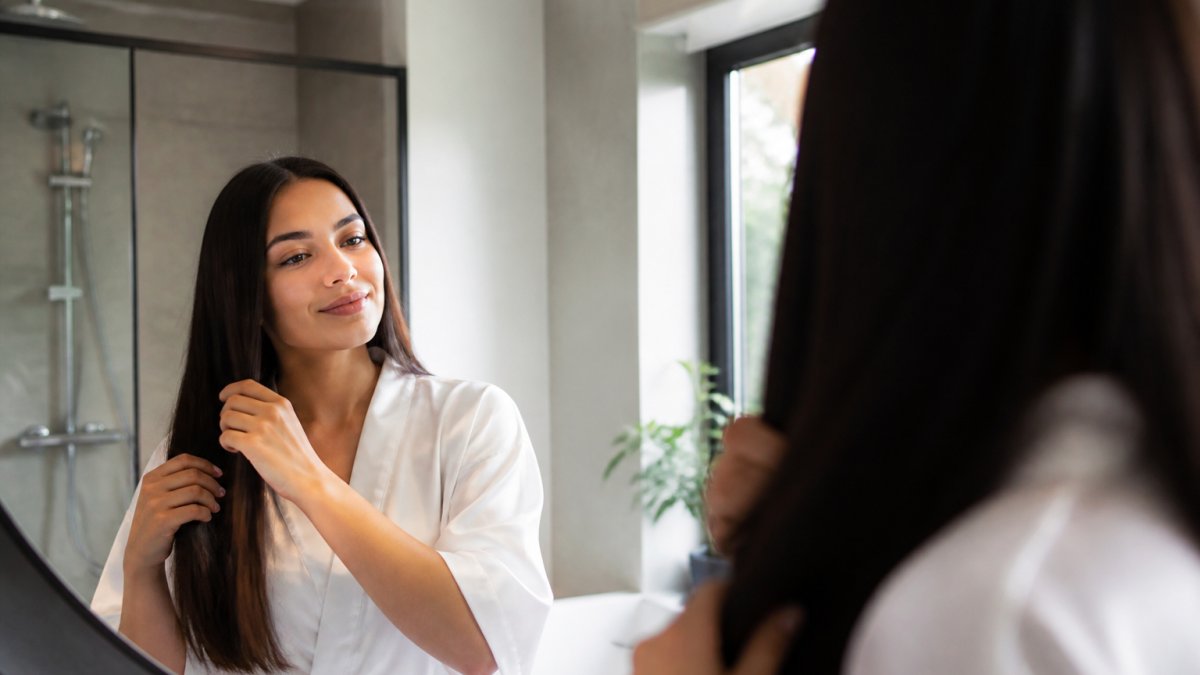
Keratin treatments are professional smoothing services that use keratin protein to reduce frizz and add shine.
How Soon to Wash Hair After a Keratin Treatment
It depends on the formula. Most aftercare instructions land between 48 and 96 hours, and your stylist's number is tied to the specific product used, not to keratin treatments in general. Treating "72 hours" as a universal rule is one of the most common ways people shorten their results.
Why the Waiting Window Exists at All
A keratin treatment deposits protein and a sealing agent onto and into the hair's cuticle layer, which needs time to cure, the formula must finish bonding and the cuticle must close around it. Water, steam, sweat, and mechanical bending all interfere.
How the Window Varies by Formula
Different keratin systems carry different cure times. The label or your stylist's instructions always override a generic rule of thumb.
- Formaldehyde-free smoothing treatments (the category most at-home and "express" salon services fall into) typically ask for 48 to 72 hours before the first wash.
- Traditional Brazilian-style treatments that rely on a heat-sealed protein layer often call for the full 72 hours, and some specify 96.
- Express or "no-wait" formulas marketed as wash-and-go may allow washing the same day, but they usually fade faster and need more frequent touch-ups.
If you don't know which category your treatment falls into, ask your stylist before leaving the chair: "How many hours until I can wash?" and "What happens if I wash early?" Write the answers down.
What Counts as "Getting Hair Wet"
People underestimate this constantly. The window isn't just about shampoo.
- Rain, even light drizzle, counts.
- Sweat from a workout or a hot commute counts.
- Steam from a hot shower counts, even with a cap if the cap leaks.
For the first three days:
- Keep hair completely dry
- Skip saunas, steam rooms, and intense workouts that cause sweating
- Use a shower cap and keep water temperature moderate
If You Already Got Your Hair Wet
Do not panic, and do not wash it again to "reset" it, that makes things worse.
- Blot gently with a soft towel. Do not rub.
- Let it air dry without touching or bending it.
- Do not apply heat to "fix" it.
- Call your stylist and describe what happened.
A brief splash or sweaty workout usually doesn't ruin the treatment outright; it may shorten the smooth phase by a few weeks. A full shampoo within the first 24 hours is more serious and often means the treatment fades noticeably faster. Either way, wait out the full window, then resume a sulfate-free routine and see how the hair behaves over the next two weeks before deciding on a touch-up.
Using the Wrong Shampoo: Why Sulfates and Salt Undo Your Treatment
Switch to a sulfate-free, salt-free shampoo the day you leave the salon. Sulfates strip the keratin coating from your hair, and salt does the same over time, which is why most people accidentally undo their own treatment within the first few washes.
Sulfates are detergents that create lather. They remove oil effectively, but don't distinguish between dirt and the keratin you just paid for. Salt, often listed as sodium chloride, thickens shampoo formulas and can dull the finish.
Best Sulfate-Free Shampoo for Keratin-Treated Hair
Look for a shampoo labeled sulfate-free and salt-free, with conditioning ingredients like keratin, argan oil, or panthenol to maintain smoothness between washes.
Our pick is KERATIN SHAMPOO MAINTENANCE ($14.60). It's salt- and sulfate-free, includes hydrolyzed keratin and argan oil, and adds UV protection. Pair it with KERATIN CONDITIONER POST-TREATMENT ($14.60) to keep hair hydrated and manageable.


A few things to check before you buy any shampoo:
- "Sulfate-free" on the front label, but check the back for sodium lauryl sulfate or sodium laureth sulfate
- No sodium chloride in the ingredient list
- Keratin, silk protein, or amino acids listed as ingredients
Heat Styling Mistakes That Break Down Keratin
Heat is the second-biggest threat to a keratin treatment, right behind early washing. What matters is which tool, at what temperature, on what hair type, with what protection, and what to do once damage has started.
How Heat Actually Breaks Down a Treatment
Keratin protein and its sealing agents have a temperature threshold. Push past it and the protein denatures, losing its smoothing effect. Push past it repeatedly and the cuticle cracks, which is why heat damage shows up as brittleness and breakage rather than just fading.
A few mechanics worth knowing:
- Water boils at 212°F. Any tool hot enough to flash-boil the moisture inside the hair shaft is stressing the cuticle from the inside out. That is why "wet to dry" flat ironing is one of the worst things you can do to treated hair.
- Most fine or color-treated hair does not need a flat iron above 350°F. Many stylists work in the 300-350°F range for fine hair and 350-400°F for coarse, resistant hair.
- Blow dryers and curling wands count as heat tools too. People protect against the flat iron and forget the dryer.
The Mistakes We See Most Often
- Skipping heat protection. Always apply a heat protectant before any hot tool, dryer included.
- Using high temperatures out of habit. Most people use 100°F to 150°F more heat than their hair needs.
- Flat ironing wet or damp hair. This cooks the cuticle fastest. Hair should be 100% dry before the iron touches it.
- Re-ironing daily. If your treatment is working, you shouldn't need to flat iron at all. Daily ironing signals something else is off, usually the shampoo or wash frequency.
- Using the same temperature on every section. Fine hair around the face and nape needs less heat than coarse hair at the crown.
Tool-by-Tool Temperature Guidance
| Tool | Typical safe range for treated hair | Notes |
|---|---|---|
| Blow dryer | Medium heat, medium speed | Keep the nozzle 6+ inches from the hair; finish with a cool shot to close the cuticle |
| Flat iron (fine or damaged hair) | 300-350°F | One slow pass; do not repeat on the same section |
| Flat iron (coarse, resistant hair) | 350-400°F | Still one pass; if it takes more, the hair is not dry enough |
| Curling wand | 300-350°F | Wrap, do not clamp and hold |
| Hot rollers | Lowest setting | Let them cool completely before removing |
If your tool has a digital display, trust the number, not the dial position. Many irons run hotter than their dial suggests.
If You Have Already Overdone the Heat
Stop heat styling entirely for two to three weeks. That's the most effective recovery step, and the one people skip because they want the smooth look back immediately.
While on the heat break:
- Use a deep conditioning mask once a week
- Avoid rough towel drying and tight styles that pull at fragile sections
- Get a trim to remove split ends before they travel up the shaft
If breakage is severe, patchy, or accompanied by scalp pain, burning, or redness, contact your stylist or a dermatologist rather than layering on more product.
Use a leave-in with heat protection, like KERATIN LEAVE-IN CONDITIONER - HAIR SPRAY ($18.80).
Swimming, Chlorine, and Salt Water: Protecting Your Treatment
Chlorine and salt water both strip keratin from the hair, so regular swimmers will see their treatment fade faster.
Before swimming, wet your hair with fresh water and apply a leave-in conditioner.
After swimming, rinse immediately with fresh water, then wash with a sulfate-free shampoo and follow with a deep conditioner.
If you swim more than twice a week, expect your keratin treatment to last closer to the shorter end of its normal range.
Tying, Pinning, and Tucking Hair Too Soon
Hair ties, clips, and pins leave creases in hair that hasn't fully set. For the first 72 hours, avoid anything that bends or dents the hair, ponytails, buns, braids, and bobby pins included.
After the initial window, you can style your hair normally, but with a few adjustments:
- Use coated or silk hair ties instead of bare elastic
- Avoid tight ponytails that pull at the roots
- Don't sleep with wet hair tied back
Creases from tight ties can become semi-permanent if the hair is still curing. Once the treatment has fully set, normal styling won't cause lasting bends.
How Long Does a Keratin Treatment Last (and What Shortens It)
A keratin treatment typically lasts two to five months, depending on formula, hair type, and maintenance. Salon treatments last longer than at-home versions, and coarse or resistant hair often holds a treatment longer than fine hair.
What shortens results:
- Washing too soon after the treatment
- Using sulfate or salt-based shampoo
- Frequent heat styling without protection
What extends results:
- A consistent sulfate-free routine
- Weekly deep conditioning with a keratin mask
- Heat protection every time you style
For weekly maintenance, KERATIN POST-TREATMENT MASK - STEP 3 ($12.50) reinforces the treatment and helps it last longer. Use it once a week after shampooing.

| Mistake | Effect on Treatment | Fix |
|---|---|---|
| Washing before 72 hours | Prevents full bonding | Wait the full 72 hours |
| Sulfate or salt shampoo | Strips keratin coating | Switch to sulfate-free, salt-free |
| Skipping heat protection | Breaks down keratin protein | Apply leave-in before styling |
| Chlorine or salt water | Fades treatment fast | Wet hair and apply leave-in before swimming |
| Tight ties and pins | Leaves creases and bends | Use coated ties; avoid tight styles |
Keratin Treatment Not Working? How to Tell Fading From Damage
If your keratin treatment isn't working as expected, first figure out whether it's fading normally or whether something has actually damaged your hair, two very different problems needing different responses.
Normal fading looks like this:
- Hair gradually returns to its natural texture over weeks
- Frizz comes back slowly
- Hair still feels soft and healthy
Damage looks like this:
- Hair feels dry, brittle, or straw-like
- Breakage increases noticeably
- Split ends appear faster than usual
If you're seeing damage rather than fading, the treatment may have been applied to already-compromised hair, or heat tools may have been used at unsafe temperatures.
If you're seeing normal fading, you have options. Book a touch-up, or switch to a maintenance routine that supports the keratin you still have. KERATIN INTENSIVE MAINTENANCE MASK PREMIUM ($22.50) is formulated to nourish hair fibers from the inside out and is a good weekly addition to a fading treatment.
Keratin treatments work when aftercare supports them. Get started with Kerarganic and keep your keratin treatment looking salon-fresh for months, not weeks.
Frequently Asked Questions
What happens if I get a botched keratin treatment?
A botched keratin treatment can leave hair uneven, with some sections straighter than others, or cause excessive dryness and breakage. If the formula was applied unevenly or heat was inconsistent, the protein bonds form irregularly. Wait at least two weeks before attempting a corrective service. In the meantime, use a sulfate-free shampoo and a deep conditioning mask to restore moisture. A licensed stylist can assess whether a redo is safe or if your hair needs recovery time first.
Can sulfate shampoo ruin a keratin treatment?
Yes. Sulfates are harsh detergents that strip the keratin proteins deposited during treatment. Even one wash with a sulfate-heavy shampoo can accelerate fading and bring back frizz. Switch to a salt- and sulfate-free formula like Kerarganic's Keratin Shampoo Maintenance ($14.60), which cleanses gently while replenishing hydrolyzed keratin and argan oil. This single swap is one of the most effective ways to extend your results.
How soon can I wash my hair after a keratin treatment?
Most stylists recommend waiting 72 hours before the first wash. This window allows the keratin to fully bond with your hair's cuticle. Washing too soon can rinse away the treatment before it sets, leaving you with uneven results and reduced longevity. If you must wash sooner due to an emergency, use a sulfate-free shampoo and cool water, then air-dry rather than heat-style.
Why did my keratin treatment not work?
Several factors can cause a keratin treatment to underperform: washing too soon, using sulfate shampoo, excessive heat without protection, or swimming in chlorinated water within the first week. Sometimes the issue is the formula itself. If your hair feels rough rather than smooth after the waiting period, the treatment may not have bonded properly. Consult your stylist and review your aftercare routine before scheduling another service.
How long does a keratin treatment last with proper aftercare?
A professional keratin treatment typically lasts three to five months, depending on your hair type, wash frequency, and how well you follow aftercare guidelines. Using sulfate-free products, limiting heat styling, and protecting hair from chlorine and salt water all extend results. A weekly deep conditioning mask, like Kerarganic's Keratin Post-Treatment Mask ($12.50), reinforces the treatment and helps you get closer to the five-month mark.