
Table of Contents
- How Keratin Treatments Work on Your Hair
- Keratin Treatment Benefits: What Actually Improves
- Does Keratin Treatment Damage Hair? The Evidence
- How Long Does a Keratin Treatment Last and What to Expect
- Keratin Treatment Aftercare: Protecting Your Results
- Is a Keratin Treatment Right for Your Hair Type
- Frequently Asked Questions
Last Updated: October 8, 2026
How Keratin Treatments Work on Your Hair
Keratin treatments infuse your hair with a protein-based formula that penetrates the hair shaft and alters its structure. The formula bonds with the hair's natural proteins, smoothing the cuticle and sealing moisture inside.

The formula typically contains hydrolyzed keratin, amino acids, and nourishing oils that work into the cortex of each strand, filling gaps left by damage, heat styling, or chemical processing. After it sets (usually 10-20 minutes), you flat-iron the hair to seal the keratin in place, creating a smoother surface that reflects light and reduces friction.
This process addresses the root cause of many hair problems. Over-processed, curly, or heat-damaged hair loses its natural keratin over time; replacing that protein restores its ability to hold moisture, resist breakage, and maintain shape. That's the fundamental reason why keratin treatments are good for hair health: they repair structural damage rather than mask it.
Keratin Treatment Benefits: What Actually Improves
Keratin treatment benefits span multiple dimensions of hair health, but it's important to separate cosmetic improvements from actual structural repair so you can set realistic expectations.
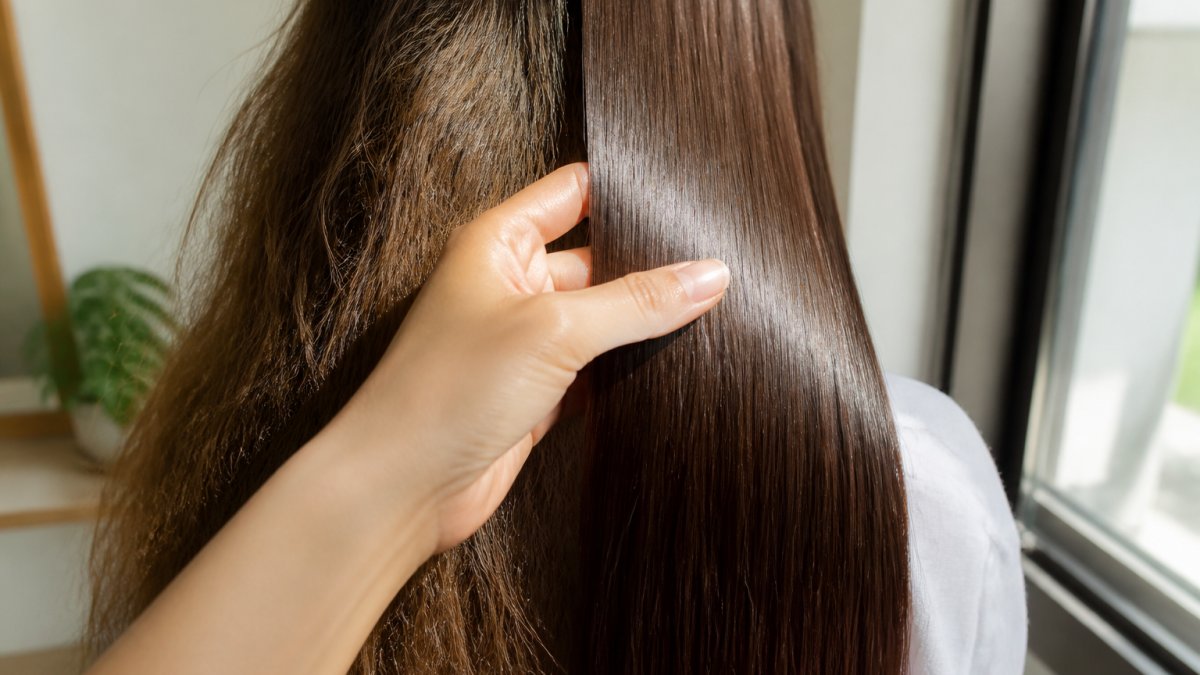
Frizz Reduction and Smoothness
Frizz happens when moisture penetrates the cuticle unevenly, causing it to swell and lift. Keratin treatments seal the cuticle and lock moisture inside at a consistent level, dramatically reducing the hair's tendency to absorb humidity and expand unpredictably.
The smoothness you feel is real, not a temporary coating. The treatment fills micro-gaps in the shaft, creating a denser, more uniform surface that reflects light evenly and looks shinier. Reduced friction between strands means less tangling, easier combing, and less breakage, so daily styling time often drops significantly.
Strength and Reduced Breakage
This is where keratin treatments deliver genuine structural benefit. Breakage occurs at weak points where the protein structure has degraded; replenishing keratin reinforces those points and increases overall resilience.
The amino acids in keratin formulas, particularly the silk amino acids found in formulations like the Kerarganic Organic Keratin System, bind to damaged areas and restore elasticity. This means your hair can stretch and flex without snapping. If you've been dealing with breakage from heat styling, chemical treatments, or aggressive brushing, a keratin treatment can genuinely reduce that damage. The improvement isn't cosmetic; it's a measurable increase in the hair's ability to withstand stress.
Shine and Hair Appearance
Shine is partly cosmetic and partly structural. A smooth, sealed cuticle reflects light uniformly, and healthy, hydrated hair shines because it reflects light properly instead of scattering it through a roughened surface.
The oils and butters in keratin formulas, argan oil, shea butter, coconut oil, add shine and improve how hair feels. Their fatty acids nourish the scalp and shaft and help hair retain moisture long-term, so it keeps looking better for weeks with the right aftercare.
Does Keratin Treatment Damage Hair? The Evidence
A keratin treatment can help or harm your hair depending on the formula, application, and your hair's starting condition. The word "keratin" on a label tells you almost nothing about safety, because the smoothing effect in most salon treatments comes from the chemistry around the protein, not the protein itself.
What the Smoothing Chemistry Actually Does
A keratin treatment works in two stages: a solution lets the cuticle be reshaped, then flat-iron heat locks that shape in. The protein temporarily fills gaps and improves how the surface feels, but it does not rebuild the living tissue inside the strand. Hair isn't living tissue once it leaves the follicle, so no topical product can permanently restore a damaged cortex. A well-applied treatment smooths the cuticle, reduces friction, and makes hair look and behave better for weeks, a real cosmetic benefit worth being precise about rather than calling it repair.
Formaldehyde and Formaldehyde-Releasing Ingredients
The safety concern with traditional smoothing treatments centers on formaldehyde. Some formulas contain it directly; others contain ingredients that release it when heated, including methylene glycol, methylene oxide, and certain glyoxylic acid-based systems. Heat accelerates the release, so the flat-iron stage carries the highest exposure. OSHA has published a hazard alert on formaldehyde in hair smoothing products, and the FDA has warned that products labeled "formaldehyde-free" or "no formaldehyde" can still release the chemical when heated. A label claim is not a chemical analysis.
What to Ask Before You Book
You don't need to be a chemist to protect yourself. Ask your stylist before booking:
- What is the exact product name and manufacturer, and can I see the ingredient list?
- Does the formula contain formaldehyde or any formaldehyde-releasing ingredient?
- What ventilation is used during application, and is there a fan or open window?
- What temperature does the flat iron reach, and how many passes are typical?
- How often do you recommend reapplying for my hair type?
A stylist who won't answer these questions is a reason to pause; a qualified professional will know the product and process.
Where the Real Damage Comes From
When keratin treatments cause problems, the cause is usually one of four things:
ORGANIC KERATIN SYSTEM - STEP 2 - FORMALDEHYDE FREE →
- Heat damage. Repeated high-heat flat-ironing during application can cook the cuticle if the iron is too hot or passed too many times.
- Overlapping applications. Reapplying before the previous treatment has faded can stress already-processed hair.
- Chemical layering. Combining a treatment with bleach, relaxers, or color in a short window compounds damage.
- Improper aftercare. Washing too soon or using harsh sulfates strips the treatment and can leave hair drier than before.
The Evidence Gap You Should Know About
Most claims that keratin treatments "strengthen" or "repair" hair come from marketing rather than independent clinical trials. The established effects are smoother cuticles, less frizz, more shine, and easier detangling; claims about increased tensile strength or permanent repair are harder to verify. A balanced view: a well-applied, formaldehyde-free treatment can improve how hair looks and feels for weeks, but it's a cosmetic intervention, not a cure for structural damage.
How Long Does a Keratin Treatment Last and What to Expect
A keratin treatment typically lasts, depending on hair type, wash frequency, and heat styling. It isn't permanent because new, untreated hair grows in, and regular washing gradually removes the treatment, especially with sulfate-based shampoos.
The timeline: immediately after treatment, hair is at its best, smooth, shiny, and manageable. Frizz may return and smoothness may fade over time, and reapplication may be needed to maintain results.
Longevity depends heavily on maintenance. Sulfate-free shampoos and conditioners don't strip the keratin, so the treatment lasts longer; daily washing with regular shampoo fades it faster. Heat styling also accelerates fading, so minimizing blow-drying and flat-ironing between treatments extends results significantly.
Keratin Treatment Aftercare: Protecting Your Results
Aftercare is where most people fail to maintain results. The first 48 to 72 hours are critical: the keratin is still bonding and setting, so don't wash your hair, sweat excessively, or expose it to water. This is non-negotiable if you want the treatment to last.
After the initial 72-hour window, use only sulfate-free shampoos and conditioners. Sulfates are harsh detergents that strip oils and treatments from your hair. They're the primary reason keratin treatments fade quickly. Switching to sulfate-free products alone can extend your treatment. Products like the Kerarganic Keratin Intensive Treatment Mask are specifically formulated to reinforce the treatment and maintain the hair's health between applications.
Reduce heat styling as much as possible. If you must use heat, apply a heat-protectant product first and use the lowest effective temperature. Weekly deep conditioning treatments, applied for 15 to 20 minutes under a shower cap, help replenish moisture and keep the treatment working longer.

Is a Keratin Treatment Right for Your Hair Type
Suitability isn't a simple yes or no. The right question is whether a keratin treatment fits your hair's current condition, styling goals, and willingness to maintain results.
Start With Your Hair's Condition
| Your Hair Situation | Keratin Treatment Outlook | What to Consider |
|---|---|---|
| Straight or wavy, mildly frizzy | Strong candidate | Smoothing and shine benefits are usually clear |
| Curly or coily, wants to keep curl pattern | Poor fit | Treatment will loosen or remove curl definition |
| Curly or coily, wants smoother texture | Possible fit | Expect reduced curl, not straight hair |
| Fine or thinning | Use caution | Added weight can make hair look limp |
| Bleached or highlighted | Conditional | Wait until hair is stable; consult a professional |
| Chemically relaxed or permed | High risk | Layering chemicals can cause breakage |
| Severely damaged or breaking | Not a quick fix | May need multiple sessions and reduced styling |
Contraindications and When to Wait
Sometimes a keratin treatment should be postponed or avoided. If your scalp is irritated, sunburned, or has open sores, wait until it heals. If you've had a relaxer or perm within two to four weeks, most practitioners recommend waiting longer before another chemical process. If your hair is breaking in handfuls, a treatment may not stop it and could add stress; consult a professional first.
How Keratin Treatments Compare With Alternatives
Understanding the trade-offs helps you choose the right tool.
- Deep conditioning masks. These add moisture and temporary softness. They do not smooth the cuticle for weeks or reduce frizz in humidity the way a keratin treatment can. Best for maintenance between treatments.
- Bond-building products. These are designed to help rebuild some of the internal bonds in hair, particularly after bleaching. They address a different problem than smoothing and are often used alongside, not instead of, a keratin treatment.
- Relaxers. These chemically straighten hair permanently by breaking bonds. They are far more aggressive than a keratin treatment and carry a higher risk of damage. A keratin treatment smooths and reduces curl without permanently straightening.
- Heat styling. Flat-ironing at home gives temporary smoothness but repeated high heat is one of the leading causes of cuticle damage. A keratin treatment can reduce how often you need to flat-iron.
A Practical Decision Path
- Identify your primary goal: less frizz, more shine, easier styling, or curl reduction.
- Assess your hair's condition honestly; if it's fragile, get a professional opinion first.
- Ask about the formula and heat used, as covered in the safety section.
- Commit to the aftercare routine, or results fade faster.
- Reassess and decide whether to reapply or switch to gentler maintenance.
If your goal is smoother, more manageable hair and your hair is in reasonable condition, a keratin treatment can be a good fit. If your goal is to preserve curls, repair severe damage, or avoid chemical processing entirely, other options will serve you better.
Frequently Asked Questions
Do keratin treatments make your hair healthier?
Keratin treatments improve hair appearance and manageability by replenishing the protein structure of the hair shaft. They reduce frizz, add shine, and strengthen strands, making hair less prone to breakage. However, the health benefits are primarily cosmetic, they restore the look and feel of damaged hair rather than fundamentally changing your hair's biological health. For lasting results, pair keratin treatments with sulfate-free shampoos and weekly conditioning masks like the Keratin Intensive Treatment Mask to maintain protein levels.
What is the downside of keratin treatment?
The main downsides are the processing time (10-20 minutes of heat application), the need for aftercare with sulfate-free products, and the cost of maintenance treatments every 3-5 months. Some formulations historically contained formaldehyde, a chemical linked to respiratory irritation during application. Formaldehyde-free options like Kerarganic's Organic Keratin System eliminate this risk. Results also fade gradually, requiring repeat treatments to maintain smoothness and shine.
How long do keratin treatment results last?
Keratin treatment results last, depending on your hair type, how often you wash, and water quality. The treatment gradually washes out with each shampoo. To extend results, use sulfate-free shampoo, avoid chlorinated water, and apply weekly conditioning treatments. The Keratin Post-Treatment Mask reinforces results after your first wash and can be used weekly to prolong the treatment's lifespan.
What is the safest keratin treatment for my hair?
The safest keratin treatments are formaldehyde-free formulas with natural, organic ingredients. Look for products containing hydrolyzed keratin, argan oil, silk amino acids, and plant-based proteins rather than harsh chemicals. Kerarganic's Organic Keratin System uses glyoxyloyl keratin amino acids, hydrolyzed keratin, and argan oil without formaldehyde or formaldehyde derivatives. Always ensure proper ventilation during application, follow the recommended processing time, and use the treatment on clean, dry hair for best results.