
Last Updated: October 22, 2026
Quick Summary
Wait at least 72 hours before you swim after keratin, and ideally longer for the best results, because that window protects the treatment while it bonds to your hair. Once the waiting period ends, you can swim, but chlorine, saltwater and hot tubs still stress treated hair, so pre-wet strands, wear a cap and rinse immediately afterward.
- Express or lunchtime keratin services typically require 24 to 48 hours of water avoidance.
- Standard keratin smoothing calls for a 72-hour wait before water contact.
- A saltwater pool is still chlorinated because the salt cell generates chlorine on site.
- Rinse hair with plain water before swimming so saturated hair absorbs less chlorine.
- Wash with a sulfate-free shampoo within a few hours of leaving the water.
Table of Contents
- Is It Safe to Swim After a Keratin Treatment? The Short Answer
- How Long to Wait to Swim After Keratin Treatment
- Swimming After Keratin Treatment in Chlorine: What Pool Water Does to Treated Hair
- How to Protect Keratin-Treated Hair While Swimming
- Keratin Treatment Aftercare: Washing and Conditioning After Swimming
- What to Do After Accidental Early Water Exposure
- How Swimming Affects Treatment Longevity and Realistic Expectations
- Conclusion
- Frequently Asked Questions
Is It Safe to Swim After a Keratin Treatment? The Short Answer
Yes, you can swim after keratin, but timing matters more than most people think. The real question isn't whether swimming is safe.
At Kerarganic Cosmetics, LLC, we field this question constantly from individuals who just had a smoothing service and want to know how soon they can get back in the water.
Here's the part most guides skip. Water exposure after a keratin treatment isn't a simple yes-or-no risk.
How Long to Wait to Swim After Keratin Treatment
If you search this question, you will find answers ranging from 24 hours to two weeks. That spread is not because one source is wrong. It is because "keratin treatment" describes a family of services with different chemistries, heat-sealing steps, and manufacturer aftercare rules.
That said, you can use the ranges below to set expectations and ask better questions at the salon.
Why the Advice Conflicts
Most aftercare instructions are written by the manufacturer of the smoothing product, not by a regulator. A formaldehyde-free express formula that is heat-sealed in a single pass may allow water contact within 24 to 48 hours.
A practical rule: the wait your stylist gives you overrides anything you read online, including this article. If you did not get a clear number, ask for the product name and the manufacturer's water-exposure window.
Typical Waiting Windows by Service Type
These ranges reflect common manufacturer and stylist guidance. They are starting points for a conversation, not a substitute for your own aftercare sheet.
| Service Type | Typical Water-Avoidance Window | What Drives the Difference |
|---|---|---|
| Express or "lunchtime" keratin | 24-48 hours | Lighter protein load, single heat-seal pass, faster cure |
| Standard keratin smoothing | 72 hours | Protein needs time to bond to the cuticle; heat sealing is part of the set |
| Formaldehyde-free smoothing | 72 hours (verify with label) | Gentler chemistry but similar bonding window in most protocols |
| Brazilian-style smoothing | 72 hours up to 2 weeks | Stronger process and brand-specific cure instructions |
| In-salon vs. at-home kits | Varies widely | At-home kits often have stricter water rules because application is less precise |
The First 72 Hours: What "Avoid Water" Actually Means
During the waiting window, the concern is not just pools. Anything that wets the hair can interfere with the set:
- Showering without a cap
- Heavy sweating from a workout or hot yoga
- Steam rooms and saunas
- Hot tubs, which combine heat and chemicals
- Rain, if you are caught without cover
If you must shower, use a shower cap and keep the hairline dry. Avoid clipping wet hair up, and skip heat styling until the window closes.
When the Label and the Stylist Disagree
Follow the stylist's instruction if it is stricter than the label. If the label says 24 hours but your stylist says 72, wait 72. The cost of waiting is inconvenience; the cost of washing out a fresh treatment is a redo.
keratin treatment guidance from Hair Bar NYC and keratin product guidance from Keratin.pro both note that manufacturer directions should take priority over generic timelines, which is consistent with what most practitioners advise.
Swimming After Keratin Treatment in Chlorine: What Pool Water Does to Treated Hair
Chlorine is the most aggressive common water environment for a fresh keratin treatment, but the reason matters if you want to protect your hair intelligently. Chlorine is an oxidizing agent. It reacts with the protein layer that gives treated hair its smooth finish and with the natural lipids that keep the cuticle flat. The result is not instant damage; it is cumulative.
The practical takeaway: minimize time in chlorinated water, rinse immediately after, and do not treat a saltwater pool as if it were the ocean.
Chlorinated Pools, Saltwater Pools, and the Ocean: How They Differ
Searchers often ask whether saltwater pools are safer than chlorinated pools. The answer is nuanced. A saltwater pool is still a chlorinated pool. The salt cell generates chlorine on site, so the water contains chlorine, just introduced differently.
The ocean is a different environment. Ocean saltwater has high salinity and a mix of minerals, but it does not contain pool chlorine. Salt pulls moisture out of the hair shaft and can rough up the cuticle, which makes treated hair feel drier and less smooth.
| Water Type | Primary Stressor | Relative Risk to Treated Hair |
|---|---|---|
| Chlorinated pool | Chlorine oxidation | Highest |
| Saltwater pool | Chlorine (generated) plus salt | High, often underestimated |
| Ocean | High salinity, minerals | Moderate |
| Hot tub | Heat plus chlorine | Highest |
| Freshwater lake or river | Minerals, sediment | Low to moderate |
Why "Saltwater Pool" Is Not a Safe Shortcut
A common mistake is assuming that because a pool is labeled saltwater, it is fine for treated hair. In practice, saltwater pools combine two stressors: the chlorine generated by the salt cell and the osmotic pull of the salt itself. For treated hair, that can mean dryness and cuticle roughness on top of chlorine exposure. If you swim in a saltwater pool, follow the same rinse-and-cleanse routine you would use after a chlorinated pool.
What Repeated Exposure Does Over Time
One long pool day will not erase a treatment. The visible decline comes from repetition. Each chlorinated swim removes some surface protein and moisture. If you swim several times a week without rinsing and conditioning, the smooth finish fades faster than the manufacturer's expected window. If you rinse promptly, pre-wet your hair, and use a sulfate-free wash afterward, you can slow that decline substantially.
A Note on "Swim-Safe" Labels
Some products marketed as swim-safe or chlorine-neutralizing are designed to remove chlorine and minerals after exposure. They can help, but they do not prevent chlorine from contacting the hair in the first place. Treat them as part of an after-swim routine, not as permission to skip pre-swim protection or to extend pool time.
KERATIN POST-TREATMENT MASK - STEP 3 →
How to Protect Keratin-Treated Hair While Swimming
Protection starts before you get wet. A few simple steps make a real difference in how well your treatment survives pool and ocean water.
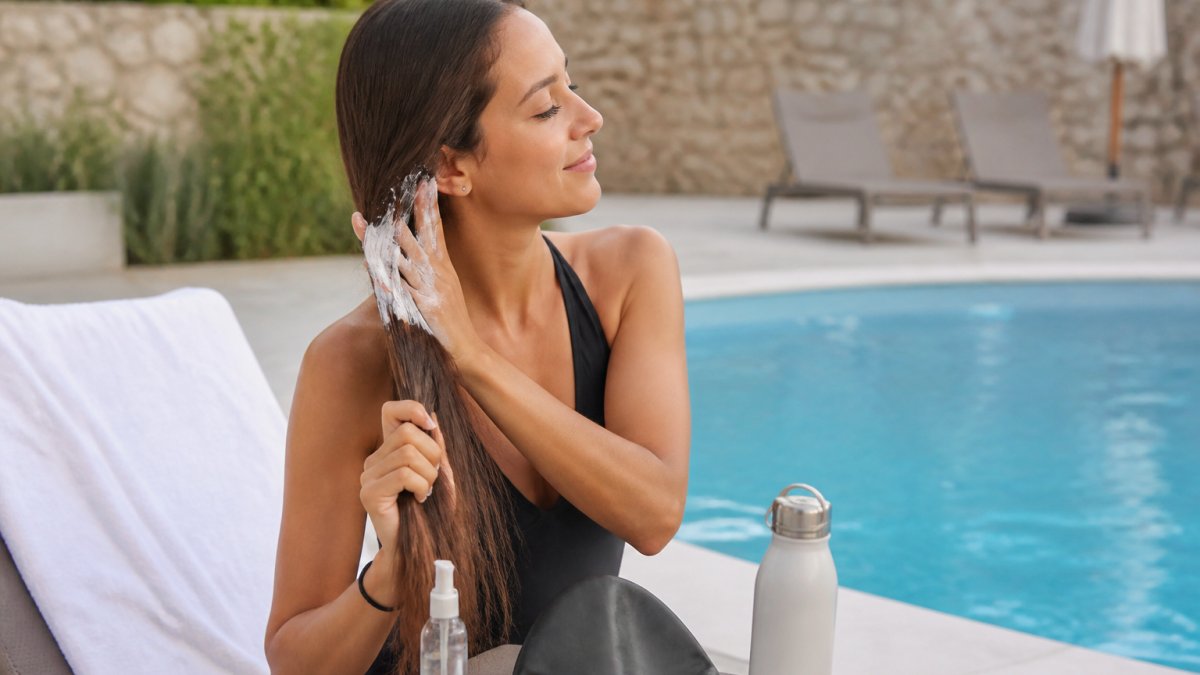
Before, During, and After: A Step-by-Step Routine
Follow this routine every time you swim:
- Rinse your hair with plain water first. Saturated hair absorbs less chlorine.
- Apply a leave-in protective product. A light layer creates a barrier on the hair shaft.
- Wear a swim cap. It won't keep hair fully dry, but it cuts exposure.
- Skip the hot tub. Heat and chemicals together do the most damage.
- Rinse immediately after you exit. Fresh water washes out chlorine and salt before they settle.
- Wash with a sulfate-free shampoo. Harsh detergents strip the treatment.
Keratin Treatment Aftercare: Washing and Conditioning After Swimming
Wash your hair with a sulfate-free shampoo within a few hours of swimming. Follow with a keratin-rich conditioner to restore moisture and reinforce the protein layer.
This is where most people undo their own results. Regular shampoo contains sulfates and salts that strip keratin from the hair shaft.
We recommend our KERATIN SHAMPOO MAINTENANCE, a salt- and sulfate-free formula with hydrolyzed keratin and argan oil. Pair it with our KERATIN CONDITIONER POST-TREATMENT to lock in moisture after sun and pool exposure.


Once a week, swap the conditioner for our KERATIN POST-TREATMENT MASK - STEP 3.

What to Do After Accidental Early Water Exposure
Don't panic if you get your hair wet before the waiting period ends. One early splash usually won't ruin a treatment, but you need to act quickly.
Rinse with cool water as soon as you can. Skip shampoo for the rest of the waiting window. Then let your hair air dry and avoid heat styling until the full 72 hours have passed.
Watch for these signs that the treatment took a hit:
- Frizz returning sooner than expected
- Loss of the smooth finish
- Hair feeling rougher or drier
If the finish fades fast, call your stylist. A touch-up or a strengthening mask can often bring the results back without a full redo.
How Swimming Affects Treatment Longevity and Realistic Expectations
Swimming shortens treatment longevity, but it doesn't have to destroy your results. How much depends on frequency, water type, and how well you protect your hair.
A casual swimmer who rinses and washes properly can keep results for the full expected window. A daily lap swimmer in a chlorinated pool will see faster fade. That's just the reality of repeated exposure.
Set realistic expectations:
- Occasional swimmer: Expect normal treatment longevity with good aftercare.
- Weekly swimmer: Plan on more frequent conditioning and a possible touch-up sooner.
- Daily swimmer: Consider a swim cap, pre-swim barrier, and a strengthening routine to preserve the finish.
The goal isn't to avoid water forever. It's to protect your investment with a routine that fits how you actually live.
Conclusion
Swimming after a keratin treatment comes down to timing and protection. Wait at least 72 hours, guard your hair before and after every swim, and wash with the right products to keep your results intact.
Kerarganic Cosmetics, LLC provides formaldehyde-free, keratin-infused care built to extend your treatment. Our sulfate-free shampoo, post-treatment conditioner, and weekly mask work together to rebuild strength and hold onto that smooth finish.
Get started with Kerarganic Cosmetics, LLC and keep your salon results looking fresh, swim season or not.
Frequently Asked Questions
How long should I wait to swim after a keratin treatment?
Plan to wait at least 72 hours, or three days, before getting your hair wet or swimming. This window allows the treatment to fully set into the hair cuticle. Your stylist's instructions and the specific treatment formula take priority, since setting periods vary by product. If you swim sooner, rinse immediately afterward and contact your stylist if the smooth finish looks uneven.
Can I swim in a pool after a keratin treatment?
Yes, once the initial waiting period has passed. Swimming after keratin treatment in chlorine is safe for the hair, but repeated exposure can dry out treated hair and gradually weaken the finish. Wet your hair with fresh water and apply a protective product before entering the pool, wear a swim cap, and rinse with a sulfate-free shampoo afterward to preserve results.
Does chlorine damage keratin-treated hair?
Chlorine does not strip a keratin treatment off in one swim, but repeated exposure dries the hair shaft and can leave treated hair feeling rough over time. The effect builds with swimming frequency. Rinsing before and after every swim, using a swim cap, and washing with a salt- and sulfate-free shampoo like Kerarganic's Keratin Shampoo Maintenance ($14.60) limits how much pool water your hair absorbs.
Does saltwater make a keratin treatment wear off faster?
Saltwater can pull moisture from treated hair and dull the smooth finish with repeated exposure. A single ocean swim will not undo a treatment, but frequent beach days without rinsing can shorten how long results last. Rinse with fresh water as soon as you leave the water, then follow with a keratin conditioner post-treatment ($14.60) to restore hydration and keep the hair cuticle sealed.