
Table of Contents
- Understanding Fine Hair and Keratin Treatment Compatibility
- Key Ingredients to Look for in a Keratin Kit for Fine Hair
- Keratin Treatment vs. Hair Botox for Thin Hair
- Step-by-Step Application for Fine Hair Without Volume Loss
- At-Home Keratin Treatment Safety Tips
- How to Maintain Volume After Keratin Treatment
- Choosing Between Formaldehyde-Free Options
- Common Mistakes to Avoid When Treating Fine Hair
- Frequently Asked Questions
Last Updated: September 18, 2026
Understanding Fine Hair and Keratin Treatment Compatibility
Fine hair requires a different approach to keratin treatment than thicker strands because it absorbs products faster and feels weighed down more easily. When choosing a keratin kit fine hair, you must balance smoothing benefits with the risk of losing volume and movement.
A keratin kit for fine hair works by infusing protein into the hair shaft, but the key is using the right formulation. Fine hair needs a lightweight treatment that strengthens without adding bulk. Heavy formulas designed for thick, coarse hair will leave fine hair limp and flat.
Keratin treatments work for fine hair when you pick the right product and apply it correctly. Most people fail because they use formulas meant for damage repair rather than delicate strands.
Key Ingredients to Look for in a Keratin Kit for Fine Hair
Look for these ingredients:
- Hydrolyzed keratin, breaks down into smaller molecules that penetrate without weighing hair down
- Silk amino acids, bind moisture while adding softness and reducing breakage
- Argan oil, provides nourishment without excessive weight
- Hydrolyzed wheat protein, strengthens fine strands while maintaining volume
- Panthenol (Provitamin B5), hydrates without buildup
Avoid these ingredients:
- Heavy silicones that accumulate on fine hair
- Formulas with high oil content designed for dry, coarse hair
- Products containing formaldehyde or formaldehyde derivatives
- Sulfates that strip natural oils and damage delicate strands
The Kerarganic Cosmetics, LLC Organic Keratin System includes hydrolyzed keratin, silk amino acids, argan oil, and hydrolyzed wheat protein, all designed to strengthen fine hair without the heaviness. This formulation respects the delicate nature of thin strands while delivering real strengthening benefits.

Look for pH-balanced formulas, as products outside the optimal pH range cause frizz and damage to fine hair's delicate cuticle layer.
Keratin Treatment vs. Hair Botox for Thin Hair
Keratin treatments use protein infusion to strengthen the hair shaft and smooth the cuticle. They alter the hair's structure, making it straighter and smoother. Results last 4-5 months with proper maintenance.
Hair botox is a moisturizing treatment that fills gaps in the cuticle without chemical restructuring. It adds shine and smoothness temporarily but doesn't permanently alter hair structure. Results fade after 3-4 weeks.
For fine hair, keratin provides lasting strengthening, especially for over-processed or heat-damaged strands.
If your fine hair is fragile or you're worried about losing movement, start with a lightweight keratin formula.
Step-by-Step Application for Fine Hair Without Volume Loss
The application process determines success or failure with fine hair. Unlike thick hair, fine hair requires a methodical zoning approach that protects volume while ensuring even treatment coverage.
Pre-Application Preparation
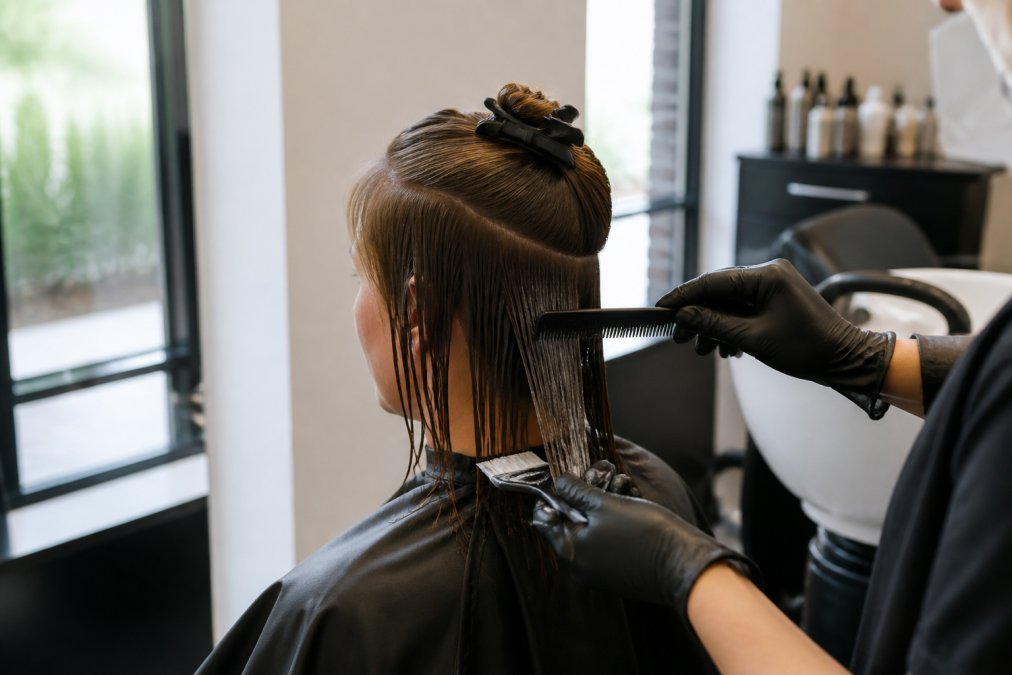
Detangle your hair thoroughly with a wide-tooth comb, starting at the ends and working upward. Divide your hair into 4-6 sections using clips. Wear protective gloves throughout the entire process and have paper towels within arm's reach. Maintaining this level of precision during application helps preserve the integrity of delicate strands, though exploring safer options for thin hair remains a prudent step for those concerned about long-term texture health.
The Root-Avoidance Zoning Technique
Applying keratin to the roots creates weight at the base of the hair shaft, which collapses volume and makes hair look thin and flat. Direct application to the scalp area guarantees heaviness.
Start your application 1-2 inches away from the scalp using a fine-toothed comb or application brush. This zone is non-negotiable for fine hair, it's the difference between volume and flatness.
Work downward from this line through the mid-lengths and ends. Apply the keratin with a brush or your gloved fingers, combing through with a fine-toothed comb to distribute evenly. The goal is saturation without excess product dripping off or pooling at the ends.
Section-by-Section Application Protocol
Unclip the first section and hold it away from your head at a 90-degree angle to your scalp to prevent product from running onto the roots.
Apply keratin to the mid-length area first, working downward toward the ends. Use two lighter passes to build saturation evenly rather than one thick application.
Comb through once more to remove excess product, as fine hair absorbs keratin quickly and excess causes stiffness or brittleness.
Repeat for all sections, working methodically around your head.
Processing Time and Heat Activation
Let the product process for the time specified by the kit. Do not extend beyond the recommended time, as overprocessing causes brittleness and loss of elasticity.
Apply heat using a blow dryer on medium heat or a flat iron to activate the keratin's bonding process. Move slowly through each section to ensure even heat distribution.
Allow hair to cool completely before rinsing. Cooling seals the cuticle and locks in the keratin treatment.
ORGANIC KERATIN DIY TREATMENT SET →
Rinsing Protocol
Rinse thoroughly with lukewarm water, not hot water. Hot water opens the cuticle and can cause the keratin to wash out prematurely. Use your fingers to gently work water through the hair, breaking up any product residue. Rinse until the water runs completely clear, residual product left in the hair will cause buildup and weight.
After rinsing, apply a lightweight conditioner (not a heavy mask) to mid-lengths and ends only. Leave it on for 2-3 minutes, then rinse again with cool water. This step seals the cuticle and prepares the hair for the post-treatment phase.
At-Home Keratin Treatment Safety Tips
Essential precautions:
- Perform a patch test 24 hours before treatment to check for sensitivity
- Wear gloves throughout the application process
- Apply in a well-ventilated area or outdoors if possible
- Don't leave the product on longer than recommended
- Rinse thoroughly with lukewarm water, not hot water
- Use a sulfate-free shampoo for the first week after treatment
If your hair feels stiff or brittle after treatment, you may have overloaded it with protein. Switch to moisturizing treatments for a week or two to restore balance.
The Kerarganic Cosmetics, LLC formulas are formaldehyde-free, which eliminates one major safety concern. Formaldehyde exposure is a real risk with some keratin treatments, so choosing a formaldehyde-free product protects both your health and your hair.
How to Maintain Volume After Keratin Treatment
Post-treatment maintenance determines how long your results last. The first 48 hours are critical, the keratin is still bonding into the hair shaft and is vulnerable to premature washing.
The Critical 48-Hour Window
Wait at least 48 hours before shampooing. Avoid sweating, swimming, or exposing hair to humidity during this window, as moisture interferes with the bonding process.
Shampooing and Conditioning Strategy for Fine Hair
Use sulfate-free shampoo and conditioner exclusively, as sulfates strip keratin out of the hair and damage the cuticle.
Wash hair in cool or lukewarm water, never hot water. Hot water opens the cuticle and accelerates keratin loss. Cool water seals the cuticle and locks in the treatment. If you find cool water uncomfortable, lukewarm is acceptable, but avoid anything above body temperature.
Use a lightweight, sulfate-free conditioner designed for delicate strands, applying only to mid-lengths and ends. A pea-sized amount at the ends is usually sufficient.
Limit shampooing to 2-3 times per week. On non-wash days, use lightweight powder dry shampoo to absorb oil and add texture.
Styling Tools and Techniques to Preserve Volume
Use a blow dryer on medium heat with a concentrator nozzle and paddle brush with widely spaced bristles. Blow-dry in the opposite direction of your natural growth pattern or flip your head upside down to create volume.
If using a flat iron, move slowly through each section.
Use a paddle brush with soft, widely spaced bristles or a detangling brush. Brush gently from ends upward, never aggressively on wet hair.
Styling Products to Avoid and Alternatives
Avoid heavy styling products with silicones, thick creams, pomades, and silicone-based volumizers, as these accumulate on fine hair and negate keratin benefits.
Frequency of Keratin Reapplication for Fine Hair
A keratin kit typically lasts 3-5 months with proper maintenance. Results fade when hair feels less smooth, frizz returns, or volume flattens.
Choosing Between Formaldehyde-Free Options
Not all formaldehyde-free keratin treatments are equal. Some brands use formaldehyde-releasing preservatives, which are legally different but functionally similar.
| Feature | Formaldehyde-Free | Traditional Keratin |
|---|---|---|
| Safety Profile | Higher, no toxic fumes | Contains formaldehyde |
| Longevity | 3-5 months | 5-6 months |
| Hair Feel | Lighter, more natural | Can feel stiff initially |
| Maintenance Ease | Simpler routine | Requires specific products |
| Fine Hair Suitability | Better, less weight | Risk of heaviness |
Common Mistakes to Avoid When Treating Fine Hair
Most failures with fine hair come from predictable mistakes. Knowing what goes wrong helps you succeed.
Frequently Asked Questions
Will a keratin kit make my fine hair look flat or weighed down?
Not if you choose the right formulation and apply it correctly. Fine hair responds well to lightweight, protein-infused keratin kits that focus on strand integrity without adding excessive weight. The key is using a root-avoidance technique and selecting products with hydrolyzed keratin and amino acids rather than heavy silicones. Formaldehyde-free keratin treatments like the Organic Keratin DIY Treatment Set are designed to smooth and strengthen delicate strands while preserving natural volume when applied 1-2 inches from the scalp.
What ingredients should I avoid in keratin kits for thin hair?
Avoid kits containing high concentrations of silicones, sulfates, and heavy emollients that coat the hair and reduce lift at the roots. Skip products with formaldehyde or formaldehyde derivatives, which can damage fine strands over time. Instead, look for formulations with hydrolyzed protein, cysteine complexes, and pH-balanced systems. Kerarganic's formaldehyde-free options include amino acids and argan oil that nourish without the harsh chemicals or excessive buildup that flatten fine hair.
How often can I safely use a keratin treatment on fine hair?
Fine hair typically tolerates keratin treatments every 8-12 weeks, depending on your hair's porosity and how much chemical processing it has already endured. Start with a single application to assess how your hair responds, then space treatments accordingly. Between full treatments, use sulfate-free maintenance products to extend results without additional chemical stress. If you notice increased breakage or dryness, extend the interval to 12+ weeks.
Is a formaldehyde-free keratin kit really better for fine hair?
Yes. Formaldehyde-free treatments like Kerarganic's Organic Keratin System use glyoxyloyl carbocysteine and hydrolyzed keratin to achieve smoothing and frizz control without the health risks or damage associated with formaldehyde. This makes them safer for frequent use on fine, delicate strands.