
Table of Contents
- Why Stylists Switch From Inovaprofessional
- Professional Keratin Treatment Brands That Compete
- Formaldehyde-Free Salon Hair Treatments: Safety and Performance
- Keratin Treatment for Damaged Hair: Ingredient-Level Comparison
- Cost-Benefit Analysis for Salon Owners
- Application Workflow and Stylist Certification
- Conclusion
Last Updated: August 18, 2026
Why Stylists Switch From Inovaprofessional
Many salon professionals who've relied on established keratin brands are exploring alternatives for one simple reason: they're looking for better control over what goes into their treatments and what their clients take home. The shift isn't about dissatisfaction with a single product, it's about finding solutions that align with evolving salon standards around safety, ingredient transparency, and long-term client retention.
When stylists evaluate professional keratin treatment brands, they're weighing multiple factors beyond just performance. Formulation clarity matters. Client communication matters. Cost structure for a small salon matters. A stylist carrying a treatment line needs to understand exactly what's in the product, how to position it to clients concerned about chemical exposure, and whether the margins make sense when you factor in training time and application labor.
The professionals switching are typically those who've built loyal clientele and want to offer something they can confidently explain and stand behind. They're not chasing trends, they're solving a business problem.
Professional Keratin Treatment Brands That Compete
The market for professional keratin treatments has expanded well beyond the original formulations. Today's alternatives emphasize ingredient specificity, formaldehyde-free construction, and systems designed for both salon application and at-home maintenance. Here's how the leading professional keratin treatment brands stack up.
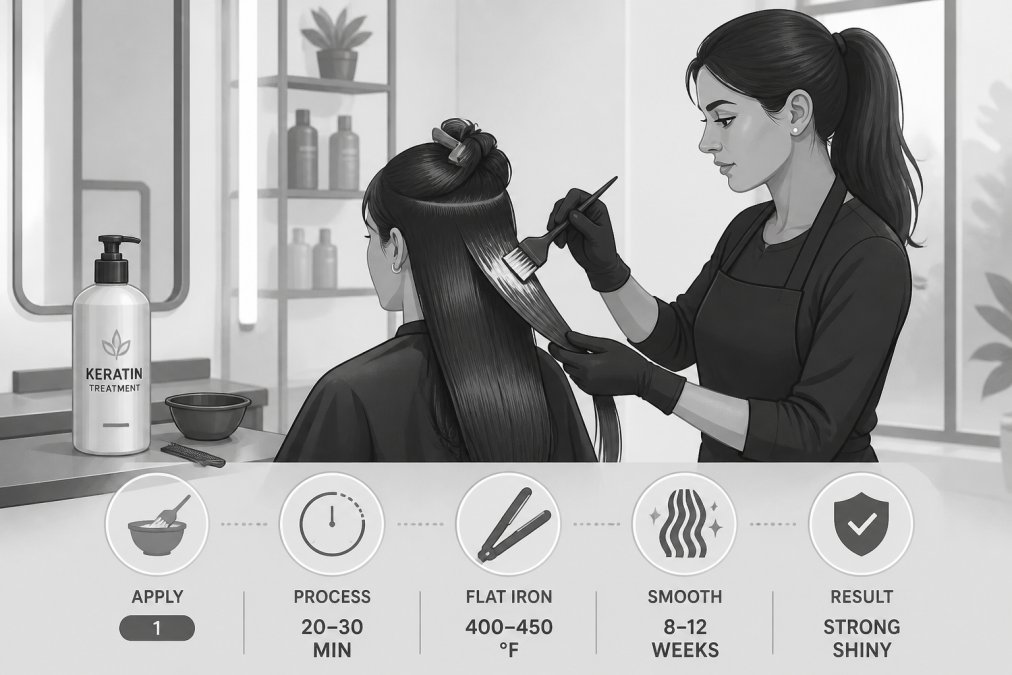
Kerarganic Professional Treatment Collection
Kerarganic Cosmetics, LLC stands out in the professional keratin space because the brand builds its entire system around formaldehyde-free chemistry from the ground up. The Professional Treatment Collection includes pre-treatment, treatment, and post-treatment products engineered for stylists who want a complete workflow without compromising on safety or ingredient quality.
What sets this approach apart is the emphasis on molecular science combined with organic-based formulations. The collection addresses chemically compromised hair specifically, a common client scenario that requires precision application and aftercare.
The brand positions itself for salon professionals who view keratin treatment as part of a service menu, not just a product transaction. This means training on application technique, understanding how the system works with different hair textures, and being able to communicate the formaldehyde-free benefit as a genuine safety advantage rather than marketing language. Kerarganic Cosmetics, LLC provides that framework, making it straightforward for stylists to integrate the system into existing salon workflows.
Keratherapy Professional Smoothing Treatments
Keratherapy approaches the keratin market through versatility. The brand offers multiple technologies, Nanoplastia, Taninoplastia, and Hair Botox, allowing stylists to match treatment type to client hair condition rather than forcing every client into a single protocol.
A key differentiator is the express smoothing option. Many stylists operate on tight schedules and client availability windows. Keratherapy's express treatments reduce in-salon time while maintaining results, which changes the economics of offering keratin services at a busy salon. Additionally, the brand emphasizes zero wait time for shampooing after certain treatments, which improves the client experience and salon throughput.
The formaldehyde-free positioning is strong here, and the vegan and eco-friendly emphasis appeals to stylists working with environmentally conscious clients. The ability to use treatments as color-locking services, applying keratin after color to seal in vibrancy, adds another revenue stream to the service menu. Stylists need training in the specific application techniques for each technology, but the payoff is a treatment menu that feels premium and differentiated.
MK Professional Hair Smoothing Treatments
MK Professional builds its system around multiple smoothing technologies: HAIR BTX, BIOTIN, and BONTX. The brand's reputation centers on the HAIR BTX treatment, which has established itself globally as a go-to system for smooth, frizz-free results.
The formaldehyde and harsh chemical-free formulas are standard across the line, which simplifies the safety conversation with clients. What distinguishes MK Professional is the comprehensive aftercare product ecosystem. A stylist recommending the treatment can immediately offer a home maintenance routine, creating a complete revenue cycle: in-salon service plus take-home products. This matters for salon economics, aftercare products often carry higher margins than the service itself.
The flexibility across treatment types means stylists can address everything from deep repair for severely damaged hair to express styling for clients who need quick results. The brand's worldwide adoption suggests proven efficacy across different hair types and climates, which builds confidence for stylists considering a switch.
| Brand | Formulation Focus | Best For | Aftercare System |
|---|---|---|---|
| Kerarganic | Organic-based, formaldehyde-free | Stylists prioritizing ingredient transparency | Complete pre/post product line |
| Keratherapy | Multiple technologies (Nanoplastia, Botox) | High-volume salons, express services | Vegan, eco-friendly options |
| MK Professional | HAIR BTX, BIOTIN, BONTX systems | Stylists seeking established global reputation | Comprehensive home care line |
Formaldehyde-Free Salon Hair Treatments: Safety and Performance
The shift toward formaldehyde-free formulations isn't just a marketing advantage, it fundamentally changes how stylists can position keratin treatments to clients. Many clients arrive with concerns about chemical exposure, particularly those who've heard stories about formaldehyde in salon treatments. A formaldehyde-free system removes that objection entirely.
Here's what matters operationally: formaldehyde-free treatments typically rely on alternative chemistry to achieve smoothing and frizz control. This means the treatment mechanism is different, not just the safety profile. Keratin proteins still provide the structural repair, but the cross-linking process that locks results into the hair uses different chemistry. Understanding this difference helps stylists explain why the treatment works without the chemical concerns.
Many professional keratin treatment brands now emphasize formaldehyde-free construction because it's become table stakes for premium positioning. A stylist recommending a treatment with formaldehyde faces immediate client hesitation. The formaldehyde-free advantage is also easier to communicate, it's a clear yes/no that doesn't require technical explanation.
The performance question is legitimate: do formaldehyde-free treatments deliver the same longevity and frizz control? The answer depends on the specific formulation. Some formaldehyde-free systems perform identically to traditional keratin treatments. Others offer slightly different results, sometimes smoother, sometimes requiring more frequent touch-ups. The key is matching the treatment type to the client's hair condition and lifestyle expectations.
Keratin Treatment for Damaged Hair: Ingredient-Level Comparison
When clients arrive with severely over-processed or chemically damaged hair, the keratin treatment choice becomes critical. Damaged hair has compromised cuticle layers, reduced protein structure, and diminished elasticity. The treatment needs to not just coat the surface but actually rebuild structural integrity.
This is where ingredient specificity matters. Standard keratin treatments deposit protein onto the hair. Premium formulations add amino acids, hyaluronic acid, and conditioning agents that work together to restore elasticity and moisture retention. Amino acids rebuild the protein matrix. Hyaluronic acid holds moisture deep in the hair shaft. Conditioning agents seal the cuticle and reduce frizz.
Kerarganic Cosmetics, LLC's approach to damaged hair treatment includes this multi-layer restoration. The pre-treatment phase opens the cuticle and removes buildup that prevents deeper penetration. The treatment itself delivers keratin plus supporting amino acids and hydration compounds. The post-treatment locks everything in place while maintaining hair elasticity, a critical factor because over-processed hair is fragile and can snap if the treatment makes it brittle.
When comparing professional keratin treatment brands for damaged hair specifically, look for formulations that address three things: protein restoration, moisture replenishment, and cuticle sealing. A treatment that handles all three delivers better results than one that only deposits keratin. This is why stylists working with a high percentage of damaged-hair clients often choose brands that emphasize the complete restoration approach rather than simple smoothing.
The durability difference is measurable. A basic keratin treatment on damaged hair might last 4-6 weeks. A comprehensive restoration treatment often lasts 8-12 weeks because the hair itself is healthier and holds the treatment longer. For clients, that's the difference between maintaining results and constantly rebooking.
Cost-Benefit Analysis for Salon Owners
A stylist considering a switch from an established brand to a professional keratin treatment alternative needs to evaluate the business impact, not just the product quality. The cost structure, training requirements, and client communication burden all factor into whether a change makes sense.
First, the direct product cost. Professional keratin treatment systems are typically sold through distributor channels with professional pricing that varies based on salon size and order volume. A small salon with one or two stylists offering keratin services might pay differently than a large salon running keratin as a core service. The initial investment in starter kits or minimum orders can range widely depending on the brand. This is why many brands require professional registration rather than listing public pricing, the cost structure is negotiated.
The training investment matters. Some brands require formal certification or at minimum hands-on training before stylists can offer the service. This takes time away from billable work and may require travel to a training location. Other brands offer virtual training or materials-based onboarding. For a busy salon, the training approach affects the total cost of switching.
The client communication burden is real. If you switch brands, existing clients who've been using your previous keratin line might ask why. If the new brand performs differently, even if it's objectively better, the transition period involves explanation and potentially managing expectations. Stylists need talking points about why the switch benefits clients, not just the salon.
The margin question: does the new brand's pricing structure allow better margins than your current line? Professional pricing often includes wholesale cost plus recommended retail markup. Some brands offer higher margins on the service itself, others on aftercare products. A salon carrying Kerarganic Cosmetics, LLC's complete system can build margin across pre-treatment, treatment, and post-treatment products, which improves overall service economics compared to a brand where the margin is concentrated in one product.
The client retention angle: does the new brand support a service menu that keeps clients coming back? Keratin treatments typically last 8-12 weeks depending on the formulation and hair condition. A brand that includes a strong aftercare product line creates a reason for clients to purchase between services. That recurring revenue often matters more than the service margin itself.
Application Workflow and Stylist Certification
The operational workflow for applying a professional keratin treatment determines how efficiently a stylist can offer the service and how consistently results come out. Different brands structure their application protocols differently, and this affects both training time and service delivery.
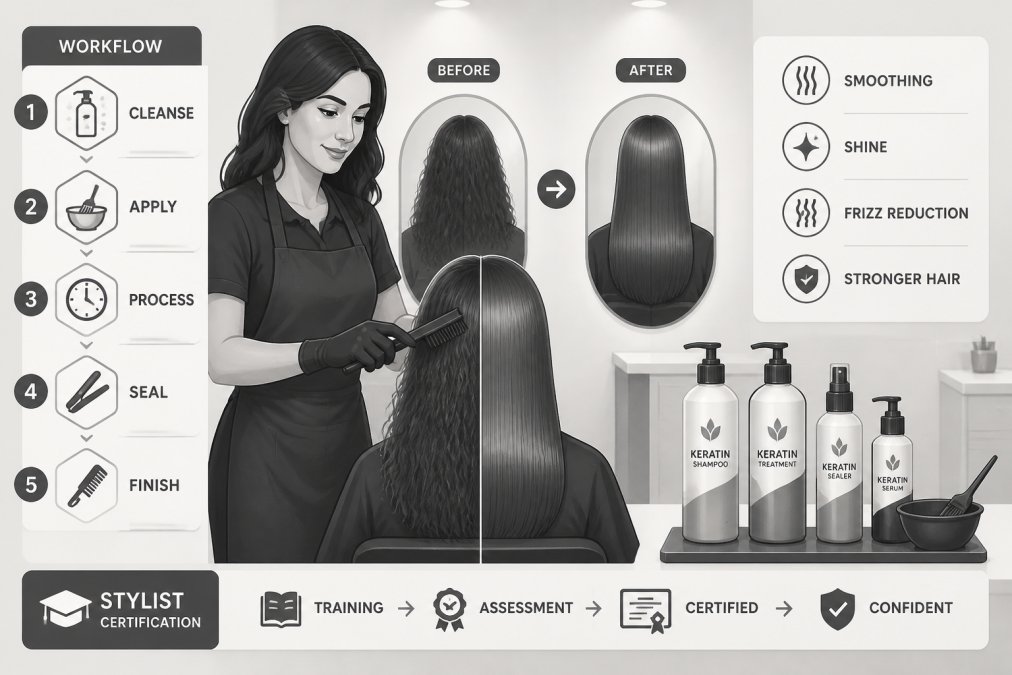
A typical professional keratin treatment workflow includes: hair analysis and consultation, pre-treatment cleanse to remove buildup, application of the keratin treatment with careful saturation, processing time (usually 20-45 minutes depending on the product), rinsing, blow-drying, and flat-iron sealing. Some brands add additional steps like heat activation or specialized finishing products.
Kerarganic Cosmetics, LLC's Professional Treatment Collection structures the workflow to minimize guesswork. The pre-treatment product is specifically formulated to prepare hair for the treatment, not just a generic clarifying shampoo. The treatment application guidelines specify saturation levels and processing time based on hair type. The post-treatment products are designed to be used in a specific sequence for maximum results. This structured approach reduces variation between stylists and improves consistency.
Certification or training requirements vary by brand. Some brands require formal certification programs that involve both online and in-person components. Others provide training materials and expect stylists to demonstrate competency before offering the service. Professional keratin treatment brands that emphasize stylist certification typically do so because the application technique genuinely affects results, improper saturation, inadequate processing time, or incorrect heat sealing can reduce treatment longevity.
The heat-tool component matters. Many keratin treatments require a titanium flat iron to seal the treatment into the hair cuticle. The temperature, pressure, and number of passes affect the final result. Stylists using different tools or techniques might get different outcomes from the same product. Brands that provide specific tool recommendations or temperature guidelines are helping standardize results across their user base.
For salon owners, the certification question affects hiring and training. A stylist trained on one keratin system might need retraining on another, even if both are high-quality products. This is a real cost when switching brands. However, a stylist trained on a well-documented system like Kerarganic Cosmetics, LLC's approach can typically transfer that knowledge to other clients quickly because the methodology is clear and repeatable.
The client-facing benefit of proper certification is reliability. Clients book with a stylist because they trust the results. A stylist trained on the correct application protocol for their keratin treatment brand delivers consistent results, which builds that trust. This is why professional keratin treatment brands emphasize training, it's not just about protecting their reputation, it's about enabling stylists to deliver the service their clients expect.
Switching from an established keratin brand to a professional keratin treatment alternative requires evaluating both the product and the business fit. The leading alternatives, Kerarganic Cosmetics, LLC, Keratherapy, and MK Professional, each offer distinct advantages depending on your salon's priorities. If you prioritize ingredient transparency and formaldehyde-free formulations designed specifically for damaged hair repair, Kerarganic Cosmetics, LLC's comprehensive Professional Treatment Collection delivers a complete system with clear training and application protocols. Explore the full range of professional keratin solutions and find the system that aligns with your salon's service philosophy and client needs.
Frequently Asked Questions
What professional keratin treatment brands do salons use as alternatives to Inovaprofessional?
Salons commonly switch to Kerarganic Professional Treatment Collection, Keratherapy Professional Smoothing Treatments, and MK Professional Hair Smoothing Treatments. Each offers formaldehyde-free formulas with different application methods, from traditional keratin to newer technologies like Hair Botox and Nanoplastia. Your choice depends on your salon's service menu, client hair types, and desired treatment longevity. Professional keratin treatment brands vary in ingredient concentration, heat-activation requirements, and aftercare demands, so testing multiple options helps identify the best fit for your workflow.
Are formaldehyde-free salon hair treatments as effective as traditional keratin formulas?
Yes. Modern formaldehyde-free salon hair treatments deliver comparable frizz control and smoothing results through alternative chemistry, amino acids, hyaluronic acid, and plant-based proteins replace formaldehyde's cross-linking action. The trade-off is typically treatment longevity; some clients see 8-12 weeks of results instead of 12-16 weeks. However, formaldehyde-free options eliminate health concerns for both stylists and clients, reduce chemical odor in the salon, and appeal to health-conscious clients. Many professional brands now position formaldehyde-free as the premium choice, not a compromise.
How do keratin treatment for damaged hair products differ between brands?
Keratin treatment for damaged hair varies by amino acid profile, protein concentration, and supporting ingredients. Kerarganic emphasizes organic-based collections with keratin replenishment for over-processed hair. Keratherapy offers multiple technologies, some treatments lock in color after chemical services. MK Professional provides collagen and biotin-infused systems alongside keratin. Damaged hair responds best to treatments that include moisture-binding ingredients like hyaluronic acid and heat-protective compounds. Compare ingredient lists and ask brands for efficacy data on elasticity restoration and breakage reduction before committing to a new line.
What should I consider before switching professional keratin treatment brands?
Evaluate application time (express treatments take 20-30 minutes; traditional keratin takes 2-4 hours), heat requirements, wait times before shampooing, and post-treatment maintenance. Check whether your salon's titanium flat irons and heat settings match the brand's specifications. Confirm stylist training availability, some brands require certification. Calculate the cost per treatment and compare client retention rates for each brand. Test products on 3-5 clients first to assess real-world results, frizz control duration, and hair texture feedback before switching your entire service menu.
This article was written using GrandRanker