
Table of Contents
- How Fine Hair Reacts to Anti-Frizz Treatment
- The Best Keratin Treatment for Fine Hair: What Actually Works
- At-Home vs Salon Anti-Frizz Treatments: Cost, Control, and Results
- How to Stop Frizz on Fine Hair Without Losing Volume
- Post-Treatment Volume Loss: The Risk Most Reviews Skip
- Cost Over 12 Months: Salon Treatments vs At-Home Anti-Frizz Products
- Conclusion: Who Should Skip Anti-Frizz Treatment and Who Should Invest
- Frequently Asked Questions
Last Updated: September 16, 2026
How Fine Hair Reacts to Anti-Frizz Treatment
Whether an anti-frizz treatment is worth it for fine hair depends on one thing: how much of your volume you're willing to trade for smoothness. For many people with fine strands, the honest answer is "sometimes, and only with the right formula." This guide from Kerarganic Cosmetics, LLC breaks down the trade-offs so you can decide before you spend.
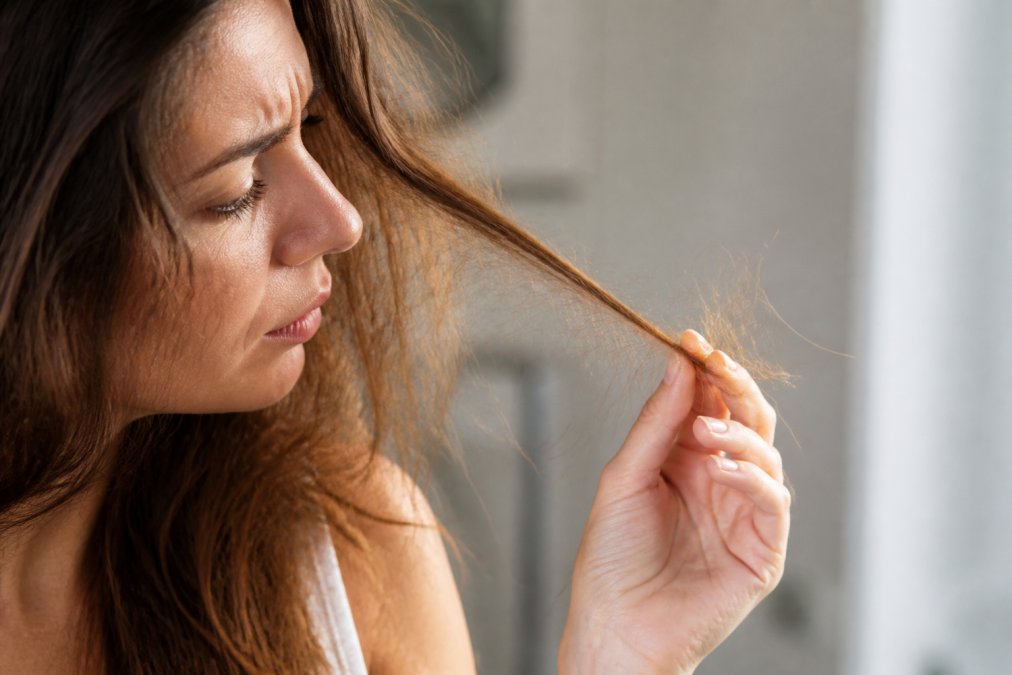
Fine hair has a smaller strand diameter, which means fewer layers of cuticle protecting the cortex.
Strand Diameter, Porosity, and Why Frizz Hits Fine Hair Harder
Strand diameter is the width of an individual hair fiber, and it determines how much structural support each strand has. Fine hair has less internal mass, so it responds quickly to moisture in the air. High porosity makes this worse: raised cuticles let water in fast, and the strand swells.

The Best Keratin Treatment for Fine Hair: What Actually Works
The best keratin treatment for fine hair is a formaldehyde-free, lightweight formula that rebuilds protein without coating the strand in heavy waxes. Keratin fills gaps in the damaged cuticle, but on fine hair the delivery matters as much as the ingredient, a rich cream that feels luxurious on coarse hair can collapse fine strands within an hour.
Keratin vs. Cysteine vs. Glyoxylic Acid: How Each Acts on Fine Strands
Smoothing treatments are not one category. They differ in chemistry, and that chemistry interacts directly with strand diameter.
- Keratin treatments deposit hydrolyzed protein onto and into the cuticle to fill gaps and reduce porosity. On fine hair, the risk is buildup: too much surface protein stiffens the strand and kills the natural bend that creates body. Hydrolyzed keratin (low molecular weight) penetrates; hydrolyzed wheat or silk protein (higher molecular weight) mostly coats.
- Cysteine treatments use an amino acid to break and reform disulfide bonds, similar in concept to a gentle relaxer. They tend to be less aggressive than traditional formaldehyde-based smoothing, but they still relax the wave pattern, and on fine hair, that relaxation is exactly what reduces root lift.
- Glyoxylic acid treatments are the current formaldehyde-free alternative many salons use. Glyoxylic acid reacts with the hair's outer layer to create a smoothing effect that builds over several applications. Because it works on the surface, it is generally considered gentler on the cortex, but repeated layering can still add weight to fine strands.
Formaldehyde-Free Formulas and Protein-Moisture Balance
Kerarganic's KERAR-PLEX STEP 2 - GEL BOND & HAIR FIBER RECONSTRUCTOR ($23.10) targets broken bonds with hydrolyzed keratin and amino acids while reducing porosity, and it's built to repair damage without the heavy coating that flattens fine strands.
At-Home vs Salon Anti-Frizz Treatments: Cost, Control, and Results
At-home anti-frizz treatments cost less per application and let you control strength, but salon treatments deliver a more uniform result on the first pass. The right choice depends on how damaged your hair is and how much time you'll realistically spend on upkeep.
| Factor | At-Home | Salon |
|---|---|---|
| Cost per application | Lower, spread over many uses | Higher, single visit |
| Strength control | You adjust per section | Stylist decides |
| Time investment | Spread across weeks | One appointment |
| Best for fine hair | Layered, gradual smoothing | Heavily damaged or over-processed hair |
How to Stop Frizz on Fine Hair Without Losing Volume
Stopping frizz on fine hair without losing volume comes down to sealing the cuticle lightly and protecting against heat, not coating the strand. The goal is smoothness with movement, not a flat, weighed-down finish.
Build a routine around lightweight layers:
- Wash with a sulfate-free shampoo to avoid stripping natural oils
- Apply a leave-in conditioner to damp hair for hydration and detangling
- Add a few drops of anti-frizz serum mid-shaft to ends only
- Use a heat protectant before blow drying or ironing
- Finish with a light mist rather than a heavy oil
Styling Routine Adjustments for Frizz-Prone Fine Hair
Styling time drops when your products do the sealing for you. Rough-dry with a concentrator nozzle pointed down the shaft to close the cuticle, then finish with a round brush on low heat. Skip heavy creams near the roots, which is where fine hair loses volume first.

Post-Treatment Volume Loss: The Risk Most Reviews Skip
Post-treatment volume loss is the most underreported downside of anti-frizz treatments on fine hair. Most reviews focus on smoothness and shine, but smoothing agents relax the wave pattern that gives fine hair its body, and that change can be permanent until new growth replaces it.
FIBERPLASTY BIOLAMINATING ANTI-FRIZZ →
Cost Over 12 Months: Salon Treatments vs At-Home Anti-Frizz Products
Most articles stop at "salon costs more per visit." That is not useful for a decision. Here is the 12-month picture with the variables that actually move the number: reapplication cadence, product usage per wash, and how much of the work you do yourself.
The 12-Month Cost Framework
Three inputs drive the total:
- Salon treatment cadence. Keratin and cysteine smoothing treatments are typically refreshed every 3 to 5 months, depending on hair growth rate and how often you wash. That is roughly 2 to 4 appointments per year. At typical salon prices, a single smoothing appointment commonly runs into the low-to-mid hundreds of dollars, and the total for the year scales from there. Because pricing varies widely by region and stylist, treat the salon side as a range, not a fixed figure.
- At-home product usage. Fine hair uses less product per application than thick hair, often a pea-sized amount of serum or a quarter-sized amount of conditioner. A single bottle of serum or a tub of treatment mask can last several months on fine hair, which is the structural reason at-home maintenance is cost-effective for this hair type.
- Replacement frequency. At-home products need replacing when they run out, not on a calendar. A wash-and-style routine of shampoo, conditioner, leave-in, serum, and heat protectant typically needs restocking 2 to 4 times a year, again depending on wash frequency.
Where the Gap Narrows
The at-home advantage shrinks when:
- You use multiple products per wash (shampoo, conditioner, leave-in, serum, heat protectant) and replace them frequently.
- You add a bond-repair or protein treatment every few weeks.
- You still book a salon smoothing appointment once or twice a year to reset the shape.
The at-home advantage grows when:
- Your hair is only mildly frizz-prone and responds to lightweight sealing rather than chemical smoothing.
- You wash less often, which stretches every product further.
- You use a single multi-tasking product instead of a five-step routine.
The Hair-Health Side of the Ledger
Kerarganic's RESTORATIVE XTREME HAIR REPAIR PRODUCTS FRIZZ CONTROL COLLECTION BUNDLE ($96.70) covers a full wash-and-style routine with sulfate-free, salt-free formulas, giving you a complete at-home system that extends results between salon visits.

Conclusion: Who Should Skip Anti-Frizz Treatment and Who Should Invest
Anti-frizz treatment is worth it for fine hair when frizz and styling time are your main frustrations and you can tolerate some loss of natural texture. It's not worth it if maximum volume is your priority, or if your hair is already over-processed and fragile.
Frequently Asked Questions
Is anti-frizz treatment worth it for fine hair?
It depends on your priorities. Anti-frizz treatment can reduce styling time and add visible smoothness, but fine hair risks volume loss because smoothing formulas coat the cuticle and can weigh down thin strands. If your main frustration is frizz and you are willing to use lightweight, formaldehyde-free products, the investment can pay off. If volume matters more than smoothness, a bond-repair or leave-in approach may serve you better than a full smoothing treatment.
Will a keratin treatment make fine hair look flat or greasy?
It can, especially with heavy salon formulas that rely on high protein loads. Fine hair has a smaller strand diameter, so excess product sits on the surface and reduces lift at the root. Choosing a formaldehyde-free, lightweight keratin treatment and applying it from mid-length to ends rather than the scalp helps preserve volume. Pairing it with a volumizing leave-in conditioner also reduces the flat, coated feeling.
How long does an anti-frizz treatment last on fine hair?
Salon smoothing treatments typically last 8 to 12 weeks on fine hair, though results fade faster if you wash daily or use sulfate-heavy shampoos. At-home treatments applied every 1 to 2 weeks maintain smoothness between salon visits. A sulfate-free, salt-free wash routine extends results because it strips less of the protective coating that keeps the cuticle sealed.
Can at-home anti-frizz treatments damage fine hair?
At-home treatments are safe when they are formaldehyde-free and used as directed. Damage happens when products with high protein content are overused, causing brittleness and breakage. Fine hair needs a protein-moisture balance, so alternate between bonding treatments and hydrating leave-in conditioners. Avoid applying heat tools above 350°F without thermal protection, since fine strands burn faster than coarse ones.
How do I stop frizz on fine hair without sacrificing volume?
Focus on hydration and cuticle sealing rather than heavy coating. Use a lightweight anti-frizz serum on damp hair before blow drying, apply heat protectant every time you use a dryer or iron, and switch to a sulfate-free shampoo. Diffusing on low heat and finishing with a cool shot sets the cuticle without flattening roots. Root-lifting sprays add volume while leave-in conditioners handle frizz control.