
Table of Contents
- Why Gray Hair Turns Frizzy: The Texture Shift Explained
- Best Products for Coarse Gray Hair: What to Look For
- How to Hydrate Dry Gray Hair: A Step-by-Step Routine
- Keratin Treatments for Gray Hair: What to Know Before You Try
- Styling Techniques and Tools for Smooth Silver Strands
- The Psychological Shift: Embracing Gray Hair Without Losing Yourself
- Common Mistakes That Make Frizzy Gray Hair Worse
- Frequently Asked Questions
Last Updated: September 30, 2026
Why Gray Hair Turns Frizzy: The Texture Shift Explained
Gray hair turns frizzy because the scalp slows oil production as pigment cells decline, leaving each strand drier and rougher. Less oil means less natural coating on the cuticle, so moisture escapes and humidity gets in, hence the coarse texture, flyaways, and wiry feel.
Here is what actually shifts:
- Less sebum: Oil glands slow down, so hair stays dry.
- A tighter cuticle: Gray strands often grow in coarser and thicker.
- Lower elasticity: Dry fibers snap instead of stretching.
- Higher porosity: Gaps in the hair shaft let moisture in and out fast.
Best Products for Coarse Gray Hair: What to Look For
The best products for coarse gray hair are sulfate-free cleansers, deep conditioning masks, and lightweight serums that seal the cuticle without weighing hair down. Match the product to your hair porosity, not to the label on the bottle.
Read the Ingredient List, Not the Front Label
Most frizz products for silver hair use the same handful of ingredients. What separates a formula that helps from one that worsens frizz is what is inside. Here is the short list worth memorizing.
Ingredients to avoid:
- Sulfates (sodium lauryl sulfate, sodium laureth sulfate): These lift the cuticle and strip the little sebum gray hair still produces. A common pattern is that frizz gets worse within a week of switching to a sulfate shampoo.
- Silicones (dimethicone, cyclopentasiloxane): They coat the strand for instant slip, but they build up over time and block the moisturizing ingredients underneath from reaching the cortex. Non-water-soluble silicones are the worst offenders.
- Alcohols (denatured alcohol, isopropyl alcohol): These evaporate fast and pull moisture out of the fiber, which is the opposite of what porous gray hair needs.
- Harsh salts (sodium chloride): Common in volumizing and clarifying formulas, they roughen the cuticle and leave silver hair flatter and frizzier.
Ingredients that specifically benefit coarse gray cuticles:
- Hydrolyzed keratin and hydrolyzed silk protein: These are small enough to slip into gaps in a porous cuticle and temporarily fill them, which smooths the surface and reduces friction between strands.
- Plant-based ceramides: They reinforce the lipid layer that holds the cuticle flat. This is the single most useful ingredient class for coarse, high-porosity gray hair.
- Hyaluronic acid: It holds water in the fiber rather than on top of it, so hair stays hydrated without feeling coated.
- Argan, macadamia, and safflower oils: Lightweight enough for fine gray hair, rich enough for coarse strands. They seal the cuticle and add shine without the greasy weight of heavier oils like coconut or castor.
- Panthenol (provitamin B5): It penetrates the cortex and improves elasticity, which matters because dry gray fibers snap instead of stretching.
Shampoos and Conditioners That Won't Strip Moisture
Start with a sulfate-free, salt-free shampoo. Sulfates lift the cuticle and strip the little oil you have left, the last thing dry, brittle hair needs.
Serums, Oils, and Leave-Ins for Frizz Control
A good serum is your daily defense against humidity and heat. Apply it to damp hair, mid-length to ends, before any styling tool touches your head.
| Product Type | Best For | When to Apply | Key Ingredients |
|---|---|---|---|
| Sulfate-free shampoo | Daily cleansing | Wash day | Keratin, argan oil |
| Deep conditioning mask | Weekly repair | After shampoo | Hyaluronic acid, ceramides |
| Leave-in conditioner | Daily hydration | Damp hair | Panthenol, collagen |
| Anti-frizz serum | Heat and humidity | Before styling | Natural oils, ceramides |
The Transition Phase: When Your Gray Is Only Half Grown In
Most product advice assumes you are fully gray. In the salt-and-pepper phase, your hair is two textures at once, pigmented strands that still hold oil and moisture, and unpigmented strands that are coarser, drier, and more porous. That mismatch is why one product leaves half your head smooth and the other half frizzy.

What works during the transition:
- Treat the gray sections separately. Apply your deep conditioner and serum to the unpigmented strands first, then work the remainder through the rest of your hair.
- Avoid all-over volumizing products. They exaggerate the texture difference and make the gray strands look wiry next to the pigmented ones.
- Consider a bond-building treatment. These help even out porosity between the two textures so products absorb more consistently.
- Plan for a longer adjustment window. Most people find the texture evens out as more of the strand grows in unpigmented, but the in-between phase can take months.
How to Hydrate Dry Gray Hair: A Step-by-Step Routine
Hydrating dry gray hair comes down to one habit: seal moisture in while the cuticle is still open. Do this on wash day and hair stays smoother all week.
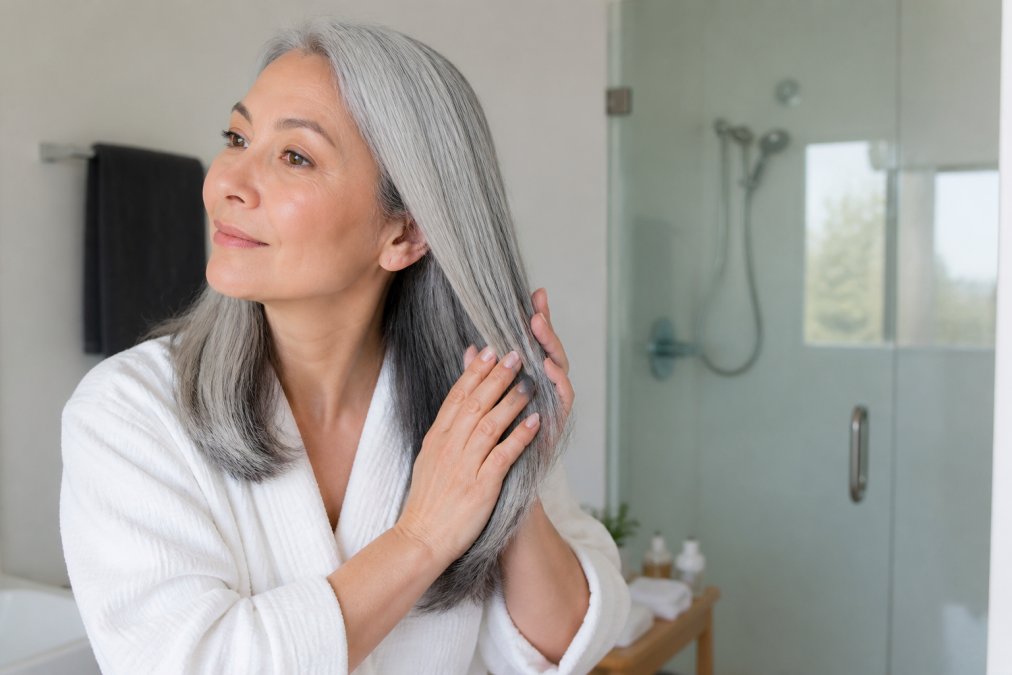
Wash Day: Cleansing Without Stripping
- Rinse with lukewarm water, never hot.
- Apply sulfate-free shampoo to the scalp only.
- Massage gently, then rinse.
- Coat mid-lengths and ends with conditioner.
- Leave it on for 3 minutes, then rinse cool.
- Squeeze out water with a microfiber towel.
Skip the rough towel rub. It roughens the cuticle and creates instant flyaways.
Deep Conditioning and Masking for Moisture Retention
Once a week, swap your regular conditioner for a deep conditioning treatment. The FIBERPLASTY REJUVENATING MASK uses hyaluronic acid and plant-based ceramides to refill lost protein and lock in hydration. Leave it 10-15 minutes, then rinse.

Keratin Treatments for Gray Hair: What to Know Before You Try
Keratin treatments for gray hair work well, but only if the formula is formaldehyde-free. Formaldehyde is a known irritant and a health concern, so check the label before you book or buy (the FDA). The FDA information on formaldehyde in hair smoothing products explains what to look for.
FIBERPLASTY BIOLAMINATING ANTI-FRIZZ →
Three things to know before you try one:
- Ask about the formula. Formaldehyde-free options exist and work well.
- Match it to your texture. Curly and textured gray hair needs a flexible formula.
- Plan your aftercare. Sulfate-free products keep results from fading fast.
Styling Techniques and Tools for Smooth Silver Strands
Styling smooth silver strands starts with the right tools and a light hand. Rough brushes, high heat, and too much product all work against you, the hardware matters as much as the products.
Brushes and Combs: Match the Tool to the Job
Not all brushes are equal on coarse gray hair. The wrong one creates static, snaps dry fibers, and lifts the cuticle you just spent wash day smoothing.
- Boar-bristle brush: Best for distributing natural oils from the scalp down the shaft and for smoothing the cuticle on dry, styled hair. Use it on finished styles, not on wet hair.
- Ionic brush: Releases negative ions that neutralize the positive static charge gray hair builds up easily. Useful in dry climates and on second-day hair.
- Wide-tooth comb: The only tool that should touch wet, fragile gray strands. Detangle from the ends up, never from the roots down.
- Paddle brush with nylon and boar mix: Good for blow-drying because it grips without tearing. Avoid all-plastic bristles, which generate static.
Pillowcases and Overnight Frizz
A surprising amount of frizz happens while you sleep. Cotton pillowcases grip hair, create friction, and pull moisture from the cuticle overnight. Switching to silk or satin cuts that friction significantly.
- Silk: Smoothest option, naturally temperature-regulating, and gentlest on coarse gray strands. The trade-off is cost and hand-washing.
- Satin: Less expensive than silk and almost as slippery. Most satin is synthetic, so it does not breathe as well, but it still cuts friction dramatically.
- Cotton: The default for most people, and the worst choice for frizz-prone gray hair.
Heat Protection and Safe Blow-Drying
Always apply a heat protectant first. The FIBERPLASTY BIOLAMINATING ANTI-FRIZZ SERUM doubles as a heat and UV protector, gray hair shows sun damage faster than pigmented hair.

The Confidence Angle: Working With the Texture, Not Against It
Gray hair has a reputation for being "wild" or "unruly," and that stigma pushes people toward aggressive smoothing, high heat, heavy products, tight tools. The result is usually more frizz, not less.
The Psychological Shift: Embracing Gray Hair Without Losing Yourself
Going gray is an identity shift, not just a color change. Many people grieve the hair they had, then learn to work with what they have now. That adjustment is normal, it does not mean hiding your gray.
What helps most:
- Reframe gray as a texture change, not a loss.
- Focus on shine and health over color.
- Find a stylist who works with silver hair often.
- Give yourself a few months to adjust.
Common Mistakes That Make Frizzy Gray Hair Worse
Most frizz problems come from a short list of habits. Fix these and you will see a difference fast.
- Washing too often strips natural oils.
- Using sulfate shampoo roughens the cuticle.
- Skipping heat protectant causes lasting damage.
- Over-brushing dry hair creates static and flyaways.
- Cranking up the flat iron burns the cuticle.
- Rough towel drying lifts the cuticle and adds frizz.
- Ignoring trims lets split ends travel up the shaft.
Frequently Asked Questions
How can I fix frizzy gray hair?
Start by swapping to a sulfate-free shampoo and adding a deep conditioning mask once a week. Gray hair has a rougher cuticle that loses moisture fast, so hydration is the priority. Apply a leave-in conditioner or anti-frizz serum to damp hair before styling, and use a microfiber towel to blot instead of rubbing. These steps reduce flyaways and make coarse gray hair easier to smooth.
What causes gray hair to be frizzy?
As hair loses melanin, the hair shaft also loses some of its natural oils and structural density. The cuticle layer becomes more raised and porous, so moisture escapes and humidity enters more easily. This makes gray hair feel coarser, drier, and more prone to frizz. It is not just about color; the texture genuinely changes with age and reduced oil production on the scalp.
Can keratin treatments help smooth frizzy gray hair?
Yes, keratin treatments can reduce frizz and add shine by filling gaps in the hair cuticle. For gray hair, choose formaldehyde-free options to avoid harsh fumes and potential damage. A keratin treatment can make coarse gray hair more manageable for 8 to 12 weeks, but you will need sulfate-free aftercare to maintain results. Always patch-test and follow the manufacturer's instructions carefully.
How often should you deep condition gray hair to reduce frizz?
Deep condition once a week if your gray hair is dry or coarse. If your hair is only mildly dry, every 10 to 14 days works well. Look for masks with ingredients like hyaluronic acid, ceramides, or hydrolyzed keratin. Apply from mid-length to ends, leave on for 10 to 20 minutes, and rinse with cool water to seal the cuticle. Consistent deep conditioning is one of the most effective ways to hydrate dry gray hair.