
Table of Contents
- Why Dry Hair Ends Feel Like Straw and What You Can Do
- Step-by-Step Routine to Fix Dry Hair Ends at Home
- Choosing the Best Deep Conditioner for Dry Ends
- Keratin Treatment Benefits for Damaged Hair
- How to Prevent Split Ends: Daily Habits That Work
- Common Mistakes That Keep Hair Ends Dry
- Conclusion: Your Path to Healthier Ends
- Frequently Asked Questions
Last Updated: September 13, 2026
Why Dry Hair Ends Feel Like Straw and What You Can Do
Dry, brittle ends don't mean you need a drastic chop. This guide from Kerarganic Cosmetics, LLC explains how to fix dry hair ends by rebuilding the cuticle, restoring moisture retention, and protecting the shaft from mechanical damage. Most straw-like ends are a surface and moisture problem, not a structural dead end.
The hair shaft has three layers, and the outermost, the cuticle, determines how your ends feel. When it lifts and wears away, moisture escapes and the fiber turns rough. You can slow that process, and often reverse the feel of it, without losing length.
The Science of Split Ends and Cuticle Damage
A split end is the physical separation of the fiber at its oldest, most fragile point, where the cuticle has worn thin and the cortex is exposed. That's why ends dry out first: they're the oldest part of the strand and have endured the most washing, brushing, and heat.
Understanding the difference between dry ends and split ends matters, because the two need different responses. Dry ends are dehydrated but structurally intact, so they respond to deep conditioning, leave-in, and sealing oils. A true split end is a tear no product can fuse back together, you can only smooth it temporarily and stop it traveling up the shaft.
Several forces drive this damage:
- Mechanical damage from brushing, detangling, and rough towel drying
- Heat damage from flat irons and blow dryers used without thermal protection
- Chemical processing such as bleach damage and repeated coloring
- Environmental exposure to sun, wind, and dry indoor air
Hair porosity sits underneath all of it. High-porosity hair, common after chemical processing, has a lifted cuticle that takes in moisture quickly but loses it just as fast. Low-porosity hair resists moisture and can feel coated. Knowing your porosity tells you whether to reach for protein or moisture, covered below.
Step-by-Step Routine to Fix Dry Hair Ends at Home
You can fix dry hair ends at home with a consistent four-step routine that hydrates, repairs, seals, and protects. The sequence matters more than any single product.
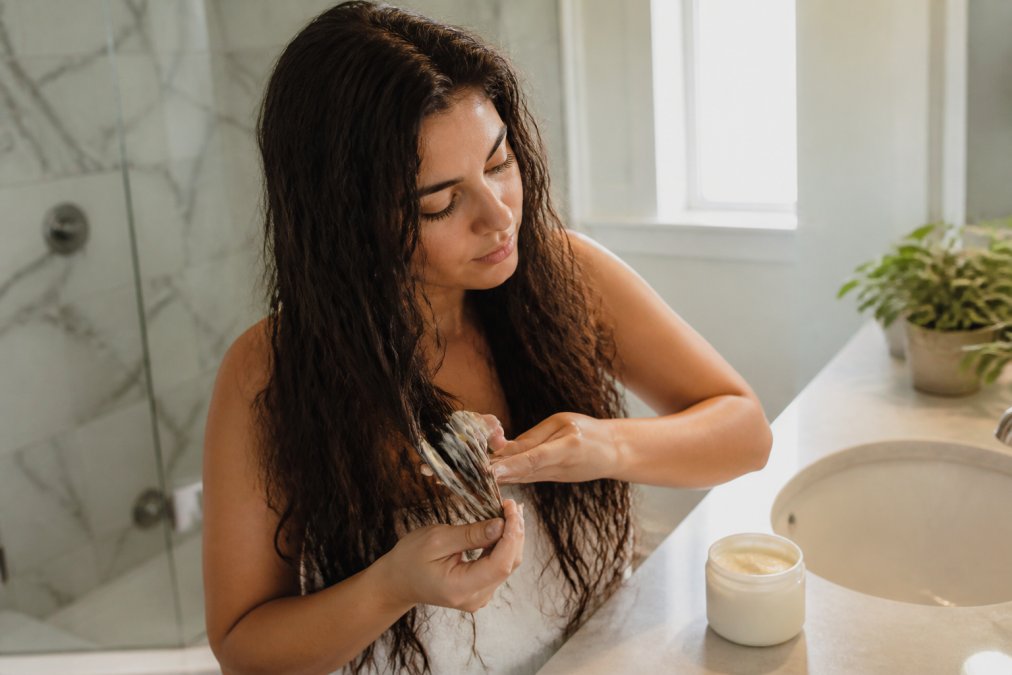
Step 1: Wash with a sulfate-free shampoo. Sulfates strip natural oils and disrupt the scalp's pH balance, leaving ends drier (PubMed). A sulfate-free formula cleans without that harshness.
Step 2: Apply a deep conditioning treatment to the ends first. Work from mid-length to tip, where it's needed most. Leave it on for the time the label specifies, then rinse cool to help seal the cuticle.
Step 3: Use a leave-in conditioner on damp hair. This is the step most people skip. A leave-in adds moisture retention and makes detangling easier, cutting mechanical damage.
Step 4: Seal with a lightweight oil. Argan oil or coconut oil pressed over the ends traps the water you just added. This is the "sealing the cuticle" step that keeps hydration from evaporating.
Choosing the Best Deep Conditioner for Dry Ends
The best deep conditioner for dry ends matches your porosity and protein needs, not simply the richest formula on the shelf. Porosity, how easily your cuticle lets water in and out, decides whether a mask absorbs or just sits on top, and most people guessing at their hair type get it wrong.
Test your porosity before you buy anything
Drop a clean, product-free strand into room-temperature water. Floating for several minutes before sinking means low porosity; sinking within a minute or two means high; hovering in the middle is normal. Faster, no-water check: slide two fingers up a dry strand from tip to root. Squeaky, rough resistance suggests high porosity (lifted cuticle); a slick, coated feel suggests low.
Here's how the result changes your routine:
| Porosity | What the cuticle is doing | Best treatment | Application method |
|---|---|---|---|
| Low | Tight, closed cuticle; resists water | Lightweight, low-protein moisture mask | Apply to damp hair and use gentle heat (warm towel or shower steam) to help lift the cuticle |
| Normal | Balanced absorption and retention | Alternate moisture and light protein | Standard 15-20 minute mask |
| High | Lifted, porous cuticle; loses water fast | Moisture mask plus a protein treatment, then a sealing oil | Layer leave-in under the mask and seal after rinsing |
Protein vs. moisture: read the label, not the marketing
Protein treatments deposit hydrolyzed protein onto and into the shaft to temporarily fill gaps in a damaged cuticle. Moisture treatments use humectants, glycerin, honey, aloe, to draw and hold water. The two aren't interchangeable, and the classic failure mode is over-proteining: hair that feels stiff, straw-like, and snaps instead of stretching right after a mask. If that happens, stop protein and run moisture-only masks for two to three weeks.
The opposite problem is hair that feels mushy, stretchy, and limp when wet, a sign it needs protein, not more moisture. A practical rhythm is one moisture mask weekly and a protein treatment every four to six weeks, adjusted by how the hair feels, not the calendar.
Match the formula to the concern
| Hair Concern | What to Look For | Frequency |
|---|---|---|
| Dry, rough, no elasticity | Moisture mask with humectants | Weekly |
| Stretchy, mushy when wet | Protein treatment | Every 4-6 weeks |
| High porosity, loses moisture fast | Sealing oils plus leave-in | After each wash |
| Low porosity, product sits on top | Lightweight, low-protein mask | Every 2 weeks |
For a targeted option, [Kerarganic's FIBERPLASTY REJUVENATING MASK](https://kerarganic.com/products/fiberplasty-rejuvenating-mask) uses hyaluronic acid and essential nutrients to restore elasticity and softness to dry, chemically processed hair. Its concentrated FIBERPLASTY LIQUID MIRACLE MASK works in a similar direction, transitioning from a liquid that penetrates the cuticle layers to a cream that seals them.


Keratin Treatment Benefits for Damaged Hair
Keratin treatment benefits for damaged hair come down to one thing: replacing lost protein. Keratin is the protein your hair is largely built from, and over-processing depletes it. A keratin treatment deposits it back onto the shaft, smoothing the cuticle and reducing frizz for weeks.
For over-processed or bleach-damaged hair, the payoff is quick: strands feel stronger, look shinier, and resist humidity better, which is why many use keratin between salon visits. Choose a formaldehyde-free formula, since traditional salon treatments have raised health concerns many clients now avoid.
At-home keratin care is where maintenance gets realistic. A restorative mask used weekly keeps the results going without a full salon appointment. [Kerarganic's XTREME REPAIR RESTORATIVE MASK](https://kerarganic.com/products/xtreme-repair-restorative-mask-copy) is built for exactly this: a deep conditioning mask that strengthens each hair shaft from the inside out and seals in moisture to keep fibers hydrated and frizz-free.
How to Prevent Split Ends: Daily Habits That Work
The most effective way to prevent split ends is to stop the small daily habits that cause mechanical damage, because prevention beats repair. Once a fiber splits, no product truly reverses it. But there's a second, less obvious driver most guides skip: the water you wash with.
Detangling, drying, and heat
Start with detangling: work from the ends upward with a wide-tooth comb or wet-hair brush, and never rip through a knot from the top down. Use a microfiber towel and blot rather than rub. When heat styling, apply thermal protection first and keep the tool moving, holding a flat iron in one spot scorches the cuticle, not the temperature alone.
For sleeping, protective styling makes a real difference. A loose braid or a silk pillowcase reduces the friction that frays ends overnight.
The water-quality angle most guides miss
If your ends feel rough, dull, and coated no matter how much conditioner you use, the culprit may be your water. Hard water carries dissolved calcium and magnesium that bind to the cuticle and form a film blocking moisture and making the surface gritty (PubMed). Over time that buildup makes hair more brittle and prone to snapping at the ends.
Signs you're dealing with hard water rather than simple dryness:
- Hair feels coated or waxy even right after washing
- Shampoo and conditioner don't lather well
- A white, chalky film shows up on shower glass, faucets, or dishes
- Color fades faster than expected
- Ends feel rough while the roots feel normal
If that sounds familiar, the fix is a chelating treatment, not another moisturizing mask. Chelating shampoos contain agents like EDTA that bind to metal ions and lift them off, a different job than clarifying shampoo, which mainly removes product buildup (PubMed). Use a chelating wash every few weeks, then follow with a deep conditioner, since it can leave hair temporarily drier. A shower filter is the preventive step; it won't soften water like a whole-home system, but it reduces the mineral load reaching your hair.
Soft water brings its own issue: it rinses so thoroughly that hair can feel flat or over-clean, and fine hair goes limp. If you have soft water and your ends still feel dry, the problem is more likely heat, chemical processing, or porosity than minerals.
The daily checklist
- Detangle from the ends up, never top-down
- Swap to a microfiber towel for drying
- Use thermal protection before any heat tool
- Sleep on silk or in a loose braid
- Consider a shower filter if your water is hard
- Add a chelating wash every few weeks if you see mineral buildup
Common Mistakes That Keep Hair Ends Dry
The biggest mistake with dry ends is treating them only from the outside while ignoring your body and routine. Hair hydration starts with internal nutrition: without enough water and protein, healthy fats, and iron-rich foods, no topical product fully compensates.
The second mistake is over-washing. Daily shampooing, especially with harsh formulas, strips sebum before it can travel down the shaft. Sebum naturally protects the ends, so washing less often lets your scalp's oils do their job. Stretch washes to every two to three days where you can.
The third is heat styling without protection, the fastest route to brittleness and breakage. The fourth is skipping trims entirely in pursuit of length. You don't need a big cut, but a light dusting of the tips every few months stops splits traveling upward and taking more length with them.
Conclusion: Your Path to Healthier Ends
Rebuilding dry ends is a routine, not a single product. Hydrate with a sulfate-free wash, repair with a deep conditioning mask, seal with a lightweight oil, and protect against heat and friction daily. Do that consistently and you'll see softer, stronger ends without sacrificing length.
Kerarganic Cosmetics, LLC makes that routine easier with professional-grade, formaldehyde-free formulas. [The KAKAWA COLLECTION BUNDLE](https://kerarganic.com/products/kakawa-bundle) brings together the masks and treatments for dry hair in one set, while the XTREME REPAIR RESTORATIVE MASK handles weekly protein and moisture repair. Every formula is keratin-infused and free of harsh salts and sulfates, so it protects the results you already have.

Get started with Kerarganic Cosmetics, LLC and give your ends the moisture, protein, and protection they need to stay healthy at any length.
Frequently Asked Questions
How can I rehydrate dry hair ends?
Rehydrate dry ends by applying a deep conditioning mask weekly, using a leave-in conditioner daily, and sealing with lightweight oils like argan oil. Avoid sulfates that strip natural oils. For best results, use products with keratin and hyaluronic acid, such as those from Kerarganic, to restore moisture and strength. Also, limit heat styling and protect hair while sleeping.
Can you actually fix dry, damaged ends without a haircut?
You cannot reverse split ends, but you can temporarily mend them and prevent further damage. Deep conditioning treatments, protein masks, and keratin treatments can smooth the cuticle and seal splits. However, if ends are severely damaged, a trim may be necessary eventually. Regular maintenance with the right products can extend time between cuts and improve appearance.
What are the best ingredients to fix dry hair ends?
Look for ingredients like keratin, argan oil, coconut oil, shea butter, hyaluronic acid, and hydrolyzed proteins. These moisturize, strengthen, and seal the hair cuticle. Avoid sulfates, parabens, and alcohols that dry hair out. Products like Kerarganic's Fiberplasty Rejuvenating Mask contain hyaluronic acid and vitamins to repair and restore elasticity.
How often should I use deep conditioning treatments for dry ends?
Use a deep conditioning mask once a week for dry, damaged hair. If hair is extremely dry, you can use it twice a week. Overuse of protein treatments can cause brittleness, so alternate with moisture-based masks. Always follow with a leave-in conditioner and seal with oil to lock in hydration.