
Table of Contents
- What Are the Real Causes of Brittle Hair?
- Test Your Hair Porosity Before You Treat It
- How Often Should You Deep Condition Hair?
- DIY Hair Masks for Damaged Hair That Actually Work
- How to Fix Brittle Hair: Washing, Rinsing, and Drying Right
- Heat Styling, Leave-In Treatments, and Damage Prevention
- Ingredient Science vs. Marketing: What Your Products Actually Need
- Conclusion
Last Updated: August 10, 2026
What Are the Real Causes of Brittle Hair?
Brittle hair is a condition in which the hair shaft loses its lipid barrier and moisture retention capacity, leaving strands prone to breakage, split ends, and a dull, straw-like texture. Most people blame their shampoo, but the real picture is more complicated. At Kerarganic Cosmetics, LLC, we provide professional-quality, keratin-infused hair care solutions for individuals dealing with over-processed, frizzy, and structurally compromised hair. The causes fall into two categories: external damage that attacks the hair cuticle and internal health markers that undermine hair elasticity from the inside out.
Environmental and Chemical Damage
The hair cuticle is the outermost protective layer of the hair shaft, think of overlapping roof shingles. When those shingles lift or crack, moisture escapes and mechanical damage accelerates. Chemical processes like coloring, bleaching, relaxing, and keratin treatments compromise this structure. Thermal damage from flat irons and blow dryers breaks down the lipid barrier that holds the cuticle flat.
Environmental factors are equally destructive. Hard water deposits mineral buildup on the hair shaft, disrupting pH balance. UV exposure degrades the proteins that give hair its tensile strength. Humidity swings cause repeated swelling and contraction, weakening the internal cortex. According to American Academy of Dermatology guidance on hair care, repeated mechanical damage from aggressive brushing and tight hairstyles is a leading contributor to hair breakage.
Internal Health Markers That Affect Hair
Hair breakage is not always a product problem, it is sometimes a body problem. Nutritional deficiencies in iron, zinc, biotin, and essential fatty acids directly impair the follicle's ability to produce structurally sound hair. Low ferritin levels, even within the "normal" clinical range, are associated with increased shedding and reduced hair quality. Thyroid dysfunction, hormonal shifts, and chronic stress all affect sebum production and follicle stimulation. If quality products show no improvement, a conversation with a dermatologist about internal health markers is worth having before spending more on topical treatments.
Test Your Hair Porosity Before You Treat It
Most people skip this step, which is the single biggest reason why a treatment that works brilliantly for one person does nothing for another.
Hair porosity is the hair's ability to absorb and retain moisture, determined largely by the state of the hair cuticle: tightly closed cuticles resist moisture absorption (low porosity), while damaged or lifted cuticles absorb moisture quickly but lose it just as fast (high porosity).
A simple home porosity test:
- Wash your hair with a clarifying shampoo and let it air dry completely, with no product.
- Drop a single clean strand into a glass of room-temperature water.
- Watch for 2-4 minutes.
- If the strand floats, you likely have low porosity hair.
- If it sinks slowly to the middle, you have medium porosity.
- If it sinks rapidly to the bottom, you have high porosity hair.
High porosity hair needs heavier emollients and protein treatments to fill gaps in the cuticle. Low porosity hair needs heat to open the cuticle before conditioning agents can penetrate. Knowing your porosity lets you choose the right treatment, not just the most popular one.
| Hair Porosity | Cuticle State | Best Treatment Approach | What to Avoid |
|---|---|---|---|
| Low | Tightly closed | Lightweight humectants, heat during conditioning | Heavy butters, protein overload |
| Medium | Balanced | Most conditioning treatments work well | Over-processing |
| High | Lifted or damaged | Protein treatments, heavy emollients, sealing oils | Products with high alcohol content |
How Often Should You Deep Condition Hair?
Deep conditioning frequency depends on your hair's current condition. For severely damaged or highly porous hair, a weekly deep conditioning session is appropriate until the condition stabilizes. For moderately dry hair, every 10-14 days is reasonable. Healthy hair can get by with a monthly treatment. Assess how your hair responds: if strands feel soft and elastic after conditioning but dry again within days, you are losing moisture faster than replenishing it.
Deep conditioning is not the same as regular conditioning. A rinse-out conditioner works on the surface; a deep conditioner penetrates the cortex to improve elasticity and repair structural gaps. Apply to clean, damp hair, cover with a shower cap, and allow 20-30 minutes of processing time. Adding gentle heat accelerates penetration, especially for low porosity hair.
DIY Hair Masks for Damaged Hair That Actually Work
The DIY hair masks category is full of noise. Some recipes work; many are inconsistent because active ingredients vary wildly between batches.
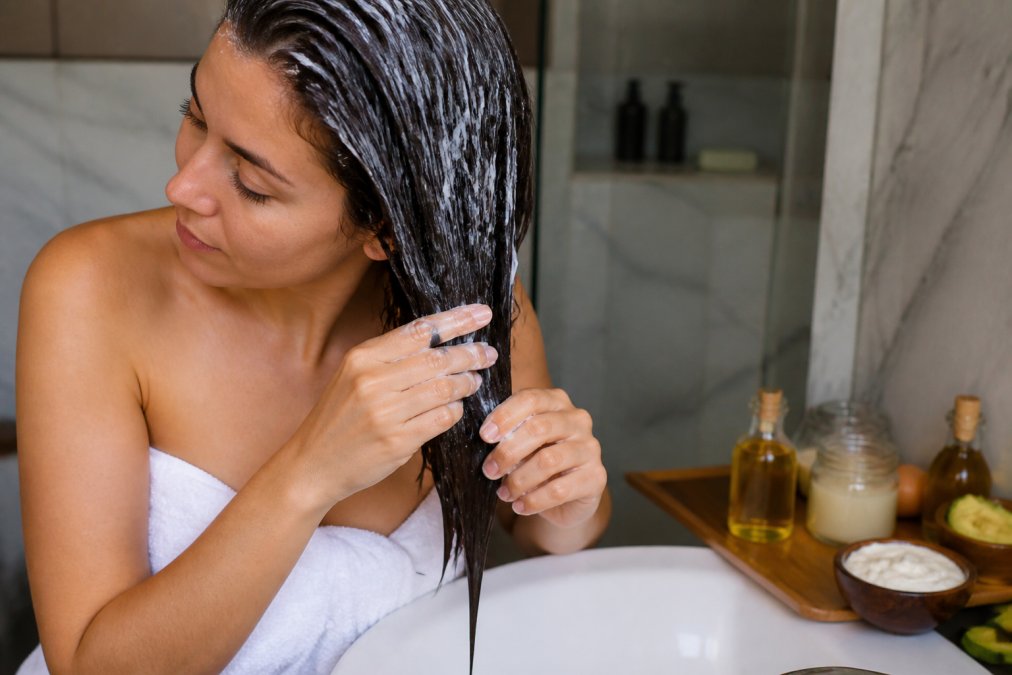
Here are three DIY hair masks for damaged hair with a clear rationale for why each works:
1. Coconut Oil and Honey Mask (Moisture + Humectant) Combine two tablespoons of virgin coconut oil with one tablespoon of raw honey. Coconut oil contains lauric acid, a medium-chain fatty acid with a molecular weight small enough to penetrate the hair shaft. Honey is a humectant that draws moisture into the hair cortex. Apply to dry hair, cover with a shower cap, and leave for 30 minutes before washing out with sulfate-free shampoo.
2. Egg and Olive Oil Mask (Protein + Lipid Repair) Whisk one egg with two tablespoons of olive oil. Eggs supply protein and lecithin, which binds moisture to the hair shaft. Olive oil contributes essential fatty acids that support the lipid barrier. Apply to damp hair, process for 20 minutes, and rinse with cool water.
3. Plain Greek Yogurt Mask (Gentle Protein + Lactic Acid) Apply half a cup of full-fat plain Greek yogurt to clean, damp hair. The lactic acid gently smooths the cuticle, while protein provides light structural support. Leave for 15-20 minutes and rinse thoroughly.
For structurally compromised or chemically over-processed hair, professional-grade treatments will produce more consistent results than kitchen ingredients alone.
How to Fix Brittle Hair: Washing, Rinsing, and Drying Right
The way you wash and dry your hair can undo every good product decision. This is where most people quietly cause more damage without realizing it.
Sulfate-Free Cleansing and pH Balance
Sulfates are surfactants that create lather and remove oil, but they strip the hair's natural sebum, disrupt pH balance, and cause the cuticle to swell and lift with repeated use. For anyone dealing with brittle hair, sulfate-free cleansing is a structural necessity.
The hair shaft maintains an ideal pH of around 4.5-5.5. Most tap water runs slightly alkaline, and many conventional shampoos are formulated above this range. Repeated exposure to alkaline pH causes the cuticle scales to open, accelerating moisture loss. A sulfate-free shampoo formulated at the correct pH keeps the cuticle flat and the lipid barrier intact. According to research published by the National Institutes of Health on hair cosmetics, pH-balanced hair care products significantly reduce friction and breakage compared to alkaline alternatives.
Cold Water Rinse, Microfiber Towels, and Air Drying
Finish every wash with a cold water rinse. Cold water causes the cuticle to contract and lie flat, sealing in moisture and conditioner. Swap a regular terrycloth towel for a microfiber towel, which absorbs excess water gently without friction. Blot rather than rub.
Air drying is least damaging, but if you use a blow dryer, use the lowest heat setting with a diffuser attachment, held at least 6 inches from the hair shaft. Thermal damage is cumulative.
Heat Styling, Leave-In Treatments, and Damage Prevention
Heat tools are not the enemy. Using them without preparation is.
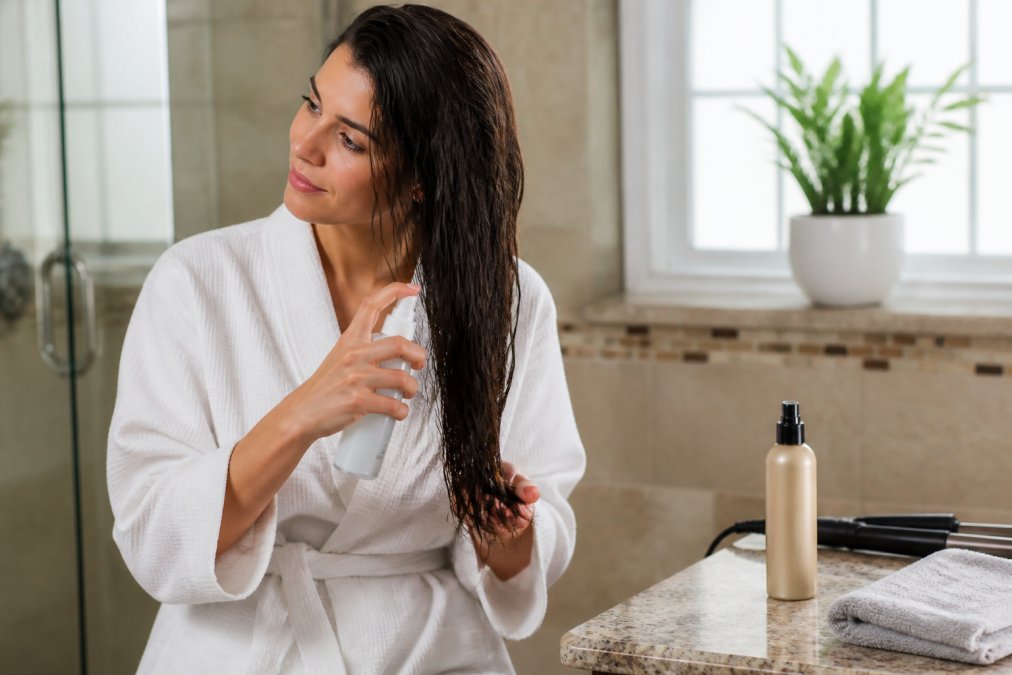
A leave-in conditioner applied to damp hair before detangling reduces mechanical damage from combing and provides a base layer of hydration that persists through drying. Look for formulas containing humectants like glycerin or panthenol alongside emollients like argan oil or shea butter.
A heat protectant is non-negotiable before thermal styling. Heat protectants form a thin film over the hair shaft that distributes heat evenly and raises the threshold at which thermal damage occurs, typically between 400°F and 450°F.
A practical heat styling protocol for brittle hair:
- Apply leave-in conditioner to towel-dried hair and detangle from ends to roots with a wide-tooth comb.
- Allow hair to air dry to at least 80% dry before applying heat.
- Apply heat protectant evenly from mid-shaft to ends.
- Set your tool to the lowest effective temperature for your hair type.
- Move the tool continuously; never hold it stationary on a section.
- Finish with a light sealing oil on the ends to smooth the cuticle.
According to American Academy of Dermatology tips on preventing hair damage, reducing flat iron temperature and limiting heat styling to three times per week significantly reduces cumulative thermal damage.
Ingredient Science vs. Marketing: What Your Products Actually Need
Many products marketed for "damaged hair" contain a handful of functional ingredients surrounded by water, fragrance, and thickeners. The active ingredients are what matter.
Ingredients with documented functional roles in hair repair:
- Hydrolyzed keratin: Breaks down into smaller peptides that penetrate the hair shaft, filling gaps in the cortex and improving tensile strength. Molecular weight matters: smaller molecules penetrate more deeply.
- Panthenol (Vitamin B5): A humectant that penetrates the hair shaft, binds moisture, and adds flexibility.
- Argan oil and lightweight oils: Provide essential fatty acids that support the lipid barrier.
- Glycerin: A humectant that draws moisture into the hair. Effective in humid climates; can have the opposite effect in very dry environments.
- Cetyl and cetearyl alcohol: Fatty alcohols that act as emollients and conditioners, not drying alcohols.
Ingredients to be skeptical of:
- Fragrance at the top of the ingredient list signals a product that prioritizes scent over function.
- "Keratin" listed without "hydrolyzed" may indicate a large molecule that cannot penetrate the hair shaft.
- Silicones coat the hair shaft and create the appearance of smoothness without addressing underlying damage. They can build up and block conditioning agents over time.
According to cosmetic ingredient research from the Journal of Cosmetic Science, the molecular weight of keratin derivatives directly determines their ability to penetrate the hair cortex, which is why professional-grade formulations differ meaningfully from retail alternatives.
Kerarganic's formaldehyde-free keratin treatments are built around this principle: functional keratin replenishment using ingredients that actually reach the cortex, without the harsh chemical exposure associated with traditional salon treatments.
Conclusion
Fixing brittle hair at home requires more than swapping your shampoo. The underlying causes, whether environmental damage, chemical over-processing, or internal nutritional gaps, each demand a targeted response. Getting your washing routine right, understanding your hair porosity, and choosing products based on functional ingredients rather than marketing claims will produce real, lasting improvements.
Kerarganic Cosmetics, LLC offers professional-quality, formaldehyde-free keratin treatments and restorative serums designed to rebuild strength in over-processed hair, eliminate frizz, and maintain results without harsh sulfates or salts. If you are ready to address brittle hair with products formulated around ingredient science rather than ingredient theater, explore the full Kerarganic collection and find the right solution for your hair type. SHOP NOW.
Frequently Asked Questions
Can brittle hair actually be fixed at home?
Yes, brittle hair can improve significantly with consistent at-home care. The key is addressing the root cause, whether that is moisture loss, protein deficiency, heat damage, or over-processing. A routine built around sulfate-free cleansing, regular deep conditioning, and reduced heat exposure can restore elasticity and reduce breakage over several weeks. Severely over-processed hair may need additional keratin-based treatments to rebuild the hair shaft's lipid barrier before normal moisture retention returns.
What causes hair to become brittle and break?
Brittle hair usually results from a depleted lipid barrier along the hair cuticle, which allows moisture to escape and leaves strands vulnerable to mechanical and thermal damage. Common triggers include frequent heat styling without a heat protectant, chemical over-processing such as bleaching or relaxing, hard water mineral buildup, low dietary intake of essential fatty acids, and hormonal or thyroid imbalances. Environmental factors like low humidity and UV exposure also strip the hair shaft of natural sebum, accelerating breakage.
How often should you deep condition brittle hair?
For brittle or damaged hair, deep conditioning once a week is the standard starting point. High-porosity hair, which loses moisture quickly, may benefit from twice-weekly treatments until elasticity improves. Low-porosity hair absorbs product more slowly, so applying a deep conditioner with gentle heat, such as a warm towel wrap, helps ingredients penetrate the hair shaft. Once hair feels stronger and split ends are less frequent, you can scale back to every two weeks for maintenance.
Are DIY hair masks as effective as salon treatments for damaged hair?
DIY hair masks using natural oils and humectants can meaningfully improve moisture retention and reduce surface-level breakage, making them a solid maintenance step. However, they do not rebuild the internal protein structure of the hair shaft the way professional keratin or protein treatments do. For hair that is severely brittle from chemical processing, a formaldehyde-free keratin treatment delivers deeper structural repair that at-home masks cannot replicate. DIY masks work best as a weekly complement to a professional-grade treatment routine.
This article was written using GrandRanker