
Table of Contents
- What Makes a Keratin Treatment Salon-Grade?
- Choosing the Best Salon Keratin Treatment for Your Hair Type
- Top Salon Keratin Treatment Brands Compared
- Why Choose a Formaldehyde-Free Keratin Treatment?
- How Long Does a Salon Keratin Treatment Last?
- Salon vs. At-Home Application: What to Expect
- Essential Keratin Treatment Aftercare Tips
- Final Verdict: Picking Your Salon-Grade Brand
- Frequently Asked Questions
Last Updated: September 8, 2026
Choosing the right formula matters more than picking the most popular name. The best salon keratin treatment brands for 2026 prioritize hair health alongside smoothing results.
This guide examines what separates a salon-grade formula from a mediocre one: ingredient transparency, active agents, and how the system matches your hair's needs. Below, we break down three Kerarganic systems, explain why a formaldehyde-free keratin treatment is the only responsible choice, and give a realistic timeline for results.
What Makes a Keratin Treatment Salon-Grade?
A salon keratin treatment is defined by the concentration and quality of its active ingredients. Salon-grade formulas rely on restructuring agents like glyoxylic acid derivatives or glyoxyloyl keratin amino acids, which alter the hair's protein structure. At-home conditioning masks only coat the surface temporarily.
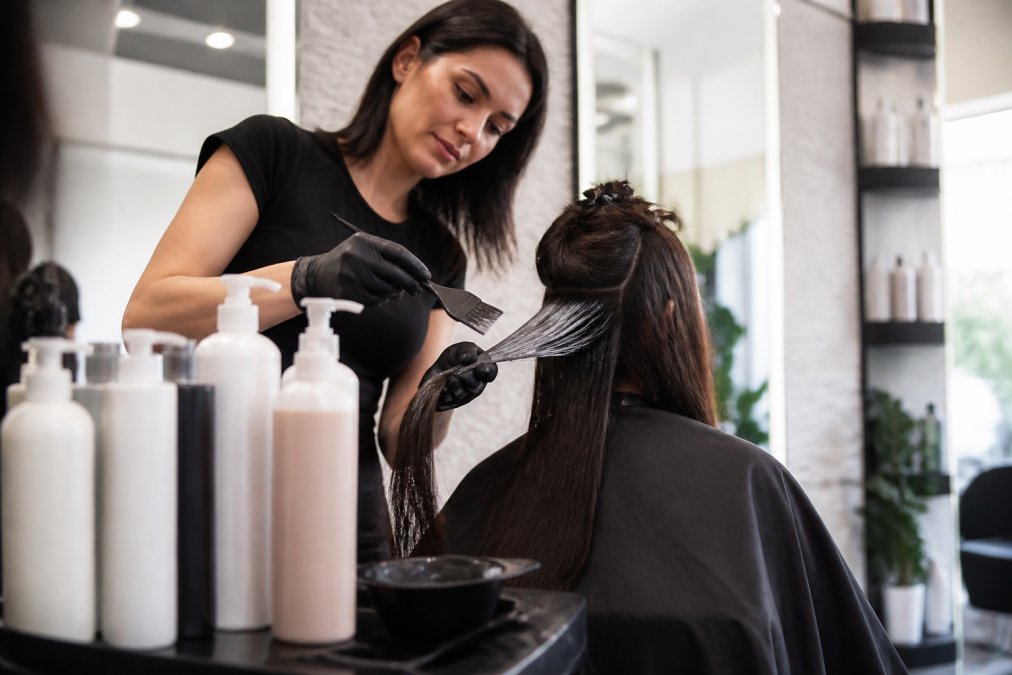
Professional application also demands heat activation. The treatment is blow-dried and sealed with a flat iron set to approximately 400°F (200°C), which drives the keratin into the hair shaft. Without sufficient heat, the cuticle will not close around the treatment, and results will fade within weeks.
Choosing the Best Salon Keratin Treatment for Your Hair Type
The right system depends on your starting point. Fine, color-treated hair needs a gentler, formaldehyde-free keratin treatment that smooths without weighing strands down. Coarse, highly textured hair can tolerate a stronger straightening solution. Over-processed or brittle hair requires a repair-first approach.
Understanding Hair Porosity and Texture
Hair porosity determines how well strands absorb and retain the treatment. Low-porosity hair has tightly bound cuticles that resist penetration, so it needs a clarifying step before application. High-porosity hair, often from bleaching or heat damage, absorbs product readily but loses moisture fast, making post-treatment sealing critical.
Texture matters just as much. If you have curly or coily hair, you want a smoothing system that reduces volume and frizz while keeping movement. Straightening treatments break curl patterns, so choosing the wrong intensity can leave hair limp or damaged. Match the system to the desired end state.
Top Salon Keratin Treatment Brands Compared
Kerarganic Cosmetics, LLC offers three distinct professional systems, each engineered for a different hair profile. Here is how they compare at a glance:
| System | Key Active Agents | Best For | Heat Requirement | Price |
|---|---|---|---|---|
| Organic Keratin System Premium | Glyoxyloyl Keratin Amino Acids, Hydrolyzed Keratin, Argan Oil | All hair types seeking smoothing without harsh chemicals | 400°F flat iron | $158.60 |
| Ultra Gold Quaternized Keratin System | Quaternized Keratin, Colloidal Gold, Bamboo Extract | Curly or frizzy hair needing stronger straightening | 400°F flat iron | $46.20 |
| Fiberplasty Repair System | Cationic Bonding Complex, Ceramides, Amino Acids | Over-processed, brittle, or color-treated hair | Heat-activated sealer | $274.20 |
Kerarganic Organic Keratin System Premium
This is our top pick for most hair types. The Organic Keratin System Premium is a formaldehyde-free keratin treatment built around glyoxyloyl keratin amino acids, hydrolyzed collagen, and silk amino acids, which improve hair elasticity and moisture retention. It is 100% vegan and enriched with 24kt gold nanoparticles for shine.

Results last up to five months with proper sulfate-free maintenance. The system suits salon professionals and confident at-home users who follow heat activation steps precisely. If you want a safe Brazilian keratin treatment that rebuilds strength while eliminating frizz, this is the formula.
Kerarganic Ultra Gold Quaternized Keratin System
For more intensive straightening, the Ultra Gold Quaternized Keratin System is the professional-grade choice. It uses quaternized keratin protein particles, which carry a positive charge that binds to the negatively charged hair fiber, repairing damage from the inside out. Colloidal gold, bamboo extract, and coconut oil smooth stubborn curls and eliminate frizz.
It is right for stylists managing clients with thick, coarse, or chemically resistant hair needing a true Brazilian perm effect. Expect significant curl relaxation and a sleek finish that cuts daily styling time.
Kerarganic Fiberplasty Repair System
Damaged hair needs repair before straightening. The Fiberplasty 3-Step Damaged Hair Repair & Straightening Bundle purifies with a micellar prep shampoo, restructures with a cationic bonding complex, and seals with a heat-activated endothermic sealer. It is ideal for clients recovering from bleach damage or chemical over-processing.
The cationic formula delivers vitamins and proteins to compromised areas, while ceramides in the sealer close the cuticle to lock in nutrients. It is a hair repair treatment that happens to straighten, not a straightening treatment that claims to repair. For brittle, over-processed hair, this is the safest path to smooth results.
Why Choose a Formaldehyde-Free Keratin Treatment?
The health concerns around traditional keratin treatments are well-documented. Formaldehyde is a known carcinogen, and when it is released as a gas during the high-heat flat ironing step, it poses a serious inhalation risk to both the client and the stylist (the CDC). The Occupational Safety and Health Administration guidelines on formaldehyde classify it as a hazardous material requiring ventilation and monitoring in the workplace.
A formaldehyde-free keratin treatment uses alternative smoothing agents, such as glyoxylic acid and hydrolyzed proteins, to achieve similar results without toxic fumes. This matters for salon owners responsible for staff air quality, and for pregnant women or those with respiratory sensitivities. professional hair coloring tools.
How Long Does a Salon Keratin Treatment Last?
A salon keratin treatment typically lasts three to five months, depending on the formula's strength and your maintenance routine. Longevity is tied to how well the cuticle is sealed during application and what products you use afterward.
The single biggest threat to keratin results is sulfate. Sulfates strip the protein coating from the hair shaft, accelerating the return of frizz. Using sulfate-free shampoo and conditioner is not optional; it is the difference between a treatment that lasts four months and one that fades in six weeks. Chlorine, salt water, and high humidity also shorten the treatment's lifespan.
Salon vs. At-Home Application: What to Expect
A professional application typically runs two to three hours, but the real difference between salon and at-home results is the chemical compatibility assessment before application. Most guides skip this step, which is a dangerous omission.
The Chemical Compatibility Check (What Salons Do That At-Home Guides Ignore)
Before any smoothing system is applied, a stylist must evaluate the hair's history of chemical services. The two highest-risk scenarios are:
- Bleach or high-lift color: Lightened hair is porous and fragile. Applying a full-strength straightening system to hair that has been lifted more than three levels can cause the fiber to melt or break off at the scalp. Most professional systems require a strand test first. If the hair stretches and does not bounce back, it is not a candidate for a straightening treatment that day.
- Relaxers or previous keratin treatments: A relaxer changes the hair's disulfide bonds permanently. A keratin treatment applied over a fresh relaxer can create a conflicting chemical environment, leading to uneven smoothing or sudden breakage. Similarly, applying a new keratin system over an old, partially faded one can cause the new formula to penetrate unevenly, leaving patchy results.
A salon professional will ask about your chemical history and may decline service if the hair is too compromised. At home, you are your own gatekeeper. If you have bleached hair, do not reach for a maximum-strength straightening system; look for a repair-first formula or postpone treatment until the hair has regained integrity.

The Technical Steps That Separate Good Results from Bad Ones
Whether in a chair or at a mirror, the application protocol follows the same sequence. The difference is in execution:
- Clarifying wash: This is non-negotiable. Product buildup, minerals from hard water, and residual oils will block the treatment from penetrating. A professional uses a deep-cleansing shampoo with a low pH to close the cuticle slightly before application.
- Towel-dry and detangle: The hair should be damp, not dripping wet. Excess water dilutes the formula and prevents even saturation.
- Sectioning: A professional divides the hair into quadrants, then sub-sections each quadrant into rows no wider than one inch. This is the most tedious part of the process, and it is where at-home users most often fail. Rushing sectioning leads to overlapping product, which creates stiff, brittle zones.
- Application: The product is applied with a brush, starting one centimeter away from the scalp to avoid product touching the roots. Saturation must be even; too little product means the treatment will not hold, and too much means the hair will feel heavy or sticky after ironing.
- Blow-dry: The hair must be completely bone-dry before the flat iron touches it. Any residual moisture will turn to steam inside the hair shaft during ironing, causing bubble damage that looks like split ends.
- Flat iron passes: The iron temperature and number of passes depend on the system's active agents. Most glyoxylic acid-based systems require a 400°F iron with five to seven slow passes per section. The iron must move continuously; stopping mid-strand creates a heat mark that will not wash out.
- Cooling and neutralization: After ironing, the hair must cool completely before it is rinsed or styled. This allows the cuticle to re-harden around the treatment. Rinsing too soon washes out the active agents before they have bonded.
The Real Cost Difference
A salon keratin treatment in the United States typically costs between $250 and $500, depending on hair length, density, and geographic location. The product cost is a fraction of that; you are paying for the stylist's time, expertise, and liability. At-home systems range from $40 to $300 per kit, which covers multiple applications depending on hair length. The trade-off is not just money, it is risk. A botched at-home application can cost more in corrective treatments than you saved on the initial service.
The Verdict on DIY
At-home application is viable for users with virgin or minimally processed hair who are methodical about sectioning and heat control. It is not advisable for anyone with a complex chemical history, significant curl pattern, or a tendency to rush detailed tasks. If you fall into the latter group, the salon cost is insurance, not an expense.
Essential Keratin Treatment Aftercare Tips
The first 72 hours after a keratin treatment are the most critical. Avoid getting the hair wet, tying it back, or using clips, as these can create creases in the newly sealed cuticle. After that window, the real battle begins at the ingredient level.
The Sulfate Problem Is Only the Beginning
Most aftercare advice stops at "use sulfate-free shampoo." That is necessary but insufficient. The chemical compounds that strip keratin treatments fall into three categories you need to avoid:
- Sulfates (Sodium Lauryl Sulfate, Sodium Laureth Sulfate): These anionic surfactants are strong detergents that lift oils and proteins from the hair shaft. They are the most aggressive strippers. Look for shampoos that use sodium cocoyl isethionate, cocamidopropyl betaine, or decyl glucoside instead.
- Chloride salts (Sodium Chloride, Sodium Citrate): Sodium chloride is plain table salt, often added to shampoos as a thickener. In high concentrations, it draws moisture out of the hair and can cause the keratin bond to degrade faster. This is especially problematic in hard-water areas where mineral buildup already stresses the cuticle.
- High-pH alkalizers (Sodium Hydroxide, Ethanolamine): These are used in clarifying shampoos and some dandruff formulas. They swell the cuticle, which is the opposite of what you want after a treatment that sealed it shut. A pH above 6.5 will gradually open the cuticle and allow the keratin to leach out.
How to Read a Shampoo Label Like a Stylist
Flip the bottle over and scan the first five ingredients. If you see any of the compounds listed above, put it back. The first ingredient is usually water, the second is the primary surfactant, and the third is often a secondary surfactant or foam booster. A safe formula will list a gentle surfactant like sodium lauroyl methyl isethionate or caprylyl/capryl glucoside in the top three.
The 72-Hour Rule and Beyond
- Days 1-3: No water, no sweat, no pins, no ponytail holders. The treatment is still curing. Sleeping on a silk or satin pillowcase reduces friction and prevents creasing.
- Days 4-14: Switch to a sulfate-free, chloride-free shampoo and conditioner. Wash no more than two to three times per week. Each wash removes a small amount of the treatment, so spacing out washes extends the life of the results.
- Weeks 2-8: Introduce a weekly deep conditioning mask that contains hydrolyzed keratin, ceramides, or amino acids. These ingredients replenish what daily wear strips away. Avoid masks with heavy silicones like dimethicone, which coat the hair and block future moisture from penetrating, leading to buildup that makes the hair look dull.
- Months 2-4: Begin using a leave-in conditioner with UV protection. Sun exposure degrades the keratin protein just as it degrades skin collagen. A lightweight leave-in with hydrolyzed wheat protein or silk amino acids adds a protective layer without weighing the hair down.
Environmental Threats You Can Control
Chlorine and salt water are notorious for stripping treatments, but hard water is the silent killer. If your tap water leaves white residue on glassware, it is high in calcium and magnesium. These minerals build up on the hair shaft and interfere with the treatment's ability to lie flat. A showerhead filter with a KDF-55 or vitamin C cartridge can reduce mineral content, but it will not soften water completely. For a more thorough solution, a whole-house water softener is the only reliable fix.
The Post-Treatment Mask Is Not Optional
A post-treatment mask is not a luxury add-on; it is the maintenance dose of the active chemistry. The treatment itself is a concentrated protein application, and the mask delivers the same building blocks in a lower concentration to keep the cuticle filled between treatments. Skipping it is like getting a dental filling and never brushing the tooth.
The Maintenance Schedule That Works
- Daily: Brush with a boar-bristle brush to distribute natural oils from root to tip. This reduces the need for washing.
- Weekly: Deep condition with a keratin-replenishing mask. Leave it on for 10-15 minutes with heat if possible.
- Monthly: Use a clarifying shampoo only if you have visible product buildup, and follow it immediately with a deep conditioning mask to re-seal the cuticle.
- Every 3-5 months: Plan your next treatment before the frizz fully returns. Reapplying to hair that still has residual treatment is more effective than waiting until the old treatment has completely worn off.
Final Verdict: Picking Your Salon-Grade Brand
Selecting the best salon keratin treatment is a decision about chemistry, not marketing. For most users, the Organic Keratin System Premium offers the best balance of safety, smoothing performance, and longevity. Stylists working with coarse or resistant hair will find the Ultra Gold Quaternized system more effective, while anyone recovering from chemical damage should start with the Fiberplasty repair line. Data from the FDA's guidance on cosmetics safety and labeling reinforces that ingredient transparency is the foundation of any responsible hair care decision.
A formaldehyde-free keratin treatment protects your health, your stylist's health, and the long-term integrity of your hair. When you choose a system that matches your porosity and texture and commit to sulfate-free aftercare, the results speak for themselves.
Choosing the right professional keratin treatment comes down to understanding your hair's needs and refusing to compromise on ingredient safety. At Kerarganic Cosmetics, LLC, our organic-based, formaldehyde-free systems are engineered to rebuild strength, eliminate frizz, and maintain salon-perfect results at home. Explore our professional treatment bundles and restorative serums to find the formula that matches your hair type.
Frequently Asked Questions
What brand of keratin treatment do salons use?
Salons often choose professional-grade brands that offer reliable results and prioritize hair health. Kerarganic is a popular choice for its range of organic and formaldehyde-free options. The Organic Keratin System Premium is designed for professional application and delivers up to 5 months of smooth, manageable hair. When selecting a brand for your salon, consider the treatment's ingredients, the training provided, and how well it suits your clients' diverse hair types and conditions.
How long does a salon keratin treatment last?
A professional salon keratin treatment typically lasts between 3 to 5 months. The longevity depends on several factors, including your hair's porosity, your daily styling routine, and the products you use. For example, Kerarganic's Organic Keratin System Premium can keep hair smooth for up to 5 months with proper care. Using sulfate-free shampoo and conditioner is crucial, as sulfates can strip the treatment and shorten its lifespan.
Are there effective formaldehyde-free keratin treatment brands?
Yes, many effective formaldehyde-free keratin treatment brands exist. Kerarganic's Organic Keratin System is a leading example, using glyoxylic acid and natural ingredients like argan oil to smooth hair without harsh chemicals. These formulas are safe for stylists and clients, including those who are pregnant. They effectively reduce frizz and improve manageability, offering a healthier alternative to traditional treatments that release formaldehyde gas when heated.
How do I choose the best keratin treatment for my hair texture?
Your hair's texture and porosity should guide your choice. For fine or color-treated hair, a gentler, formaldehyde-free formula like Kerarganic's Organic Keratin System is ideal to avoid over-processing. For coarse, thick, or very curly hair, a more robust treatment like the Ultra Gold Quaternized Keratin System can provide stronger straightening and frizz control. A professional consultation helps match the treatment's strength to your hair's specific needs and desired results.